
A sweeping international law enforcement operation has sent shockwaves through political and business circles across Asia. Authorities in the United States and the United Kingdom have jointly seized over $14 billion worth of Bitcoin linked to Chen Zhi, a 37-year-old businessman from China’s Fujian Province.
The U.S. Department of Justice also froze Chen’s 19 luxury properties in London, including one valued at over $133 million, and filed criminal charges accusing him of running a massive, transnational crypto-based “pig-butchering” fraud network. The indictment also cites human trafficking, unlawful detention, forced labor, organ harvesting, and large-scale money laundering under the umbrella of his Cambodian conglomerate, Prince Group.
Chen’s early life remains shrouded in mystery. Born in 1987 in Fuzhou, Fujian, he dropped out of middle school and reportedly worked as a low-level manager at an internet café in Shanghai. He later turned to operating illegal online gaming servers — so-called “private servers” that mimicked popular games — profiting from underground virtual currency transactions and hacking-for-hire schemes.
Fearing arrest, Chen fled to Cambodia in 2009 and began purchasing land and cultivating ties with local officials. By 2015, at just 28 years old, he founded Prince Holdings Group, later known simply as Prince Group.
Through lavish donations and political networking, Chen embedded himself within Cambodia’s ruling elite. He reportedly donated $1 million for then–Prime Minister Hun Sen’s birthday celebration and established relationships with the families of senior ministers. In 2020, he was granted the royal title Neak Oknha, Cambodia’s highest civilian honor — a status equivalent to that of a minister.
Success
You are now signed up for our newsletter
Success
Check your email to complete sign up
A fraud empire built on human suffering
While Prince Group presented itself as a legitimate player in real estate, finance, and consumer services, U.S. prosecutors describe it as a front for one of Asia’s largest criminal enterprises.
According to court documents, Chen’s network operated sprawling compounds under the guise of “technology parks” and “casino resorts.” In reality, these were enclosed compounds guarded by armed personnel, where victims of human trafficking were held captive and forced to run online scams.
Victims — lured by fake job offers — had their passports confiscated and were forced to work up to 16 hours a day. Those who resisted were beaten, confined, or, in extreme cases, subjected to organ harvesting. Some of these “factories” reportedly controlled over 76,000 social media accounts, generating as much as $30 million in daily fraud revenue.
In 2022, an FBI probe in New York traced U.S.-based fraud networks to Chen’s group. By mid-2025, the Cambodian government confirmed that Gold Bay Casino, long suspected of laundering money, was indeed part of Prince Group. Investigators later found internal spreadsheets referencing “China precision chats” and “EU/US targets,” outlining the global scope of Chen’s cybercrime syndicate.
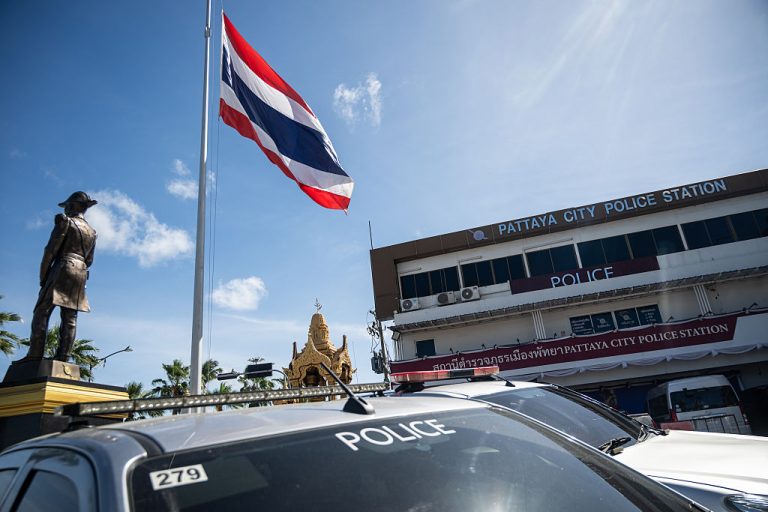
The turning point came when a senior Prince Group executive was arrested in Thailand and began cooperating with investigators. He revealed the location of Chen’s encrypted cryptocurrency servers. Using advanced decryption techniques, including pattern-based analysis of his “pseudo-random” password sequences, the FBI successfully accessed the Bitcoin wallets, seizing digital assets valued at over $14 billion — the largest confiscation of its kind in U.S. history.
Investigators allege that Chen and his associates used illicit profits to purchase private jets, yachts, luxury art — including a Picasso painting — and multiple high-value properties in New York and London.
A hidden hand from Beijing?
Beyond the criminal allegations, several Chinese-language sources have suggested that Chen’s influence and protection may have extended far beyond Cambodia.
A former Chinese intelligence officer using the alias Eric claimed that Prince Group functioned as a logistical front for Beijing’s Ministry of State Security, funding overseas operations under the doctrine of “business sustaining espionage.”
He alleged that Chen’s private club in Phnom Penh, Yunxuan Pavilion, hosted secret meetings between Chinese state security officials and overseas operatives tasked with targeting dissidents — including the Chinese political cartoonist “Badiucao” (Wang Liming).
Eric also claimed that Chen maintained detailed “bribery ledgers” documenting payments to Cambodian police and officials, ensuring immunity for his operations. Taiwan’s law enforcement agencies have since confirmed Chen’s multiple entries into Taiwan and have forwarded relevant intelligence to the FBI.
Expanding into the Pacific: The Palau connection
Another concern for Western governments is Chen’s investment footprint in the Pacific island nation of Palau, where his shell company, Grand Legend, allegedly partnered with Wang Guodan, a senior member of the Palau Chinese Association, believed to have informal links to Beijing’s United Front apparatus.
The company acquired a 99-year lease on Ngerebelas Island, located near key U.S. military routes in the Western Pacific. Security analysts suspect the purchase could have strategic implications for China’s regional presence, prompting the coordinated U.S.-U.K. crackdown on Chen and his network.
Reports further indicate that Wang had previously introduced Macau gang figure Wan Kuok-koi (a.k.a. “Broken Tooth”) — who has known United Front ties — to Palau’s then-president to secure casino licenses.
Despite the enormous scale of Chen’s empire and the number of Chinese victims involved in his fraud operations, mainland Chinese authorities and Hong Kong law enforcement took no action for years.
This passivity contrasts sharply with Beijing’s recent “anti-fraud” campaigns in Myanmar and Laos, fueling speculation that Chen enjoyed political protection at the highest levels.
State media in China once portrayed him as a “positive energy entrepreneur” and “philanthropist,” showering Prince Group with awards such as the China Financial Summit’s “Social Responsibility Model Award” in 2021 and 2022 — even as foreign governments quietly investigated his empire.
Rumors of family ties to Xi Jinping
Unverified rumors circulating in Chinese online circles claim Chen may be a hidden member of Xi Jinping’s extended family, or at least a financial proxy for Xi’s sister Qi Qiaoqiao and her business network.
Exiled writer Sheng Xue has alleged that Chen helped manage offshore wealth for the so-called “Fujian faction” tied to Xi’s family. According to her claims, Chen was granted special access to China’s Public Security Ministry, Foreign Ministry, and the Shenzhen Guesthouse complex, a known nexus for elite financial operations.
While no direct evidence supports these allegations, they underscore the extraordinary political insulation that allowed Chen’s empire to flourish unchecked — until Western authorities intervened.
Chen Zhi’s current whereabouts remain unknown since his last public appearance before the October asset seizure. Once hailed as Cambodia’s youngest billionaire and a “model Chinese investor,” he now stands accused of orchestrating crimes spanning more than 30 countries.
Multiple reports and analyses point to deep political shadows behind Chen Zhi and the Prince Group. Behind the vast flow of red capital lies immense human suffering — much of it borne by Chinese citizens themselves. It raises a painful question: How did a system turn its own people into instruments of cruelty?