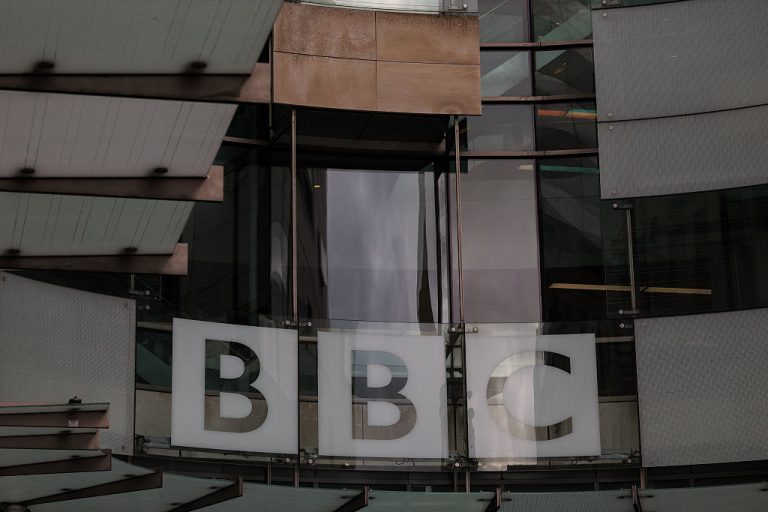
The long-established Western media outlet, the British Broadcasting Corporation (BBC), has recently plunged into an unprecedented crisis due to a controversial editing issue in a documentary about U.S. President Donald Trump. The network now faces a potential $1 billion lawsuit threat from Trump’s legal team and has seen a collective resignation of its senior management. What began as a simple video edit has escalated into a complex crisis involving journalistic ethics, media credibility, and international relations, with far-reaching implications for the global media industry.
The controversy centers on the BBC’s flagship investigative program Panorama and its documentary “Trump: Second Chance?,” aired before the 2024 U.S. presidential election. According to leaked internal BBC memos, the documentary employed highly controversial editing when presenting Trump’s speech related to the Jan. 6, 2021, Capitol events.
Specifically, the production team spliced together two segments of Trump’s speech that were more than 50 minutes apart. In the original speech, Trump said: “We are going to the Capitol to cheer on our brave senators and congresspeople.”
However, in the Panorama program, this was edited to read: “We are going to the Capitol… I will go with you. We are going to fight. We will fight to the death.”
This editing completely altered the context and meaning of Trump’s original remarks, making it appear as though he was directly inciting supporters to attack the Capitol, rather than expressing a comparatively mild statement. BBC Chairman Samir Shah later admitted that the edit “gave the impression of directly calling for violent action,” acknowledging it as a clear “judgment error.”
Success
You are now signed up for our newsletter
Success
Check your email to complete sign up
Trump’s legal response
In response to this clear editing error, Trump’s legal team took a very aggressive stance. According to letters obtained by Agence France-Presse, Trump’s lawyers formally issued a legal notice to the BBC on Nov. 10, demanding that the documentary with the incorrect edits be fully withdrawn by Nov. 14, a public apology issued, and “appropriate compensation for the damages suffered.”
The legal team’s letter described the BBC’s editing as “false, defamatory, malicious, derogatory, and inflammatory,” claiming it severely distorted the content of Trump’s speech.
They emphasized that the “fabricated statements” broadcast by the BBC were widely disseminated across digital media platforms, reaching tens of millions globally, and caused Trump “substantial financial and reputational damage.”
Trump’s team made it clear that if the BBC did not comply, “President Trump will have no choice but to exercise his legal rights… including filing a lawsuit seeking at least $1 billion in damages.” This astronomical figure highlights both Trump’s seriousness about the issue and the scale of harm he believes the edit caused.
Trump’s lawyer Alejandro Brito further cited Florida law in alleging defamation by the BBC, indicating a possible multi-jurisdictional legal strategy. A spokesperson for Trump’s legal team stated: “President Trump will continue to hold accountable those who spread lies, deception, and fake news.”
BBC’s crisis management and leadership shake-up
Facing strong protests and legal threats from Trump’s side, the BBC found itself in an unprecedented crisis. The incident not only exposed flaws in the BBC’s internal editorial processes but also raised widespread doubts about its journalistic credibility and professional standards.
On Nov.11, BBC Chairman Samir Shah publicly acknowledged the “judgment error” over Trump’s speech edits and issued an apology on behalf of the BBC. He stated that the BBC recognized the editing was inappropriate and promised a comprehensive reform of its internal oversight mechanisms.
Even more dramatically, after The Daily Telegraph published internal memos exposing the issue, BBC Director-General Tim Davie and News Division CEO Deborah Turness announced their resignations on Nov. 9 under increasing pressure.
Davie said that while the “recent controversy” was not the sole reason for his resignation, it “reasonably contributed” to the decision. He admitted: “Overall, the BBC runs well, but mistakes were made. As Director-General, I must take ultimate responsibility.”
Turness, speaking publicly for the first time after resigning, insisted that the BBC did not have “systemic bias.” Outside BBC’s London headquarters, she told reporters: “Mistakes happen, but BBC journalists work hard and strive to be fair.”
Deeper issues revealed by internal memo
This crisis is closely linked to an internal memo written by Michael Prescott, a former independent external advisor to the BBC Editorial Standards Committee. The leaked memo not only highlighted the editing issue in the Trump documentary but also pointed to systemic problems across the BBC.
The memo alleged clear biases in the following areas:
- Gaza coverage: Prescott noted that the BBC Arabic channel showed what he called “systemic bias” in reporting the Israel-Gaza conflict, and that these issues were not properly addressed. The memo specifically mentioned “anti-Trump and anti-Israel bias.”
- Transgender reporting: The memo suggested that content was filtered by LGBT-specialist reporters promoting transgender positions, undermining balance and objectivity in journalism.
Since the memo’s publication, the BBC has received over 500 complaints, reflecting public concern over its reporting quality and fairness.
Chairman Shah, responding to the UK Parliament’s Culture, Media, and Sport Committee, stated that the BBC did not “deliberately conceal” the issues mentioned in the memo and emphasized that a review of gender and sexual identity reporting found “most content meets BBC fairness and accuracy standards.”
Divided reactions in UK politics
The incident elicited a clear split in British political responses, reflecting differing views on the BBC’s role and responsibility.
- Government stance: Prime Minister Keir Starmer’s office said the PM did not believe the BBC “has systemic bias” and denied claims that it was “corrupt” — a term Trump used to describe some BBC journalists — indicating official government support.
- Conservative criticism: Conservative Party leader Kemi Badenoch took a different view, stating that the BBC “has long-standing serious issues to answer for,” calling the documentary incident a “real problem.”
- Liberal Democrat perspective: Liberal Democrat leader Ed Davey suggested Trump aims to “destroy the BBC and take our resources,” accusing Reform Party leader Nigel Farage of “fanning the flames.”
Farage, at a London press conference, quoted Trump saying in conversation: “Is this how you treat your best allies?” — expressing both Trump’s anger and hinting at potential impact on the UK–U.S. special relationship.
Shifts in the international media environment
This is not an isolated incident but reflects deeper changes in the global media landscape. Trump’s legal actions against media outlets demonstrate a more proactive approach to monitoring and holding media accountable.
In July, CBS and its parent company Paramount, BBC’s U.S. partners, settled a $16 million claim after Trump alleged deceptive editing of Kamala Harris’ interview before the 2024 election.
Similarly, The New York Times, CNN, and the Des Moines Register have faced legal actions from Trump, showing that his campaign against “fake news” has become a core political strategy.
This editing controversy has evolved into a complex battleground affecting the BBC brand, public trust, political dynamics, and cross-jurisdictional legal risks, with multiple implications for the media industry:
- Re-examining journalistic ethics: The incident highlights ethical issues in editing, reminding media organizations to handle sensitive content cautiously, ensuring technology does not distort facts. Any splicing across time can be interpreted as bias; editorial sensitivity to context is key to maintaining consensus in a divided society.
- Redefining media–politician relations: The event may reshape the dynamics between media and political figures, especially with Trump potentially returning to the presidency, requiring careful balance between truthful reporting and legal risk.
- Public broadcasting credibility challenge: As one of the world’s most influential public broadcasters, the BBC’s reputation damage could influence public media globally, prompting reassessment of oversight and professional standards.
In today’s age of polarized information and high distrust, whether this crisis can become an opportunity for systemic upgrades in media practices will test the wisdom and resolve of all involved parties.