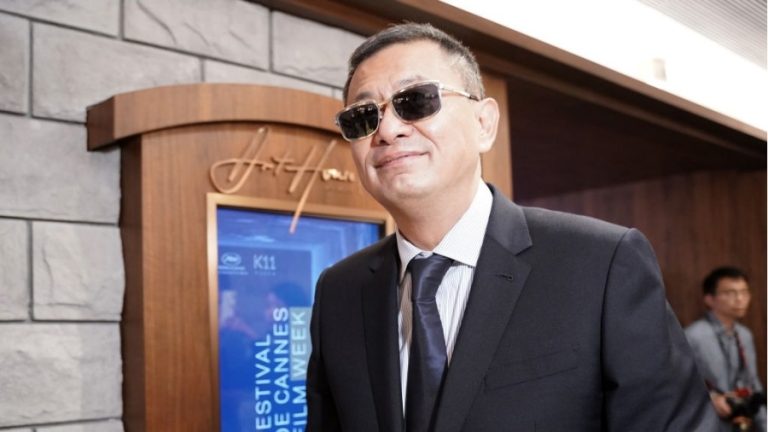
A viral audio recording has triggered controversy in China’s entertainment industry after allegedly capturing famed Hong Kong director Wong Kar-wai criticizing the Chinese Communist Party’s (CCP) handling of the Wuhan pandemic and linking it to “a greedy one-party state.”
The recording, reportedly made during production of Wong’s hit TV drama Blossoms, was uploaded on Weibo on Nov. 8, 2025, by whistleblower Cheng Jun-nian (screen name “Gu’er”). It was deleted soon after, but not before spreading widely online and sparking heated debate.
In the leaked conversation, Wong and members of his production team — including co-director Li Shuang and screenwriter Qin Wen — discussed the government’s pandemic response with apparent frustration. They reportedly said the CCP “has no compassion” and “only knows how to reap people’s lives like crops,” phrases carrying strong negative connotations in Chinese political discourse. One voice compared China’s handling of the pandemic with that of democratic countries, remarking, “No democracy would handle things like this — what we did was a disaster.”
The most politically sensitive line came from Wong himself: “This kind of chaos only happens in a greedy one-party state.”
The remark directly criticized China’s political system and equated its single-party rule with “greed” and “disorder.” In China’s strict censorship environment, such a statement touches the core of political taboos and can carry severe consequences.
Success
You are now signed up for our newsletter
Success
Check your email to complete sign up
The leaked remarks quickly provoked a fierce backlash from nationalist “Little Pink” netizens, who called for boycotts and punishment of Wong and the Blossoms team. Some demanded that the show be “removed immediately,” that its Magnolia Award be revoked, and that Wong be permanently banned from the industry. Weibo’s rapid deletion of the recording underscored both the sensitivity of the content and the political risks it posed.
How the controversy began: A screenwriting credit dispute
The incident originated from a long-running dispute over writing credits between Blossoms producers and Cheng Jun-nian, a young screenwriter. Cheng claimed he had contributed extensively to the show’s script since 2019, developing key storylines including those of Hu Ge’s character Abao, Xin Zhilei’s Li Li, and Tang Yan’s Miss Wang.
However, he was credited only as a “pre-production editor,” while Qin Wen won the Best Screenwriter Award at the 29th Shanghai TV Festival for Blossoms. Feeling wronged, Cheng accused the production team of exploiting his work.
After repeated attempts to defend his rights failed, Cheng retaliated by releasing a series of recordings — seven in total, running over an hour — on social media. What began as a creative ownership dispute soon evolved into an explosive controversy revealing not only private industry gossip but also politically charged remarks.
Cheng’s early uploads focused on private conversations among the Blossoms creative team. Some included blunt personal remarks about prominent Chinese actors.
According to the recordings, Wong allegedly joked about launching a “summer camp” to recruit young writers while mocking fellow filmmakers Chen Kun and Zhou Xun, accusing them of exploiting young screenwriters. The tapes also captured negative comments about Tang Yan, Chen Daoming, and Jin Dong, labeling them “pretentious,” while veteran actor You Benchang was described as “no easy man to deal with.”
The recordings further hinted that actress Jin Jing was removed from the show for refusing to “play along with unspoken rules,” and that Ni Ni and Liu Shishi clashed over dialogue during the filming of Flowing Gold Years. Cheng accused Wong of mistreating his staff, calling him “a jerk.”
The leaks shocked the public and triggered heated debate across the entertainment industry.
The Qin Wen ‘assault on police’ incident
One segment featured Qin Wen and her colleague Xu Siyao boasting about an incident in which they allegedly assaulted a police officer and were released through connections.
According to the recording, Qin described punching an officer during a traffic stop in Shanghai, after which she called her husband, senior TV producer Wang Guangli. He allegedly made a single phone call to the local police chief, and within 30 minutes, Qin and Xu were freed.
Wong, who was present in the conversation, advised Qin to “keep it low-key” and even joked that she could write the story into her next script.
These revelations fueled public outrage. Many saw the incident as evidence of elitist privilege in China’s entertainment industry, where powerful insiders often escape punishment. Netizens condemned Qin’s behavior as “a mockery of justice” and an example of how “connections outweigh the law.”
For Wong Kar-wai and the Blossoms crew, the exposure of politically sensitive remarks is potentially devastating. In China’s tightly controlled media environment, any negative reference to the CCP or its system can lead to blacklisting, censorship, or even legal consequences.
Although the recordings have been scrubbed from major platforms, their content continues to circulate widely online, leaving lasting damage to Wong’s reputation and raising fears of official retaliation.
Tensions and fault lines in China’s entertainment industry
This controversy has become more than celebrity gossip — it reveals deeper fractures within China’s entertainment world.
First, political red lines remain deadly serious. Wong’s alleged remarks about the CCP’s pandemic response challenged the regime’s authority, crossing boundaries that few in the entertainment field dare to approach.
Second, copyright and credit disputes continue to plague the industry, exposing a lack of protection for screenwriters and behind-the-scenes creatives.
Third, the incident illustrates the double-edged nature of social media. Platforms like Weibo and Xiaohongshu have become tools for whistleblowing and public accountability, yet also amplify rumors, malicious editing, and online attacks.
The Blossoms production team has accused Cheng of “malicious editing and distortion,” urging the public to approach the leaked materials with caution.
The Blossoms recording controversy — from disputes over screenwriting credits to sensational industry revelations — has ultimately touched the Chinese Communist Party’s most sensitive political red lines. The scope and impact of this controversy are rare in China’s entertainment industry in recent years.
The outcome of this storm remains a focus of public attention, and how the authorities handle its politically sensitive content will undoubtedly determine its final result.
By Yang Tianzi