Raymond Greene, Director of the American Institute in Taiwan (AIT), stated that in the context of the AI technological revolution, U.S.-Taiwan economic and trade relations will enter a “golden era.” He emphasized that the complementary strategies between the U.S. and Taiwan make their cooperation mutually reinforcing, and the international community recognizes that global prosperity depends on peace in the Taiwan Strait and supply chains free from coercion. Greene added that a U.S.-Taiwan partnership will create a secure and reliable network, expressing strong optimism about the future of U.S.-Taiwan relations.
On Nov. 18, at the 2025 Annual Membership Meeting of the American Chamber of Commerce in Taiwan, Greene delivered a keynote speech, stating that U.S.-Taiwan economic and trade relations are entering a golden era, driven by the AI revolution and the global economic shift from prioritizing cost to emphasizing security and resilience. He noted that the unique U.S.-Taiwan partnership sits at the core of this transformation.
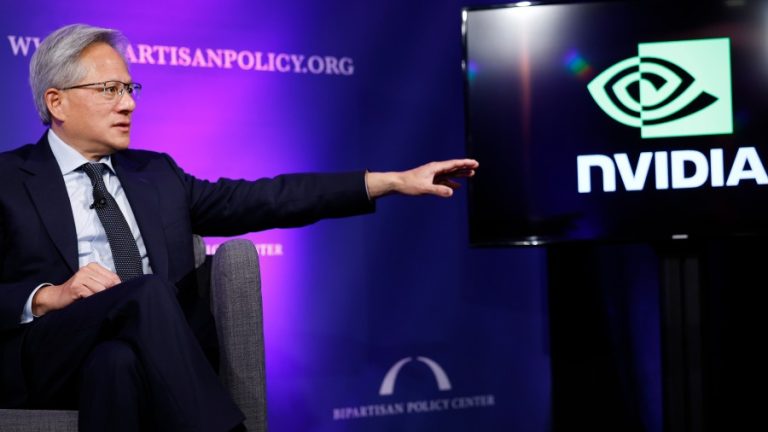
Greene highlighted that Taiwan has become a global leader in the AI industry, especially in hardware. Meanwhile, the U.S. artificial intelligence (AI) strategy focuses on research and development, ethical AI governance, and promoting international collaboration. The complementary strategies of the U.S. and Taiwan enhance and deepen cooperation. He cited the collaboration between Taiwan’s TSMC and U.S. AI chip leaders Nvidia and AMD as a prime example, reflecting a partnership grounded in trust, innovation, and shared goals.
Greene also pointed out that Taiwan’s economic orientation has shifted toward the U.S. Since 2010, Taiwan’s annual investment in China as a share of total outbound investment has fallen from 84 percent to less than 4 percent this year, while the U.S. is now Taiwan’s largest overseas investment destination. In 2025, Taiwan set a historical record for direct investment in the U.S., with 33 investment plans totaling $105 billion.
Additionally, Greene emphasized that the international community increasingly understands that global prosperity relies on peace in the Taiwan Strait and supply chains free from interference or coercion. He stressed that U.S. commitment to Taiwan is rock-solid, today and in the future. The U.S. is committed to maintaining peace and stability in the Taiwan Strait, supporting cross-strait dialogue, and believes differences should be resolved peacefully without coercion, in ways acceptable to the people on both sides. As U.S. Senator Marco Rubio has stated, the U.S. will continue opposing any attempt to change Taiwan’s status by force or coercion—a stance consistent across decades and multiple administrations.
Success
You are now signed up for our newsletter
Success
Check your email to complete sign up
Greene underscored that the U.S. supports Taiwan’s efforts to “seek peace through strength” with concrete actions, as evidenced by the growing defense industry cooperation between the two. The U.S. remains a key supplier of defense equipment and services to Taiwan. Expanding Taiwan’s defense industrial base is essential for maintaining peace and security in the Indo-Pacific region.
Greene praised Taiwan’s commitment to raise defense-related spending to 5 percent of GDP by 2030, making it the first non-NATO partner to respond to NATO’s new “5 percent commitment.” The U.S. is optimistic about future Taiwanese investment, which is vital for deterrence and opens new opportunities for U.S.-Taiwan cooperation. Taiwan’s unmatched manufacturing capabilities could make it a hub for the defense industry. Together, the U.S. and Taiwan are forming a secure network with reliable partners and verified sources to protect industry, economy, and security.
Greene also noted that the U.S. and Taiwan are working to integrate critical supply chains for drones and unmanned systems, building a resilient network to quickly trace and analyze key components. Many U.S. drone companies seeking to decouple from unreliable Chinese suppliers increasingly see Taiwan as a preferred partner.
On rare earths, Greene said that joint U.S.-Taiwan investment in rare earth processing would create safer, more resilient supply chains, reduce dependence on untrustworthy sources, and promote industrial growth.
In conclusion, Greene reiterated his strong optimism about the future of U.S.-Taiwan relations, which are built on shared values, common interests, and close people-to-people connections.