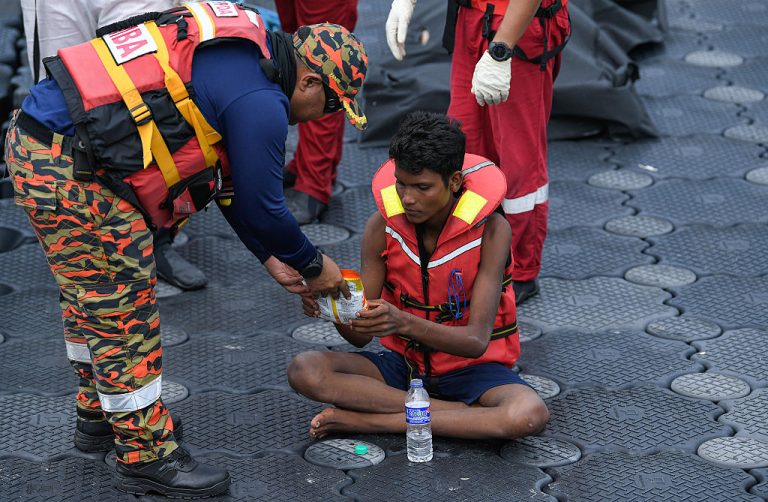
On Nov. 17, Malaysia ended its search operation for the Rohingya refugees who went missing after their ship sank near the Thai-Malaysian coast on Nov.18. In the end, 36 bodies were recovered and 14 survivors were rescued.
According to officials, the boat that sank on Nov. 6 near Thailand’s Tarutao island contained 70 undocumented refugees; most of them from the Rohingya community. The search was called off at 6:30 p.m. local time that Monday.
“We have examined all factors, including the size of the area, assets deployment, duration of the operation and information about the incident,” Zainudin Mohd Zaki, deputy operations director of the Malaysian Maritime Enforcement Agency (MMEA), said, shortly before the official conclusion.
“However, if there are any new leads or indications, we will reassess and reactivate the operation to search for the missing victims,” he said at a news conference.
Rescuers from both Malaysia and Thailand joined forces to search for survivors. A total of 29 bodies were found by Malaysian rescuers, with another seven found by Thai rescuers.
Success
You are now signed up for our newsletter
Success
Check your email to complete sign up
All 14 survivors, primarily Rohingya and Bangladeshi citizens, were found in Malaysian waters.
The search operation saw around 19 vessels and more than 300 personnel scouring around 1,750 square nautical miles of water for the missing refugees. It is believed the capsized boat was part of a larger group, with 300 people fleeing Myanmar. Officials claim that at least two boats were used.
The ship that capsized carried around 70 people, Malaysian authorities said. The fate of the other vessel, housing 230 passengers, is still unknown.
At the time of the search, rescuers feared that the survivors would not be able to last long with the lack of life jackets, Reuters wrote. Weather conditions were not so favorable either.
READ MORE:
- Ukraine Faces Perilous Winter Amid Corruption, Funding, and Battlefield Crises
- ‘We are RFA’, Radio Free Asia Journalists Express Dismay and Hope as Platform Ceases Operations
- Australia Faces Rising Threat From Chinese State-Linked Hackers
‘I saw one person die’
In an article by Reuters, one survivor recalled the disaster that stranded him in the Andaman Sea for days.
After being transferred from a larger boat, Iman joined 70 other refugees on the smaller vessel, right before it sank. He held on to some floating wreckage for days before he was washed up on a Malaysian island.
“I saw one person die. They drowned,” Iman told reporters after his rescue on Nov. 11.
Iman also said he was from Rakhine state, where many are displaced by Myanmar’s ongoing civil war.
Another refugee, Mohamed Ibrahim, also fled on a boat to Malaysia. But his elder brother, Mohammed Younus, said Ibrahim “left for Malaysia without telling anyone, leaving behind his wife and three children; two of whom are not even a year old.
“Who will take care of them?” Younus told Reuters from the refugee camps in Bangladesh.
“If I had known, I would never have let him go,” he added.
Plight of the Rohingya
For decades, the Rohingya community has been targeted in Myanmar, with thousands fleeing repression and the civil war between the military junta and opposition forces.
Between January and early November this year, more than 5,300 Rohingya have boarded boats leaving both Myanmar and Bangladesh, the United Nations Refugee Agency and the International Organization of Migration said in a joint statement on Nov. 11.
As a relatively affluent nation, Malaysia attracts millions of laborers from less wealthy parts of Asia. These migrants, many of whom are undocumented, fill essential roles in sectors like construction and agriculture.
According to local news outlet Malaysia Gazette, around 14,000 Rohingya have been found living in the northern Malaysian state of Kedah.
However, voyages are dangerous as boats can be overloaded and can easily capsize. Human trafficking syndicates also pose a dire threat.
Chris Lewa — director of the Arakan Project, which monitors these voyages — told Reuters that it usually takes “a week to 10 days to reach Malaysian waters. Sometimes, boats would have also stopped to pick up Rohingya refugees from Rakhine.”