Since the full-scale outbreak of the Russia-Ukraine war in February 2022, Ukraine has endured several harsh winters. However, the upcoming winter of 2025 is undoubtedly set to be its most perilous test yet. At present, Ukraine is mired in a multifaceted crisis driven by entrenched corruption, a worsening battlefield situation, and an imminent funding shortfall. These challenges are intertwined, threatening not only Ukraine’s national security and stability but also potentially undermining the confidence of its international allies and severely testing its resolve to resist aggression.
The shadow of corruption scandals
A series of recent corruption scandals in Ukraine has cast a fresh shadow over the war-torn nation. The most prominent involves the state nuclear energy company, Energoatom, and a massive kickback scheme. According to reports from The Washington Post and other media outlets, the scandal involves roughly $100 million in kickbacks, funds that were supposed to be used to sign contracts for protective infrastructure to shield Ukraine’s critical energy facilities from Russian airstrikes. Instead, these valuable funds were misappropriated, severely weakening Ukraine’s ability to withstand strategic Russian attacks.
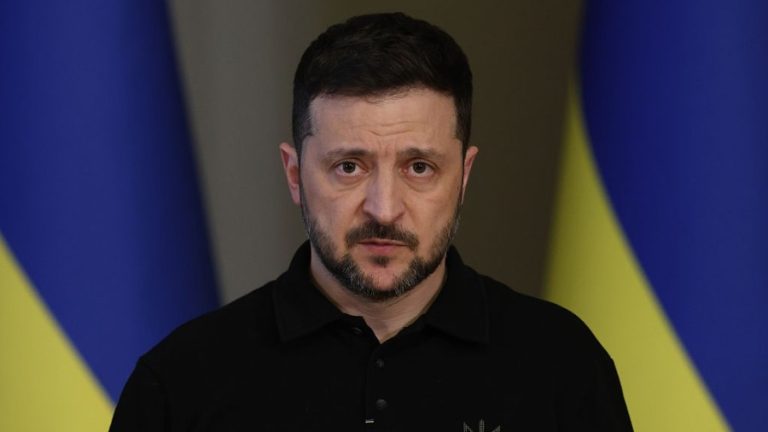
Even more shocking is that one of the central figures in this corruption case is reportedly Timur Mindich, a close associate and former business partner of President Zelensky. Mindich is said to have fled abroad, fueling public outrage and dealing a heavy blow to the government’s image of integrity. In response to the scandal, President Zelensky acted swiftly on Nov. 12, 2025, requesting the resignations of Energy Minister Svitlana Grynchuk and Justice Minister German Galushchenko to signal the seriousness of the matter.
The timing of the scandal’s exposure is highly sensitive. Since early 2022, the European Union and its member states have provided Ukraine with over $200 billion in financial, humanitarian, and military assistance, including donations, loans, and material support. Against this backdrop, corruption at Energoatom has raised serious concerns among European allies that aid intended for Ukraine’s defense against Russia may have been diverted into corrupt hands. EU High Representative for Foreign Affairs and Security Policy Kaja Kallas publicly described the scandal as “extremely unfortunate,” emphasizing that Kyiv must treat the matter “with the utmost seriousness.”
Ukraine’s two main anti-corruption bodies—the National Anti-Corruption Bureau (NABU) and the Specialized Anti-Corruption Prosecutor’s Office (SAPO)—have recently announced large-scale investigations into the case. Notably, during the summer of 2025, Zelensky’s office had attempted to weaken the powers of these two institutions, but public protests and strong EU condemnation forced a reversal. This historical context makes the current corruption investigation even more critical and sensitive; Ukraine’s ability to effectively combat corruption will directly affect its international reputation and future access to aid.
Success
You are now signed up for our newsletter
Success
Check your email to complete sign up
Funding crisis and challenges in international aid
The corruption scandal emerges at a time when Ukraine faces severe financial shortages. According to Jamie Dettmer, a foreign affairs columnist for POLITICO Europe, Ukraine’s funds are expected to run out by February 2026, leaving little time for the Kyiv government to secure a new round of financial support. President Zelensky is actively appealing to European allies to ensure the continued operation of both the state and war machinery.
However, the international community’s willingness and capacity to aid Ukraine face obstacles. One critical funding source, an EU proposal to provide Ukraine with €140 billion in loans based on frozen Russian central bank assets, faces hurdles. Belgium has expressed concerns over potential legal risks and possible Russian retaliation, while Slovak Prime Minister Robert Fico has openly opposed the plan, stalling this vital financial lifeline.
The exposure of corruption at such a critical moment is “rain on an already leaky roof.” It not only raises doubts among international partners about Ukraine’s governance but could also weaken the political will of some countries to continue providing substantial financial support. A funding shortfall would directly affect the operation of the Ukrainian military, the provision of government services, and postwar reconstruction efforts, with potentially severe consequences.
Deteriorating battlefield situation
Beyond internal corruption and external financial difficulties, Ukraine’s battlefield situation is increasingly dire. After nearly three years and nine months of large-scale conflict, Ukrainian forces face immense pressure, particularly in the east. The logistics and transport hub of Pokrovsk (called Krasnoarmeysk by Russia) has nearly fallen, marking a potential turning point on the battlefield.
Located in the Donetsk region, Pokrovsk is a strategically vital hub connecting the eastern front to rear areas. Full Russian control would allow Moscow to threaten three key eastern strongholds: Kostyantynivka, Kramatorsk, and Sloviansk. These cities are not only crucial defense positions in Donbas but also central nodes for military command and logistics. Losing Pokrovsk could compress Ukraine’s defensive lines in the region and potentially trigger a chain reaction, worsening the situation in eastern Ukraine.
Setbacks on the battlefield also damage morale and deplete Ukraine’s valuable manpower and resources. Ukraine has long faced challenges in replenishing troops, and recent policy changes have worsened the problem. A new regulation allows young Ukrainian men not yet conscripted to leave the country, resulting in a surge of departures to Europe. According to Germany’s Ministry of the Interior, the number of 18–22-year-old Ukrainian men entering Germany rose from roughly 19 per week in mid-August 2025 to between 1,400 and nearly 1,800 per week by October. This large-scale outflow exacerbates manpower shortages, seriously affecting frontline replenishment and reserve forces.
This phenomenon has also sparked social tensions in host countries. German Chancellor Friedrich Merz has publicly threatened to cut social benefits for newly arrived Ukrainians and adjust support for those already residing in Germany. This reflects Europe’s difficulties in managing refugee pressures and may create new frustrations among the Ukrainian refugee population.
Ukraine’s existential test and difficult choices
Beyond financial and battlefield challenges, Kyiv faces a third critical test: sustained damage to its energy infrastructure. Russia has made Ukraine’s energy system a key target in past winter attacks, and the upcoming winter of 2025 is expected to be even harsher.
Russia continues to target Ukraine’s power grid and has increasingly focused on natural gas infrastructure. Airstrikes are becoming larger in scale, more precise, and more frequent, while Ukraine’s air defense capacity is declining, leaving key infrastructure vulnerable to missiles and drones. Reports indicate that by October 2025, just a month before winter, Ukraine may have lost more than one-third of its natural gas production capacity.
The severe reduction in gas production, coupled with a fragile power grid, means that Ukrainians will face critical energy shortages during the cold winter. This will not only affect heating and daily life but also have major impacts on industrial production and state operations. Ensuring citizens’ basic needs while maintaining national functioning will be a formidable challenge. The energy crisis is not only a humanitarian issue but also a test of national resilience, potentially provoking social unrest and threatening Ukraine’s long-term capacity to resist.
Taken together, Ukraine faces a triple crisis this winter—corruption, battlefield setbacks, and financial shortages—making it the most perilous situation since the war began. Corruption scandals erode international trust, funding shortages threaten state operations, battlefield losses undermine defensive foundations, and the energy crisis imposes severe hardship on civilians. As columnist Jamie Dettmer bluntly puts it, Kyiv’s greatest challenge now is how to persevere under these disadvantages to avoid being forced into an unfavorable peace agreement.
This is a critical moment for Ukraine’s survival. The resilience of its leadership and people will be tested once again. Successfully enduring this “most perilous winter” will determine not only Ukraine’s independence and sovereignty but also have profound implications for Europe and the global geopolitical landscape.
By Yang Tianzi