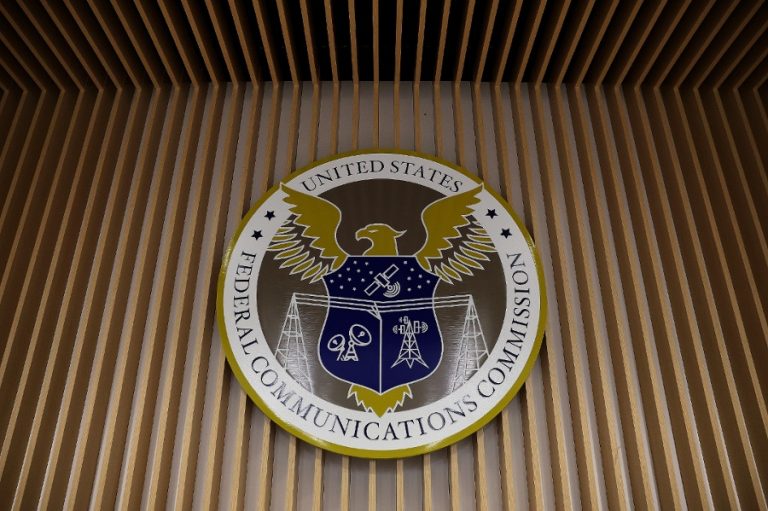
The U.S. Federal Communications Commission (FCC) on July 7 officially issued an order denying the international Section 214 authorization application of California-based Digitalsystem Technology Inc. (Digitalsystem). The company had sought approval to provide global facilities-based and resale international telecommunications services, but the FCC concluded that the firm is majority-owned by a Chinese citizen and poses significant national security and law enforcement risks that cannot be mitigated.
According to a Reuters report published on July 7, the decision underscores the U.S. government’s continued scrutiny of telecommunications companies with ties to China seeking access to the American market. The FCC’s order states that Digitalsystem is 70 percent owned and effectively controlled by Chinese citizen Hui Xie, making the company subject to the jurisdiction and influence of the Chinese Communist Party (CCP). The agency concluded that the company’s business relationships and operating plans could threaten U.S. communications security.
Key findings of the FCC order
In its Memorandum Opinion and Order, adopted on June 30 and released on July 7, 2026, the FCC concluded that granting Digitalsystem’s application would create substantial and unacceptable national security and law enforcement risks, making the application inconsistent with the public interest.
Digitalsystem filed its application on March 26, 2024, seeking authority to provide international telecommunications services between the United States and destinations worldwide. Headquartered in Los Angeles, the company provides data center management, network implementation, cloud migration, zero-trust architecture, and disaster recovery services, with operations spanning the United States, Mexico, Brazil, Hong Kong, and China.
Primary reasons for the denial
Chinese ownership and jurisdictional concerns
Digitalsystem is 70 percent owned by Chinese citizen Hui Xie, who also serves as CEO, while the remaining 30 percent is owned by U.S. citizen Yi Zhou. The FCC and executive branch agencies determined that, as a Chinese citizen, Hui Xie remains subject to Chinese laws—including the National Intelligence Law and the Cybersecurity Law—which could compel cooperation with Chinese intelligence authorities. The FCC said these concerns remain even though Hui Xie has lived in the United States for many years.
Success
You are now signed up for our newsletter
Success
Check your email to complete sign up
Risks involving Hong Kong affiliates and Chinese telecom partners
The company plans to work with an affiliated company in Hong Kong and has existing or planned business relationships with PCCW, China Unicom, and China Mobile. The FCC said these entities are subject to the influence of the CCP and could potentially be used to obtain U.S. communications data, customer records, and other sensitive information.
US data storage and cybersecurity concerns
Digitalsystem proposed storing or allowing access to U.S. customer records, call detail records (CDRs), and personal information in Hong Kong and China. The FCC concluded that these arrangements could expose sensitive information to the Chinese government. The agency also found the company’s explanations regarding foreign personnel’s access to U.S. systems to be inconsistent and misleading.
Mitigation measures deemed insufficient
The FCC said Digitalsystem provided responses that were “contradictory, incomplete, or misleading” during the review process, undermining confidence in the company’s representations. As a result, the agency determined that no mitigation agreement could adequately address the underlying risks.
Classified evidence supported the decision
The order also notes that classified information provided by executive branch agencies further supported the FCC’s decision, although the details remain confidential.
US continues tightening communications security
The ruling is the latest example of the FCC’s increasingly rigorous review of foreign—particularly Chinese-linked—telecommunications applications. In recent years, the agency has revoked or denied authorizations for several Chinese-affiliated telecom companies on similar national security grounds. Executive branch agencies, including the Departments of Defense, Homeland Security, and Justice, play a central role in those reviews.
The decision is part of a broader U.S. effort to tighten oversight of Chinese telecommunications companies. The FCC has previously barred China Mobile, China Telecom, and China Unicom from providing international telecommunications services in the United States and revoked the U.S. operating authority of Hong Kong Telecommunications (HKT).
The agency is also advancing new rules that would prohibit U.S. telecommunications carriers from interconnecting with Chinese telecom companies deemed national security risks, further limiting their access to U.S. data centers and network infrastructure.
Beyond telecommunications services, the U.S. government has expanded restrictions on Chinese technology products in recent years. The FCC has banned additional communications equipment manufactured by companies including Huawei, ZTE, Hikvision, and Dahua from entering the U.S. market. It has also moved to further restrict imports of certain Chinese-made drones and network routers to reduce supply chain security risks.
The FCC said the United States will continue strengthening the security of its communications infrastructure to ensure that critical telecommunications networks are not compromised by foreign government influence and remain consistent with national security and the public interest.