From Nov. 24 to 25, 2025, a high-profile secret diplomatic mission quietly unfolded in Abu Dhabi, the capital of the United Arab Emirates. The mysterious appearance of U.S. Army Secretary Daniel Driscoll signaled an unprecedented level of activity by the Trump administration in pushing Russia-Ukraine peace talks. According to the Financial Times, Reuters, and other major outlets, this three-party meeting involving representatives from the U.S., Russia, and Ukraine is regarded as one of the most substantive peace efforts since the start of the war.
Driscoll began talks with the Russian delegation on the night of the 24th and was expected to meet with Kyrylo Budanov, head of Ukraine’s Defense Intelligence Directorate (GUR). Although the identities of the Russian representatives remain classified, multiple U.S. officials confirmed the meeting took place. One U.S. official said, “Driscoll has been very active in this peace process over the past few days. He is clearly deeply involved, and therefore able to convey the terms of the agreement to the Russians.”
US Army Secretary appears in UAE
On the night of Nov. 24, global diplomatic attention was not fully focused on Abu Dhabi—but intelligence agencies were. U.S. Army Secretary Dan Driscoll appeared there and began two straight days of secret negotiations.
According to sources, Driscoll’s core mission was to meet with the Russian delegation and Ukrainian officials. While the Russian side remains highly classified, Ukraine’s representative has been confirmed as Kyrylo Budanov, director of the GUR.
Budanov’s personal involvement signals that the discussions have moved beyond diplomatic rhetoric and entered core areas such as military deployments, security guarantees, and intelligence exchange. It remains unclear whether the three parties met together at the same table or held separate shuttle diplomacy sessions. U.S. officials did state, however, that Driscoll’s role was to accurately and directly convey to Moscow the agreements and understandings reached between the U.S. and Ukraine in Geneva.
Success
You are now signed up for our newsletter
Success
Check your email to complete sign up
Washington officials described Driscoll as “very active” and “deeply involved,” indicating he is not just a messenger but one of the architects and implementers of the peace framework. Including a senior military official in the talks carries strategic value—reinforcing the seriousness of discussions from the perspective of military feasibility and signaling to Russia the U.S. commitment, or potential deterrence, regarding enforcement.
From 28 points to 19: How the peace plan evolved
The Abu Dhabi meetings were a direct continuation of the recently concluded high-level talks in Geneva. In Switzerland, U.S. and Ukrainian negotiators spent several intense days revising and trimming the Trump administration’s peace proposal.
The original, controversial “28-point peace plan” was reduced to “19 points.” Ukrainian negotiators reportedly balanced flexibility with core principles.
Notably, the language on blocking Ukraine from joining NATO was “softened.” This may signal that while Ukraine does not seek formal membership in the short term, alternative arrangements—such as bilateral security agreements or an “Israel-style” security model—could substitute.
Despite major disagreements over territorial issues, Ukraine reaffirmed its “red line” of preserving territorial integrity and sovereignty.
The Geneva talks were described as “constructive,” but the main obstacle—territory—remains unresolved. This is why the issue was ultimately left for direct discussion between Trump and Zelensky.
The biggest point of contention is the Donbas region. Although Russia has captured much of it over four years of war, it has never fully controlled the entire area.
Moscow is demanding international recognition of its occupation, and may even insist that Ukraine withdraw from strategic areas it still controls.
In a Nov. 24 video address to Swedish lawmakers, Zelensky firmly stated Ukraine’s position: “It is essential to uphold Europe’s principle that borders cannot be changed by force.” This was a direct rebuke to Russia’s demands to recognize the “current reality.” He stressed that although Ukraine kept sensitive issues on the table in Geneva, it would not “easily compromise.”
Meanwhile, President Trump posted a cryptic message on Truth Social: “Is it really possible that major progress will be made on the peace negotiations??? We’ll see—maybe something very good will happen.”
A volatile moment
On the 24th, Russian President Vladimir Putin said the U.S. proposal, “in its initial form, can serve as a basis for reconciliation.
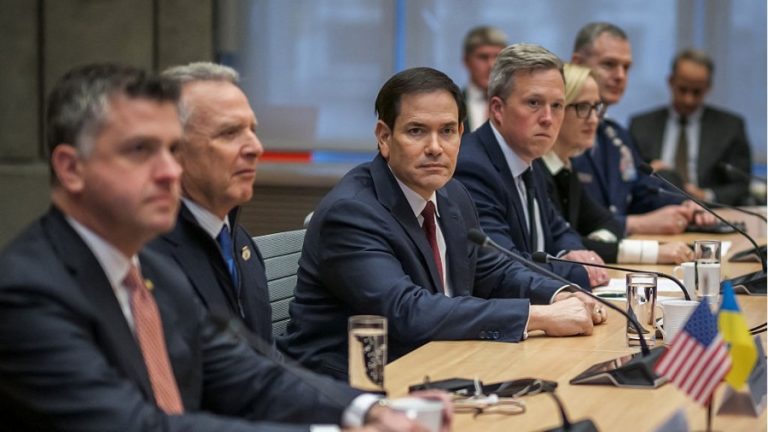
Washington’s strategy has clearly shifted to a dual-track approach, combining diplomatic pressure and negotiations led by the State Department—through Rubio and special envoy Wycough—with parallel military-level security discussions directed by Driscoll.
Some U.S. media reported that Zelensky could visit the U.S. as soon as this week to resolve territorial disputes directly with Trump. Ukraine’s embassy, however, was cautious: “No current plans, but anything is possible.” Such a summit would be decisive for whether a peace deal can be signed.
A White House spokesperson said the revised plan “does meet Ukraine’s core strategic needs.” Ukraine, however, reacted more modestly, saying only that it would “continue working together.” This suggests a gap in how each side defines those “core needs.”
From Geneva to Abu Dhabi, the U.S. has shown an unusually high level of diplomatic activity, attempting to fast-track a resolution to the war. The coordinated efforts of Driscoll, Rubio, and Wycough—and the reduction of the peace plan from 28 points to 19—show Washington trying to balance interests and push for breakthroughs.
In the final days of November 2025, these developments mark one of the most intense periods of diplomatic activity since the war began. From drafting revisions on the shores of Lake Geneva to secret meetings in the deserts of Abu Dhabi, the U.S. is leveraging its diplomatic and military influence to drag both sides toward a potential endgame.