By Jing Chen
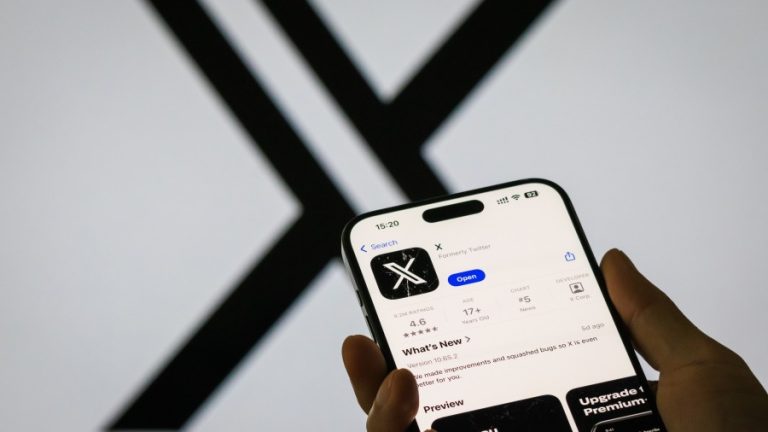
When X (formerly Twitter) quietly turned on a new feature showing each account’s IP-based location, it was billed as a simple trust-and-safety upgrade. But within hours, the Chinese-language internet was in upheaval.
The update appears on every profile under “About this account,” revealing where posts originate, whether a user is on a VPN, and whether the account may be masking its location. X’s product lead Nikita Bier said the goal was straightforward: reduce bots, fake personas, and state-sponsored manipulation by adding a layer of transparency.
What followed was something very different — a spectacular, real-time exposure of Beijing’s online propaganda machinery.
Because X is blocked in mainland China, ordinary users rely on VPNs that route traffic through the U.S., Hong Kong, or Europe. But as the update rolled out globally in mid-November, accounts claiming to be “overseas Chinese,” “Taiwanese,” “Japanese,” or even “Uyghur activists” suddenly displayed something else altogether:
Success
You are now signed up for our newsletter
Success
Check your email to complete sign up
“Account based in China.”
Some were also flagged for “possible VPN use.”
Others weren’t flagged at all — meaning they were connected through the rare, high-level privileged routes that bypass China’s Great Firewall.
Within hours, users across X began pulling up the profiles of well-known nationalism influencers and state-aligned commentators. What they found quickly turned into a spectacle.
Diplomats in the US, a wolf-warrior in France
Two faces of China’s “wolf-warrior diplomacy” — Foreign Ministry spokespeople Mao Ning and Lin Jian — showed IP locations in the United States and Hong Kong, contradicting their claims of speaking from Beijing.
The revelation that drew the loudest reactions, however, belonged to Hu Xijin, the former Global Times editor known for scolding Western media and lecturing foreign governments. X marked his account location as France.
The jokes erupted immediately:
“Is Hu Xijin enjoying a cappuccino on the Seine while warning others not to ‘climb the wall’?”
The update also exposed a network of accounts long suspected of impersonation: profiles posing as Taiwanese, Japanese, or members of ethnic minorities while pushing pro-Beijing narratives
Names like “夏一旦,” “阿凡提,” and “扎扎江” (Xia Yidan, Afanti, Zhazhajiang) appeared frequently in political threads — attacking democracies, praising Beijing, and repeating official talking points.
After the update, all showed the same tag:
“Account based in China.”
These accounts were believed to be operating on special direct-access channels reserved for state agencies, major tech companies, or security units. Outside media have also reported the existence of “inmate accounts” — troll operations staffed by prison labor.
A coordinated machine, suddenly visible
As users kept cross-checking accounts, patterns became impossible to ignore. The same clusters of profiles posted at the same hours, pushed the same slogans, and rarely if ever encountered China’s firewall restrictions. Some posted hundreds of times a day in synchronized waves.
Researchers, including users like @hrichina, listed dozens of these accounts in long threads summarizing their behavior. The conclusion many drew from the evidence presented was that these were not individual voices but part of Beijing’s organized influence architecture — spanning from propaganda units to security services.
The effect was immediate.
In Chinese-language threads on X, the flood of “Little Pink” nationalist posts virtually disappeared. Overnight, conversations about Hong Kong, Xinjiang, Taiwan, democracy movements, and Beijing’s global influence campaigns became noticeably clearer.
Taiwanese users commented that the platform felt “quiet for the first time in years.”
Many pro-Beijing accounts deleted old posts or went silent altogether. Some migrated to Discord or Telegram, but their reach was sharply reduced; X remains the primary arena for global Chinese discourse.
The embarrassment for Beijing was substantial. It exposed the contradiction between banning citizens from accessing X while simultaneously enabling state-run troll teams to operate freely, unblocked, and often unmasked.
The impact wasn’t limited to Beijing. X’s new tool also revealed networks linked to other governments, including accounts apparently associated with India’s RAW in Pakistan-related discussions, as well as troll clusters from Russia and Iran.
Still, it was the Chinese-language sphere that experienced the biggest systemic shift.
For years, discussions about sensitive topics were drowned out by inauthentic voices. Now, real users — activists, researchers, diaspora communities — found their words rising back to the surface.
Musk calls transparency ‘a weapon against fake news’
Elon Musk endorsed the update personally, describing it as part of a broader effort to counter misinformation. While users may still choose to hide their locations, X clearly marks such profiles as “location hidden,” which many consider even more suspicious.
The update has made many previously anonymous pro-CCP accounts visible, dramatically reducing their activity on the platform.
The update has also made years of CCP influence-building — spanning COVID disinformation, Taiwan narratives, and “wolf warrior” messaging — suddenly vulnerable. Once IP visibility entered the picture, carefully constructed propaganda strategies became transparent in seconds.
In effect, Musk’s transparency update pulled a section of the Great Firewall down from the outside. Chinese-state troll networks — long propped up by privileged access, layered disguises, and coordinated messaging — suddenly found themselves exposed.
What had been a battlefield shrouded in noise and anonymity became, overnight, a far more level space for genuine voices.
For 2025’s online environment, this represents a profound shift — and a reminder that, eventually, the truth has a way of surfacing.