Normally, Tokyo’s policy statements barely register on China’s internet. But when Japanese officials repeated the now-familiar line — “a Taiwan contingency is a Japan contigency” — Beijing’s anger was predictable. The real surprise came moments later. Before China could retaliate, Japan made the first move, quietly pulling all its photoresist operations out of the mainland.
What followed was not a single dramatic announcement but a series of quiet disclosures from industry sources, expert comments and market shifts. The feeling grew that something fundamental had changed. This is less a clean geopolitical confrontation and more a slow-draining reservoir: each bucket removed exposes how much China still depends on Japanese materials it simply cannot replace.
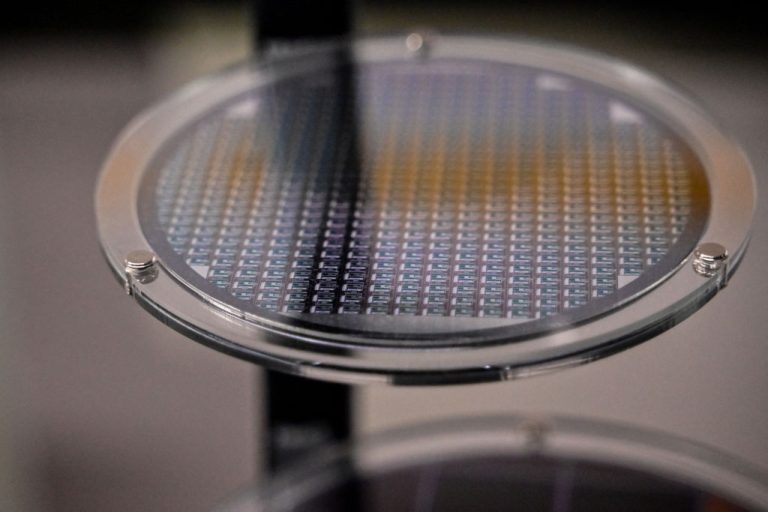
For years, Chinese engineers and policymakers have known the numbers by heart: Japan controls more than 90 percent of the global market for high-end photoresist, or the light-sensitive material essential for etching circuits into chips.
It also dominates over 95 percent of the EUV-grade materials needed for the most advanced 7 nm and smaller chips. Specifically within China, more than 90 percent of the necessary KrF and ArF photoresists come from Japan.
Japanese commentators often warned that a full photoresist cutoff would leave China with “no rice to cook with.” The metaphor works because it captures a simple truth: without these materials, the world’s most advanced fabrication plants (fabs) cannot function. Even China’s flagship manufacturers like SMIC and Hua Hong,would struggle to keep their machines running.
Success
You are now signed up for our newsletter
Success
Check your email to complete sign up
The issue wasn’t just photoresist. China has more than 1,200 EUV lithography machines, but roughly 90 percent rely entirely on after-sales service from Canon and Nikon. In November 2025, both companies tightened their service availability. Simultaneously, Japan began reviewing each export of spare parts on a case-by-case basis. Industry insiders in China quickly calculated the impact: current inventories might last three to six months.
Export controls cut deep into China’s supply
The timing of Tokyo’s moves was striking. By October 2025, punitive tariffs of up to 25 percent were already hitting 19 categories of semiconductor materials. Then, in November, exports from Shin-Etsu Chemical to China dropped 42 percent month-on-month. Soon after, Canon, Mitsubishi Chemical, and other Japanese firms withdrew local service teams and halted all maintenance work.
The unspoken message was that Japan had the leverage and now the willingness to tighten control over the most vulnerable part of China’s semiconductor supply chain.
Experts note that Japan’s leverage extends beyond cutting edge materials. It also dominates DUV (deep ultraviolet) lithography, the workhorse technology behind everyday chips: 90 nm, 40 nm, and 28 nm chips used in smartphones, cars, home appliances, and base stations. If EUV is about staying competitive at the bleeding edge, DUV is about keeping a modern economy running.
That is why analysts warn that a sustained Japanese cutoff could ripple far beyond high-end fabrication lines. Basic automotive controllers, household electronics, power management chips — technologies considered “low political risk” — could all feel the impact.
Billions spent, but the gap remains
Beijing has poured more than 300 billion RMB into its two “Big Fund” phases. For a decade, the slogan has been consistent: break the foreign choke points, build domestic independence. Yet the metrics have barely shifted.
A 2025 report by the Center for Security and Emerging Technology found that ASML holds 79 percent of China’s lithography-machine market. Japanese firms control another 17 percent. Domestic manufacturers, primarily Shanghai Micro Electronics Equipment (SMEE),control just 4 percent, limited only to low-end i-line tools.
The report showed little progress in key areas like polishing systems, film deposition, etching, and cleaning tools. Separate data from TechInsights revealed that in 2024, China bought $41 billion worth of semiconductor equipment, or 40 percent of global sales, while domestic tools accounted for a mere 11.3 percent.
Inside China, even those sympathetic to the government admit the core problem: chipmaking is not something one can build simply by copying. A lithography system is an integrated nanometer-scale ecosystem. Reverse-engineering one piece means nothing if the rest of the machine — hundreds of thousands of components — cannot meet the same precision.
Japan’s latest export controls came at a moment when relations between Beijing and Tokyo were quickly deteriorating.
Chinese Foreign Minister Wang Yi accused Japanese Prime Minister Sanae Takaichi of “crossing red lines.” Beijing issued a travel advisory urging citizens to avoid Japan. Airlines offered free cancellations. Online posts claimed that nearly 491,000 tickets to Japan had been voided.
But while Chinese state media amplified these warnings, Japan’s airports told a different story.
On Nov. 15, the Asahi Shimbun reported that flights from Shanghai to Japan remained packed. Travelers told reporters they had seen the advisory but had no intention of changing their plans. Some described Japan as “especially safe.” Others said they simply preferred to ignore the politics.
The irony grew sharper.as tourist patterns shifted. With fewer Chinese visitors, Taiwanese tourists suddenly became more visible. Demand for Japan-bound flights from Taiwan spiked, with some routes fully booked for weeks. Local businesses, noticing the shift, expressed open appreciation for Taiwanese travelers—“polite,” “patient,” “supportive.” Regional governments increased outreach to Taiwan, offering traditional-Chinese signage and Taiwan-only events.
In a hard-to-miss twist, Beijing’s attempt to apply pressure had instead nudged Tokyo and Taipei closer together.
Japan’s exit creates a generational gap in China’s chipmaking ambitions
The semiconductor story did not fade amid the tourism debate—it only sharpened. What Japan removed was not a minor component of China’s chipmaking ecosystem, but a critical hinge holding the entire system together.
Even Chinese analysts recognize the structural reality: replacing photoresist is not a three-year or five-year task. It is a generational challenge, requiring a level of basic scientific infrastructure that China has not yet built.
And this time, the setback did not come from Washington, but from Tokyo—a country whose cooperation China has relied on far more than it admits.
Beijing may continue issuing warnings, reigniting nationalist rhetoric, or urging citizens to stay home. But none of that changes the material reality underlying its semiconductor ambitions: a single shutdown in Japan can stall dozens of fabrication lines across China.
For a country investing hundreds of billions to close a technological gap, the message is sobering—and unmistakable.