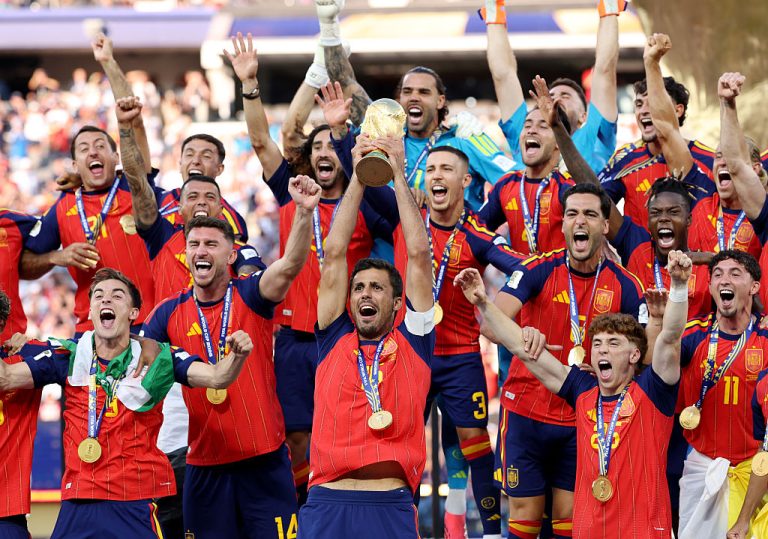
The 2026 FIFA World Cup concluded on July 19 at MetLife Stadium in New Jersey. Ferran Torres scored the decisive goal in the 106th minute of extra time as Spain defeated defending champion Argentina 1–0, lifting the World Cup trophy for the first time in 16 years and claiming the second title in the country’s history.
For 39-year-old Lionel Messi, the defeat meant he was unable to lead Argentina to back-to-back World Cup titles. Brazil’s record of winning consecutive tournaments in 1958 and 1962 therefore remains unmatched.
Spain controls the match as Messi is tightly contained
Yahoo Sports said the final unfolded almost entirely according to Spain’s preferred rhythm.
From the opening whistle, Spain controlled the match through precise passing, possession, and high pressing, making it difficult for Argentina to mount an effective attack. Eighteen-year-old Lamine Yamal repeatedly created danger on the right flank, while midfielders including Pedri and Rodri dictated the tempo.
Although Messi frequently dropped into midfield and deeper positions to help organize attacks, he was consistently surrounded by Spanish defenders and rarely found an opportunity to face the goal. The BBC said Spain used nearly “textbook” collective defending to minimize Messi’s influence on the match.
Success
You are now signed up for our newsletter
Success
Check your email to complete sign up
Statistics showed that Argentina did not register its first shot until the closing stages of extra time, with its attack almost completely neutralized.
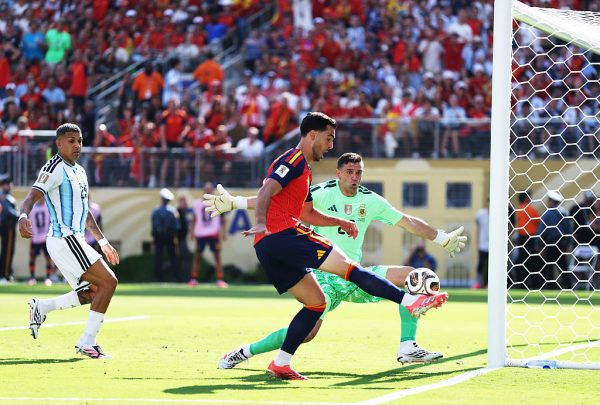
Martínez keeps Argentina alive for 120 minutes
Facing wave after wave of Spanish attacks, Argentina goalkeeper Emiliano Martínez emerged as the team’s strongest defensive barrier.
During the match, he repeatedly denied shots from Yamal, Mikel Oyarzabal, Pedri, and others. His series of crucial saves throughout the first and second halves kept the score at 0–0 for much of the contest.
ESPN said Argentina likely would have conceded within the opening 90 minutes had it not been for Martínez’s outstanding goalkeeping.
Argentina, however, suffered a major setback near the end of regulation time. Enzo Fernández received a second yellow card for a forceful foul and was sent off, forcing the defending champions to play the entirety of extra time with 10 men.
Torres strikes in the 106th minute to secure the title
Spain finally broke the deadlock in extra time after gaining the numerical advantage.
In the 106th minute, Nico Williams headed the ball across the face of goal, where substitute Ferran Torres arrived at the right moment to turn it into the net. The match’s only goal sparked wild celebrations among the more than 80,000 fans inside the stadium.
Torres later appeared to score again, but the goal was disallowed for offside.
Argentina pushed forward in numbers during the closing minutes. Messi repeatedly dropped back to organize the attack and delivered a key pass that helped Giuliano Simeone create the team’s most dangerous opportunity, but Argentina was unable to beat Spain goalkeeper Unai Simón.
When the final whistle sounded, Spain’s players rushed onto the field in celebration, while Messi watched calmly as his opponents lifted the trophy, bringing Argentina’s title defense to an end.
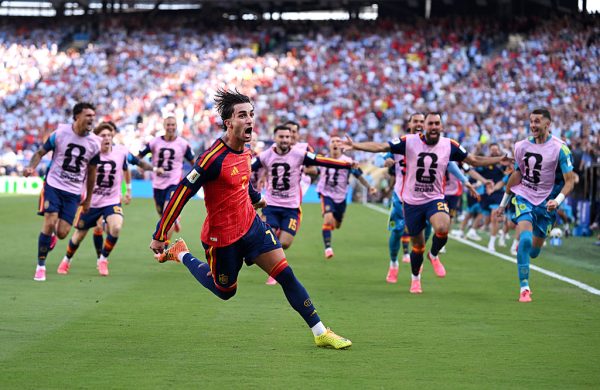
Spain earns its second star and begins a new era
The victory marked Spain’s first World Cup title since the 2010 tournament in South Africa and represented the culmination of the national team’s ongoing generational transition.
The Associated Press reported that young players such as Yamal, Pau Cubarsí, and Nico Williams have developed into world-class stars, while experienced figures including Rodri and Unai Simón provide stability through the center of the team. Spain is widely seen as having the potential to continue dominating international football.
Spain conceded only one goal throughout the tournament and eliminated leading teams including France and Argentina on its way to the championship, demonstrating its strength in both attack and defense.
The BBC said the final was not merely a championship victory, but also marked the official beginning of a new era for Spanish football.