By Yu Gui, Janet Huang
In the global effort to tackle climate change, many climate activists loudly call for “saving the planet.” However, behind these slogans often lie risks to economic security, national sovereignty, and even basic survival rights. The following provides a concise analysis of these issues from three interrelated perspectives and offers strategies to help readers better understand them.
Wealth Transfer Under the Green Banner
Structural asymmetry of the Paris Agreement
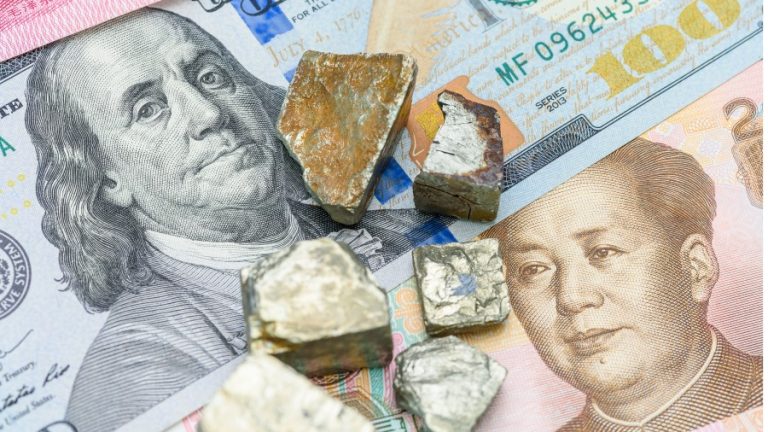
The Paris Agreement (2015) is hailed as a milestone in global climate governance, but its framework creates a one-way flow of capital from developed countries to major carbon emitters like China. Wealthy nations such as the United States pledged around $100 billion annually in climate financing to developing countries. Yet China, now the world’s largest carbon emitter, is still classified as a “developing country” and will not face binding emission limits until after 2030.
According to the Heritage Foundation, this asymmetry could cost the U.S. up to $2.5 trillion in GDP over the next 20 years, while the global emission reduction benefits remain relatively limited.
- On the surface: The Paris Agreement (2015) is celebrated as a landmark in global climate governance.
- In practice: Developed countries commit about $100 billion per year in climate financing to developing nations.
- The issue: China, the world’s largest carbon emitter, is still treated as a developing country and will only face binding limits after 2030.
- Consequence: Wealthy nations like the U.S. may lose trillions in capital outflows over 20 years, with limited global emission reduction benefits.
Hidden flows in the carbon credit market
Article 6 of the Paris Agreement allows for international carbon offset trading, which is expected to create a $100 billion market by 2030. China plays a dual role in this market as both a credit producer and a major buyer. Companies supported by Beijing generate carbon credits through reforestation projects in regions like Inner Mongolia and sell them to Western firms, effectively channeling funds into China’s fiscal coffers. This system also benefits China’s photovoltaic and electric vehicle exporters, which account for 80 percent of the global green technology supply chain.
- Mechanism: Article 6 of the Paris Agreement permits international carbon offset trading, projected to reach $100 billion by 2030.
- China’s role: Both a producer and buyer of carbon credits. Reforestation projects generate credits sold to Western companies, funneling money into Chinese government finances.
- Environmental cost: Large-scale production of solar panels and wind turbines involves heavy metal mining, silica dust, wastewater discharge, and non-recyclable wind blades, undermining the credibility of the “green” label.
Success
You are now signed up for our newsletter
Success
Check your email to complete sign up
Under the ESG (Environmental, Social, Governance) framework, Western pension funds and asset management institutions have channeled trillions of dollars into Chinese state-owned enterprises. Some of these funds even indirectly support companies linked to forced labor camps associated with the persecution of Falun Gong and Uyghurs, or highly polluting coal projects. Meanwhile, domestic fossil fuel industries in the West are being constrained, causing economic hardship for workers and worsening energy poverty — in some parts of Europe, household electricity prices have surged nearly 50 percent.
These capital flows not only weaken the competitiveness of Western industries but also provide a “green” cover for China’s surveillance technologies and military-industrial development.
‘Community of shared future for mankind’
Xi Jinping’s vision for global governance
- Concept: The “Community of Shared Future for Mankind,” written into China’s constitution in 2018, aims to establish a Beijing-centered global governance order.
- Method: Through the Belt and Road Initiative, China has invested roughly $1 trillion in infrastructure across about 150 countries, often accompanied by high levels of debt.
- Climate Framing: China promotes “ecological civilization” as a slogan while benefiting from flexible emission targets under the Paris Agreement and even exporting coal-fired power projects abroad.
Western climate left ‘fellow travelers’
- Phenomenon: Some Western climate activists, while criticizing “corporate greed” and “Western hegemony,” inadvertently lend rhetorical support to China’s climate agenda.
- Collaboration: Certain European environmental organizations cooperate with Belt and Road green projects, promoting China’s solar and wind technologies.
- Risk: This ideological alignment may allow Beijing to justify resource extraction and surveillance under the guise of climate action, weakening Western economic independence and democratic oversight.
Potential erosion of democracy and sovereignty
- Warning: If Western countries sacrifice domestic economies and democratic oversight in pursuit of utopian collectivism, they risk repeating the mistakes of communist authoritarianism.
- Conclusion: Climate issues should not be used as tools to undermine national sovereignty or human rights.
The shadow of geoengineering
Geoengineering and chemtrails were once dismissed as nonexistent “conspiracy theories.” However, the U.S. Environmental Protection Agency (EPA) began publicly disclosing information on this topic in July, bringing it into academic and policy discussions.
Controversy over solar radiation management (SRM)
- Concept: SRM is a form of “artificial cooling” technology, similar to chemtrails, that sprays tiny sulfate particles into the atmosphere to reflect sunlight back into space, temporarily cooling the Earth.
- Risk: The United Nations Environment Programme (UNEP) warns that if large-scale SRM projects are suddenly halted, it could trigger a “termination shock,” causing dramatic global climate fluctuations.
- Ethics: Ethical review of SRM remains limited, and research is still ongoing.
Experimental cases and regulatory gaps
- SCoPEx (Harvard University): Planned to release sulfate particles over Sweden, but the project was suspended in 2024 due to public health concerns.
- U.S. Legislation: States like Florida and Tennessee have banned unauthorized SRM experiments because particles such as aluminum and barium could cause respiratory diseases.
- International Law Perspective: The International Environmental Law Center classifies SRM as potentially infringing on the rights to life, health, and self-determination, and in severe cases, it could constitute crimes against humanity.
Potential humanitarian and geopolitical consequences
- Uneven Cooling: If SRM’s cooling effect is uneven, particularly near the equator, it could reduce crop yields, putting billions at risk of famine.
- Weaponization of Technology: If a single country or organization secretly deploys SRM, it could forcibly alter other nations’ climates, causing crop losses and extreme weather. SRM could thus be perceived as a climate weapon, potentially triggering conflicts.
These audacious SRM projects recall Mao Zedong’s communist-era slogan: “The bolder the man, the greater the harvest,” which fueled China’s Great Leap Forward. From 1959 to 1961, approximately 45 million people died of famine (according to internal CCP statistics). Mao’s belief in “fighting the heavens, the earth, and mankind” drove efforts to transform nature, resulting in disastrous projects like the Sanmenxia Dam, which caused upstream sedimentation and flooding, submerged 660 square kilometers of fertile land, forced massive population relocations, and created lasting environmental and social problems.
Reasonable skepticism toward climate data and policies
- Academic Suppression: Scholars who challenge mainstream climate views on high-stakes issues often face funding cuts, publication barriers, and other pressures.
- Necessity: Scientific integrity demands listening to and fairly evaluating differing perspectives, preventing the mainstream climate consensus from becoming dogma.
Ethical baseline for human well-being
- Fundamental Rights: No climate policy should infringe on human rights, such as enforcing restrictive diets or excessively limiting agricultural activities.
- Prudent Approach: Extreme measures — including insect-based foods, lab-grown meat, or restrictions on cattle farming — should be approached with caution to protect basic living rights.
A call to look beyond the green veil
The intertwining of economic exploitation, ideological convergence, experimental technologies, data opacity, and ethical risks outlines the potential harm behind the guise of climate salvation.
History shows that grandiose slogans of leftist catastrophists often diverge from reality. For example, Marx claimed his communist theory served “the vast majority,” yet under Marx’s guidance, the Paris Commune destroyed much of France’s cultural heritage. According to The Black Book of Communism, 20th-century communism caused at least 94 million unnatural deaths worldwide, not counting China’s family planning policies, which resulted in over 400 million fetal and infant deaths.
Pew surveys indicate that 56% of U.S. Republican voters view climate policies as economically destructive, and some Democratic voters also see them as exacerbating social inequality.
To truly mitigate the risks of climate actions and ensure policies serve all of humanity, the following steps are necessary:
- Transparency and Accountability: Stop transferring wealth to authoritarian regimes, disclose ESG investment criteria, and ensure climate policies do not undermine basic living rights.
- Respect for Human Rights and Nature: Learn from history and prohibit geoengineering experiments without public consultation and evaluation.
- Technological Prudence: Prioritize energy technologies with higher efficiency and lower pollution while maintaining economic stability.
- Sovereignty and Self-Determination: Prevent a single group or institution from dominating the global climate agenda.
- Protect Academic Freedom: Provide fair funding and publication opportunities for researchers with differing perspectives.
Only by removing the “green veil” and adhering to principles of transparency, ethics, and human rights can climate action genuinely benefit all of humanity.