By Yang Tianzi, Vision Times
Right after U.S. and Ukrainian officials concluded important talks in Florida, President Trump’s special envoy, Steve Witkoff, is set to depart for Moscow. After nearly three years of war, the Russia-Ukraine conflict appears to be entering its most decisive turning point yet. On Dec. 1, EU High Representative for Foreign Affairs and Security Policy Kaja Kallas publicly stated that this week would be a “critical moment” for pushing toward an end to the war. Diplomatic shuttle efforts spanning Washington, Kyiv, Brussels, and Moscow have now concentrated global attention on the upcoming negotiations.
Florida meeting: Tough but productive
The diplomatic drama began in Florida. On Nov. 30, U.S. Secretary of State Marco Rubio, special envoy Steve Witkoff, and Trump’s son-in-law Jared Kushner held a four-hour marathon closed-door meeting with Ukraine’s negotiation team.
Afterward, Rubio described the talks as “difficult but productive,” admitting it was an extremely complex negotiation with much work still ahead. Senior U.S. officials said the meeting touched on highly sensitive core issues, including a possible timeline for new Ukrainian elections and the controversial idea of “territorial exchange.” But major questions remain unresolved—such as what concrete security guarantees the U.S. and Europe can offer Ukraine, and how to respond to Russia’s demand for international recognition of the territories it has occupied.
Another senior U.S. official confirmed that the talks covered extremely sensitive topics including a timeline for new Ukrainian elections and potential Russia-Ukraine territorial swaps. However, the two most critical issues—Western security guarantees and Russia’s demand for recognition of its occupied territories—remain unsettled.
Success
You are now signed up for our newsletter
Success
Check your email to complete sign up
Trump expressed optimism on social media, claiming the chance of a Russia-Ukraine agreement was “very high” and hinting that “good things are happening.” Whether this optimism leads to real breakthroughs remains to be seen.
EU’s stance: This week is decisive for ending the Ukraine war
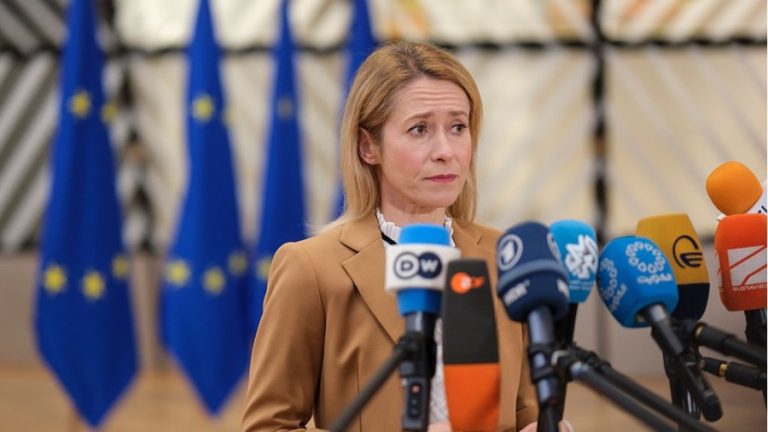
Unlike the U.S., which is pushing for rapid agreement, the EU is taking a firmer principled stance. Kallas emphasized at a Dec. 1 EU defense ministers’ meeting that this week could be a “key week diplomatically,” noting she would meet with Ukraine’s defense and foreign ministers for further details.
The EU’s position rests on several core principles:
- Firm opposition to any agreement that changes Ukraine’s internationally recognized borders. Commission President Ursula von der Leyen has said the EU does not support using force to alter borders.
- Russia must be held accountable for war crimes. The EU’s justice commissioner warned the U.S. that Putin must not be allowed to escape responsibility.
- Continued support for Ukraine. Several EU states are drawing up plans for multinational troop deployments in Ukraine after the war as part of a security guarantee. But divisions remain, with Slovakia and Hungary favoring negotiations to end the war and skeptical of long-term military aid.
Moscow’s bargaining table: A revised peace plan
Witkoff’s Moscow visit is expected to bring a revised peace framework. The initial 28-point U.S. proposal was criticized as forcing Ukraine into excessive concessions, such as withdrawing from Donetsk and abandoning ambitions of joining NATO, and was mocked as a “Kremlin wish list.”
After the Florida meeting, the proposal was trimmed to about 20 points. The new version attempts to address some Russian security concerns while preserving Ukraine’s sovereignty red lines. Trump has expressed optimism, hinting online that “good things are happening.”
Yet the core obstacles remain enormous. Russia’s stance is hardline: it demands full withdrawal of Ukrainian forces from occupied areas and wants international recognition of its control over those regions. This is fundamentally incompatible with Ukraine’s and the EU’s bottom lines.
Witkoff’s Moscow mission
Witkoff — Trump’s longtime friend and a fellow real estate magnate — has drawn scrutiny. Leaked audio revealed he once spoke with Russian officials and praised Putin, leading critics to label him “pro-Russia.” Putin has called his conduct normal diplomatic practice.
In Moscow, Witkoff will meet Putin and his top aides directly. His job is not only to deliver Trump’s position but also to probe the Kremlin’s real red lines on territory and ceasefire terms. The success or failure of this mission will determine whether this week truly becomes a historic turning point in the war.
As Witkoff’s plane heads to Moscow, the Russia-Ukraine war enters its final stage of high-stakes bargaining. This week matters because it brings together U.S. urgency, Ukrainian desperation, Russian assertiveness, and EU resolve.
If breakthroughs emerge, Europe’s largest military conflict since World War II could finally move toward an end. But if any agreement is built on excessive concessions to an aggressor, this “critical moment” could instead further jeopaprdize Europe’s security.
Russia’s strategic calculus and Ukraine’s dilemma
Russia’s attitude toward peace talks remains cautious and calculating. The Kremlin says the new U.S. proposal can serve as a basis for discussion but insists there will be no compromise on key issues. Russia’s core demands include:
- Ukraine pledging not to join NATO,
- international recognition of Russian sovereignty over occupied territories,
- and full withdrawal of Ukrainian forces from those areas.
For Ukraine, the negotiations present painful choices. Continued war means heavy casualties and economic strain; but accepting territorial concessions would betray the sacrifices of countless soldiers and civilians. President Zelensky said the coming days are “very important,” but stressed Ukraine will not accept any agreement that harms its sovereignty or territorial integrity.
Despite the challenges, progress in peace talks is still welcome. After nearly three years of devastating conflict, all sides have paid a high price. Witkoff’s trip to Moscow suggests that the war has shifted from pure military confrontation to a new phase of “fighting while negotiating.”