By Li Jingyao, Vision Times
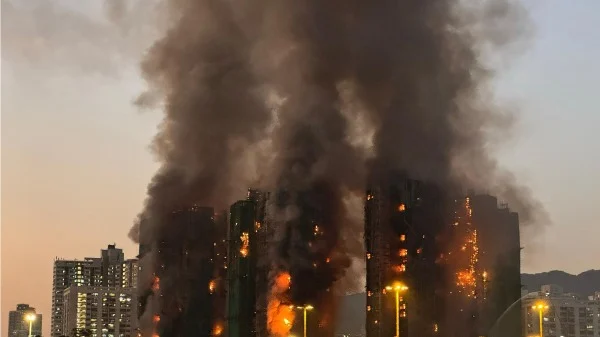
With Hong Kong’s Legislative Council election slated for Dec. 7, the city is reeling from the catastrophic fires at Wang Fuk Court — a tragedy that broke out on Nov. 26 and has since plunged the upcoming election into uncertainty as Hong Kongers focus their attention on search and recovery efforts. With the death toll now rising to 159, scrutiny over safety failures and the massive renovation project has intensified, dealing a severe blow to the pro-establishment camp ahead of the vote.
The pro-Beijing Democratic Alliance for the Betterment and Progress of Hong Kong (DAB) is now facing intense criticism after one of its district councilors, who previously advised the estate’s owners’ corporation during major renovation works, became the focus of widespread online outrage.
DAB has issued a statement distancing itself from the scandal, promising: “If it is confirmed that any member has committed illegal acts, we will never tolerate it.”
RELATED: Was Hong Kong’s Inferno Tied to Scandal-Plagued ‘PCR Queen’ Zhang Shanshan?
A fire that shattered what little trust was left
Success
You are now signed up for our newsletter
Success
Check your email to complete sign up
On Nov. 26, Wang Fuk Court was engulfed in a severe blaze that claimed 159 lives, with 31 residents still missing. The unprecedented scale of the tragedy has shocked Hong Kong and shifted public anger toward the estate’s controversial maintenance project and the individuals responsible for approving it.
Before the fire, Wang Fuk Court had been undergoing a massive renovation plan totaling HK$330 million, requiring each household to pay HK$160,000 to HK$180,000. Residents have long questioned the “sky-high maintenance project” approved by the owners’ corporation and its advisers. Many now argue that the renovation works were not only unnecessary but may have directly contributed to the spread or severity of the fire.
RELATED: Wang Fuk Court Fire Draws Public Anger From Hong Kong and Across China
Some residents have also raised concerns about potential tender-rigging, demanding accountability from the owners’ corporation and political figures who championed the repair initiative.
Pro-Beijing DAB faces crisis as election nears
The DAB, Hong Kong’s largest pro-establishment political party, has come under mounting scrutiny after one of its district councilors — who previously acted as an adviser to the Wang Fuk Court owners’ corporation — was accused of “shielding” the controversial repair plan.
In response, the DAB issued a public statement asserting:
- The party “never participated in Wang Fuk Court’s tendering or construction matters.”
- If investigations confirm wrongdoing, the party “will never tolerate it.”
- The public should refrain from making “unsubstantiated accusations” until official findings are released.
The party’s chairperson later posted a video warning that the DAB had been subjected to “organized slander and smearing,” describing the current election environment as “very severe.” She urged supporters to ensure that “not a single vote is missing” on election day.
Despite these appeals, public trust appears shaken. Analysts expect particularly steep challenges for pro-establishment candidates in geographical constituencies, where voter sentiment tends to be most responsive to public anger.
Fear of record-low turnout
Hong Kong authorities had hoped to boost turnout by expanding special polling stations for healthcare workers, civil servants, ethnic minorities, and elderly-care facilities, and extending voting hours to 11:30 p.m. to allow for those working later shifts to make it in time to the voting booths.
But following the Wang Fuk Court disaster, campaign events have been suspended or scaled back, and political engagement has plunged. Many observers now believe turnout may fall below the already-record low 30.2 percent seen in the 2021 election.
A repeat of such low participation would once again raise questions about the representativeness and legitimacy of the Legislative Council.
Beyond politics: A city left traumatized
The fire’s aftermath extends far beyond electoral calculations. Victims’ families are experiencing immeasurable suffering, and Hong Kong society is demanding accountability at multiple levels—government oversight, corporate governance within owners’ corporations, and the integrity of political parties that supported the renovation plan.
These questions are set to dominate public discourse long after election day. Currently, Hong Kong’s Legislative Council’s 90 seats are allocated as follows:
- 40 seats elected by the Election Committee
- 30 seats elected by functional constituencies
- 20 seats chosen through direct elections in geographical constituencies
In the 2021 election, no pan-democratic candidates ran; direct-election turnout collapsed to 30.2 percent, the lowest in history. Even if candidates attempted to run, maintaining their original political stances would likely have disqualified them for not meeting the “patriots governing Hong Kong” requirement.
In the coming days, all eyes will be on whether the election can proceed smoothly, voter turnout recovers or collapses, authorities can restore trust amid public anger, and whether any investigators can substantiate the allegations surrounding the city’s renovation project.
The Wang Fuk Court tragedy has become more than a deadly fire; it is now a pivotal moment exposing fractures in Hong Kong’s governance, its political system, and public faith in those seeking to lead it.