By Jian Yi
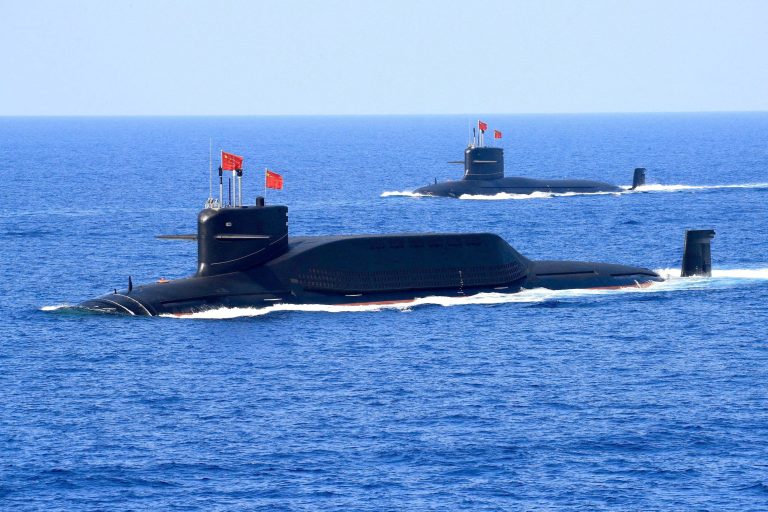
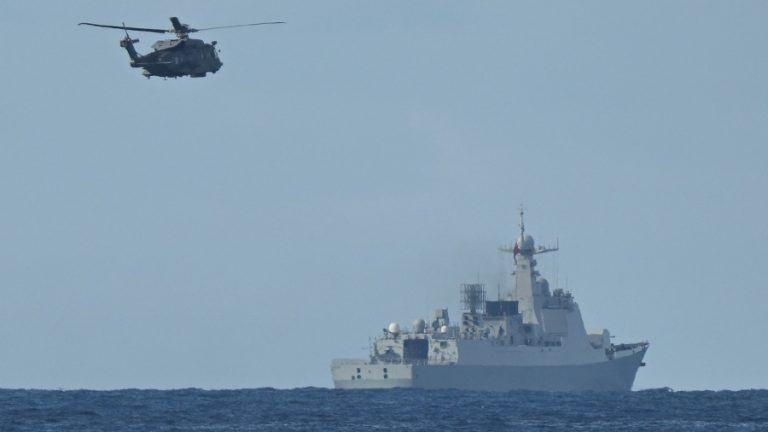
More than one hundred Chinese naval and coast guard vessels appeared across East Asian waters in recent days, a deployment so abrupt and so large that it reignited fears of a looming conflict. On Chinese and Taiwanese social media, a single question began resurfacing in a chorus of unease: Is Beijing actually preparing to attack Taiwan?
Intelligence assessments circulating among several governments suggest that parts of the fleet conducted simulated strikes on foreign vessels and rehearsed operations meant to prevent outside forces from coming to Taiwan’s aid in the event of war.
Reuters, citing one such assessment, reported that the number of vessels surpassed one hundred earlier in the week before dropping to around ninety by Thursday. What unsettled analysts was not necessarily an increased presence immediately adjacent to Taiwan, but the unprecedented scale and timing.
The deployment began in mid-November with no prior signaling. To regional observers, it appeared less like routine training than a deliberate attempt to probe the reactions of Washington, Tokyo, Canberra, and Manila.
Success
You are now signed up for our newsletter
Success
Check your email to complete sign up
Taiwan’s national security chief, Tsai Ming-yen, confirmed on Dec. 3 that four Chinese naval formations were operating in the western Pacific. He offered no additional details but said Taiwan “rules out no possibilities.”
A rising crisis inside the PLA leadership
The buildup at sea comes as Beijing pushes forward with an internal purge of its military—one that has already removed several senior generals with direct responsibility for Taiwan-related operations. The sudden downfall of Central Military Commission vice chairman He Weidong and Eastern Theater Command chief Lin Xiangyang stunned defense analysts, prompting questions about whether the People’s Liberation Army (PLA) is capable of waging a major conflict under such conditions.
The unease stems not just from the shake-up itself but from a historic echo. Another authoritarian regime attempted to fight a war after gutting its own military leadership: Stalin’s Soviet Union in the late 1930s. The results were catastrophic.
This parallel does not lie in geopolitical circumstances but in the political reflex shared by authoritarian systems—purging internal rivals even when such actions cripple the very institution presumed to safeguard national power.
Stalin’s reaction in the early days of his military collapse was telling. According to accounts later cited by Nikita Khrushchev, he reportedly confessed in despair: “Everything Lenin built—we have lost forever.”
David M. Glantz, a leading historian of the Soviet–German War, examines this moment in Stumbling Colossus, his study of the Red Army on the eve of World War II.
A chilling echo from Soviet history
Drawing heavily on Soviet archives, Glantz recounts how, on June 11, 1937, the Soviet press announced the arrest of eight high-ranking Red Army officers accused of espionage. By nightfall, state radio declared they had confessed and were sentenced to death.
America’s military attaché in Moscow, Philip R. Faymonville, wrote in a dispatch that the purge signaled a crisis inside the Red Army more severe than anything it had experienced since the October Revolution.
Over the next several years, the purge widened dramatically. Nearly every major branch of the Soviet military lost its leadership. Chiefs of training, air defense, intelligence, artillery, communications, mobilization, education, and medical departments were removed. Ninety percent of deputy commanders in all military districts were gone. Eighty percent of division commanders disappeared. Ninety-one percent of regimental leadership was purged.
Three of the Red Army’s five marshals were executed or imprisoned. All sixteen army commanders were removed. Of sixty-seven corps-level commanders, sixty were purged.
The consequences of this political terror were unmistakable. In his “secret speech,” Khrushchev described how ordinary soldiers and youth league members had grown accustomed to denouncing their own commanders as “hidden enemies.” Command cohesion dissolved. Suspicion replaced trust.
Beijing’s ongoing purge—framed officially as a “self-revolution”—has raised concerns of a similar internal degradation. Several of the PLA’s most experienced commanders for Taiwan operations have vanished from public view or been dismissed outright.
Germany noticed the Red Army’s collapse long before the rest of the world did.
How the Winter War exposed fatal weaknesses
The Soviet military’s weaknesses became unmistakable in the Winter War against Finland, which began in late 1939. The Red Army mobilized an enormous force: hundreds of thousands of troops, thousands of tanks and artillery pieces, and a large fleet of aircraft. At its height, more than a million Soviet soldiers were deployed.
Yet this overwhelming military machine failed to subdue Finland’s much smaller and poorly supplied forces.
Finnish troops, guided by commander-in-chief Carl Gustaf Emil Mannerheim, held their ground under brutal winter conditions. Many were exhausted, short of ammunition, and fighting on scant rations, yet they refused to surrender. Their resilience astonished Europe, but the deeper story was the Red Army’s dysfunction.
Stalin’s purge had hollowed out military leadership, crippled planning capabilities, and sown chaos throughout the chain of command. Training had eroded, morale had collapsed, and initiative had disappeared. The Winter War made these failures visible to the world—and to Germany in particular.
What Germany saw emboldened its next move.
Germany’s assault and Stalin’s unraveling confidence
On June 22, 1941, Hitler launched Operation Barbarossa, a massive and devastating invasion of the Soviet Union. German armored units swept across the Dnieper River, advanced along the Baltic coast toward Leningrad, drove deep into Ukraine, and approached Kyiv in a matter of weeks. Other formations pushed rapidly toward Moscow and Rostov.
Entire Soviet armies were encircled and destroyed. Hundreds of thousands of soldiers were killed or captured. Strategic reserves were exhausted before Stalin’s command structure could reassert control.
Despite repeated attempts to halt the German advance, Soviet countermeasures failed. Only in December 1941 did the Red Army begin to stabilize the front, and by then German troops stood at the gates of Leningrad, Rostov, and Moscow.
The psychological toll on Stalin was immense. According to Khrushchev, the Soviet leader—confronted with unprecedented defeat—believed that everything was lost. For nearly two weeks, he disappeared from public view, leaving Foreign Minister Vyacheslav Molotov to address the nation.
The myth of Stalin as an unshakable wartime leader disintegrated under the reality of his own purge.
What these lessons mean for Beijing today
This history has returned to the forefront as China navigates its own internal turmoil and pushes outward with aggressive military posturing. Would Beijing truly risk initiating a conflict with Taiwan under these circumstances?
The comparison is unavoidable.
When a regime destabilizes its own military leadership while simultaneously flirting with external conflict, history shows that disaster often follows.
Taiwan today is not Finland in 1939. It is not isolated. It is backed by the United States, Japan, and a coalition of democratic partners who have repeatedly signaled their commitment to regional stability and to Taiwan’s security.
Meanwhile, Beijing’s purge has removed some of its most experienced commanders—precisely those responsible for planning an invasion of Taiwan. The effect on the PLA’s cohesion and operational readiness is difficult to overstate.
History does not repeat itself literally, but its patterns are clear enough.
If the CCP were to launch a war in the midst of this internal instability, the outcome may already be foreshadowed—not by speculation, but by the precedent of another regime that believed itself invincible until the day it confronted the consequences of dismantling its own army.