By Fu Longshan
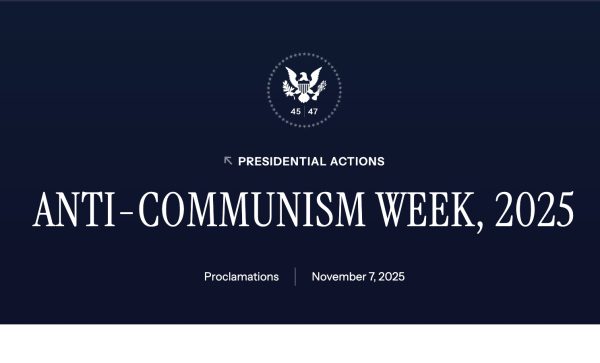
On Nov. 1, 2025, President Donald J. Trump signed a Presidential Proclamation establishing the first week of November as “Anti-Communism Week.”
The White House described the observance as a reckoning with “one of history’s most destructive ideologies” and a tribute to those who perished under communist rule—emphasizing the system’s assault on religious freedom, human rights, prosperity, and human dignity.
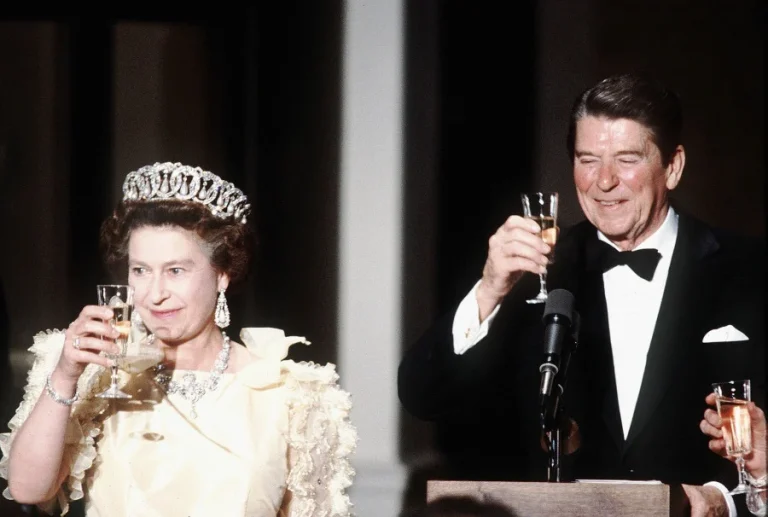
Yet the United States’ anti-communist tradition is not a short-term geopolitical tactic. It reflects nearly a century of moral and civilizational debate rooted in America’s founding belief in God. Both the Reagan era and the Trump era stand out as defining chapters in this long narrative.
Reagan transformed anti-communism into a moral verdict
Reagan’s language left no ambiguity: he defined communism not as a policy disagreement but as outright evil.
Success
You are now signed up for our newsletter
Success
Check your email to complete sign up
In his 1983 “Evil Empire” speech, he argued that “freedom is God-given, and communism seeks to take that freedom away.”
And in a 1982 address to the British Parliament, he declared: “Marxism-Leninism is destined for the ash heap of history.”
The message was not military in tone but moral. Reagan framed the struggle against communism as a defense of the divine rights of human beings.
Trump carries that moral line into the present
Trump’s proclamation mirrors Reagan’s Cold War framing while placing new emphasis on the suffering of victims. He cites the more than 100 million lives lost under communist regimes, describes communism as “another word for servitude,” and characterizes its history as one written “in blood and sorrow.”
The proclamation concludes with language unmistakably reminiscent of Reagan:
“We honor the victims of oppression by keeping their cause alive and by ensuring that communism and every system that denies the rights to life, liberty, and the pursuit of happiness will find their place, once and for all, on the ash heap of history.”
A shared clarity about freedom and tyranny
Both presidents articulate the same conviction: communism has no future, and history will deliver its judgment. Their stance reflects a deeper confrontation between freedom and totalitarianism—an understanding also supported by scholarship in the Chinese-speaking world.
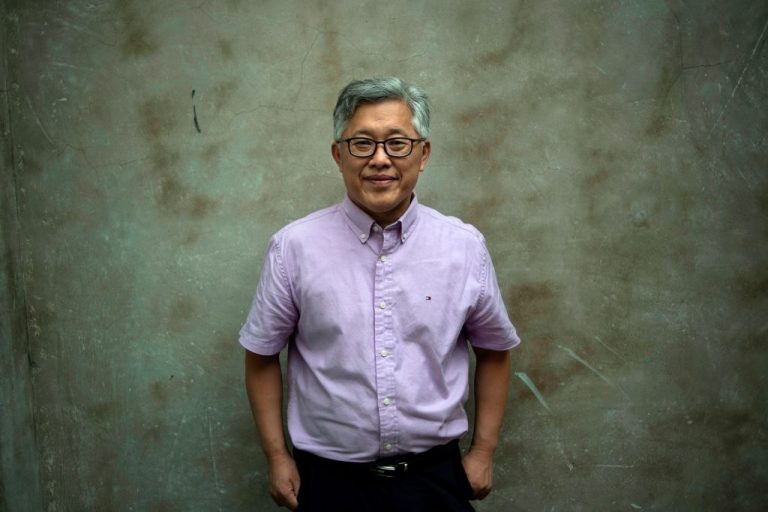
National Taiwan University emeritus professor Ming Jyu-jen argues that communist systems contain built-in mechanisms of self-destruction. Power without checks breeds corruption, which inevitably leads to the oppression of the people. As Ming often puts it: “The problem is not bad individuals; the system turns people bad.”
By abolishing private property, markets, and separation of powers, communist regimes eliminate avenues for self-correction, social autonomy, and economic vitality—conditions that ultimately lead to authoritarian rule and entrenched corruption.
Revolutionary parties, once in power, also tend toward internal purges. Ming describes this as a cycle of “permanent power struggle”: seizing power, eliminating perceived threats, generating fear and exhaustion, and eventually collapsing under governance failure.
Historian Gao Hua, author of How the Red Sun Rose, reached similar conclusions. He observed that communist regimes rely on “creating enemies—external and internal alike” to sustain fear and obedience. Trump’s proclamation echoes this, noting how communism suppresses faith, punishes dissent, and destroys liberty.
The downfall of communist systems is not accidental but historical inevitability
Gao Hua’s research shows that the Chinese Communist Party rose to power through systematic coercion, violence, and manipulation—not popular support. The Yan’an Rectification Campaign was not ideological debate but political purge. After taking power, the Party extended this logic nationwide—through the Anti-Rightist Movement, land reform executions, the Great Famine, and the Cultural Revolution.
This record reinforces Trump’s statement that communism’s story is “written in blood and sorrow.”
Communist systems rely on internal violence rather than legitimacy. As Reagan described, the “evil empire” is no accident—it is constructed, and it survives only through coercion.
Communism is not only flawed or unsuccessful; it lacks legitimacy. Its fate will not be shaped by slogans such as “reform” but by historical judgment. On this point, Trump and Reagan speak with one voice.
Full Text of the 2025 Presidential Proclamation
Anti-Communism Week (WhiteHouse.gov)
Presidential Proclamation — Anti-Communism Week, 2025
This week, our Nation observes Anti-Communism Week, a solemn remembrance of the devastation caused by one of history’s most destructive ideologies. Across continents and generations, communism has wrought devastation upon nations and souls. More than 100 million lives have been taken by regimes that sought to erase faith, suppress freedom, and destroy prosperity earned through hard work, violating the God-given rights and dignity of those they oppressed.
For more than a century, communism has brought nothing but ruin. Wherever it spreads, it silences dissent, punishes beliefs, and demands that generations kneel before the power of the state instead of standing for freedom. Its story is written in blood and sorrow, a grim reminder that communism is nothing more than another word for servitude.
As we mark Anti-Communism Week, we stand united in defense of the values that define us as a free people. We honor the victims of oppression by keeping their cause alive and by ensuring that communism and every system that denies the rights to life, liberty, and the pursuit of happiness will find their place, once and for all, on the ash heap of history.
NOW, THEREFORE, I, DONALD J. TRUMP, President of the United States of America, do hereby proclaim November 2 through November 8, 2025, as Anti-Communism Week. I call upon the people of the United States to observe this week with appropriate ceremonies, activities, and programs that honor the victims of communist regimes and reaffirm our commitment to the ideals of freedom.
IN WITNESS WHEREOF, I have hereunto set my hand this first day of November, in the year of our Lord two thousand twenty-five.