By Zhao Xing
I was born in Beijing—what people often describe as someone “born under the red flag and raised in the spring breeze.” My doubts about the Chinese Communist Party didn’t suddenly appear in adulthood; they began in childhood.
The elementary school assigned to our neighborhood had a poor reputation. My parents relied on personal connections and money to get me into a better one. Even at six years old, I understood something fundamental: opportunity depended on money and relationships. I didn’t yet know what the rest of the world looked like, but I sensed early on that something in this system was deeply wrong. Corruption, I realized, worked from the bottom up.
By second grade, every child was required to wear the red scarf of the Young Pioneers, a CCP youth organization supposedly reserved for the “successors of communism.” In reality, it was compulsory political branding.
Middle school exposed me to more history. I studied the Xinhai Revolution and read Zou Rong’s The Revolutionary Army, absorbing the idea that “China today cannot survive without revolution.” At the same time, corruption became increasingly visible in daily life. I began to believe that the CCP’s ideology could not sustain China’s future.
Success
You are now signed up for our newsletter
Success
Check your email to complete sign up
I tried developing independent political ideas and even attempted to form a small group among my classmates. I recruited three close friends, who were supposed to expand the membership. Teachers quickly discovered the effort and shut it down. They dismissed it as childish play, and I wasn’t punished. During this time, I deliberately refused to join the Communist Youth League. But in my final semester, the class was ordered to ensure everyone joined. A teacher had another student write the application for me. I was enrolled without my consent. Such practices can exist only in a country where human rights are absent.
In high school, I worked hard and tried to serve my classmates. I believed I could become class monitor through a vote. Instead, the homeroom teacher appointed someone who barely even showed up at school. What was presented as democracy turned out to be a private arrangement. From moments like these, I understood that China had no real democracy. “Grassroots democracy” was an illusion. From village committees to neighborhood offices, ordinary people had no voice.
Around this time, I first learned the truth about the June Fourth incident. I discovered China’s internet censorship and learned how to bypass it. For the first time, I felt a deep desire to leave China.
During university, I joined an exchange program and traveled to the United States as a J-1 student. For the first time, I experienced life on genuinely free soil. The experience stayed with me. But the program lasted only three months, and I had to return to China to finish my studies—returning to a life of silence and suppression.
In late 2019, after graduation, my girlfriend—now my wife—and I traveled to Thailand and Vietnam. That was when COVID-19 broke out in Wuhan. The crisis exposed the authoritarian system at its core. Grassroots doctors issued early warnings but were silenced. The outbreak spiraled, followed by three years of harsh lockdowns.
While abroad, we read Professor Xu Zhangrun’s essay “An Angry People Are No Longer Afraid,” which laid bare the CCP’s responsibility. Makeshift shelter hospitals were built, effectively abandoning the infected. Reports described crematoriums running nonstop in Wuhan. Even overseas, we felt fear. But as travelers, we had no legal way to remain abroad; we were forced to return to Beijing.
Beijing’s Suffocating Quiet
Back home, the streets were desolate. The tension was suffocating. On my verified Weibo account, I posted only the title of Xu Zhangrun’s essay. Within a minute, it was flagged as a violation. My account was permanently banned. At that moment, fear overwhelmed me. I finally understood what it meant to live without the right to speak.
By August 2022, after years of strict controls, I reached my breaking point. I registered for an overseas English exam as a pretext and left China from Chengdu, beginning a long journey that eventually led to the 2022 World Cup in Qatar. At that time, China was the only country still enforcing extreme COVID policies. Ordinary people were paying the price for a political blueprint imposed from above.
My route took me through Kazakhstan, Kyrgyzstan, Uzbekistan, Azerbaijan, Iran, the UAE, and Saudi Arabia before reaching Qatar. In Central Asia, despite economic hardships, society felt less suffocating. In Iran and Saudi Arabia, however, the constant sense of unspoken fear reminded me of home.
In Iran, I witnessed the “headscarf revolution,” as citizens confronted the religious police. Many were beaten or arrested. I couldn’t help but think that in China, resisting the authorities would bring even harsher consequences.
After the World Cup, I had no choice but to return to China. News spread that residents under Shanghai’s lockdowns had begun to resist. Eventually, the CCP was forced to roll back its zero-COVID policies. I traveled through Indonesia and Cambodia before arriving in Guangzhou, where I was forcibly quarantined for five days before being allowed to return to Beijing.
Even after the official end of domestic controls, overseas returnees were still forced into quarantine. It felt like a final round of profiteering. Attempts to resist were blocked, and our families were contacted to pressure us into compliance.
After arriving in Canada, I found people who shared my beliefs—members of the China Democracy Party. They seek democracy, freedom, and an end to CCP authoritarian rule. Their goals matched what I had long envisioned.
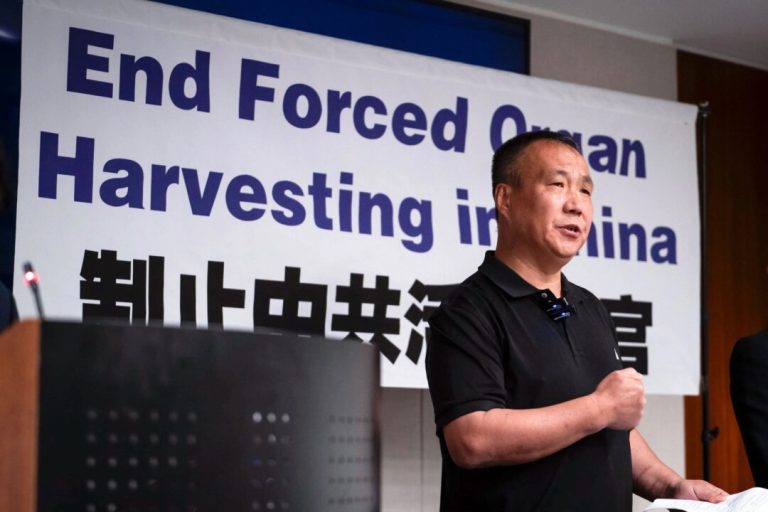
In China, there is no freedom of speech, no freedom of the press, no freedom of belief—not even a reliable guarantee of the right to life. After watching the documentary State Organs during party activities, I learned about the CCP’s organ harvesting practices. Such acts defy basic human morality.
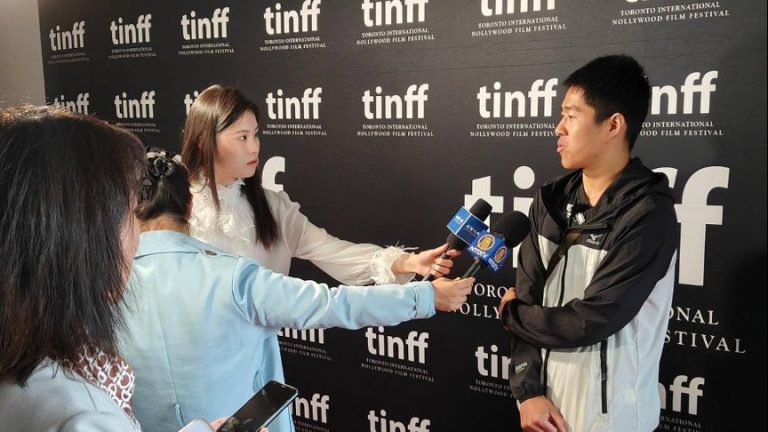
Since joining the China Democracy Party, I have actively participated in democratic movements—public protests, writing articles condemning the CCP, and giving media interviews. I believe that on Canada’s free soil, our voices can finally be heard by the world.