By Yang Hao
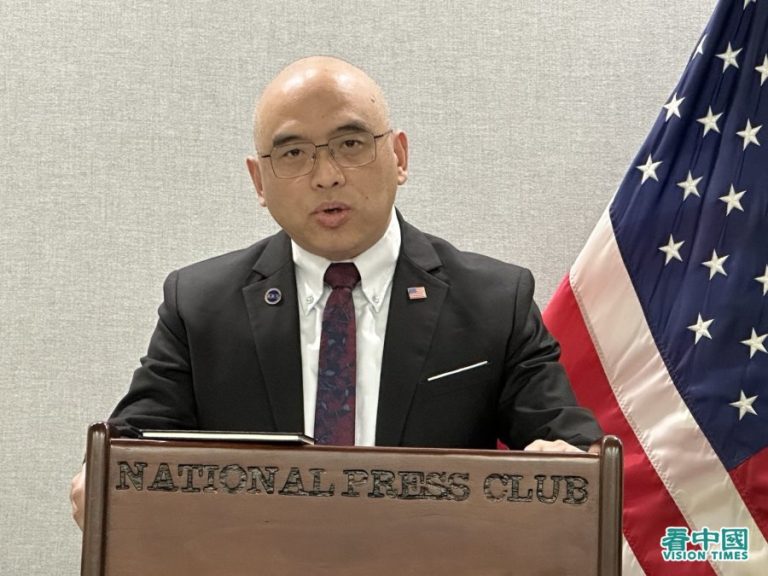
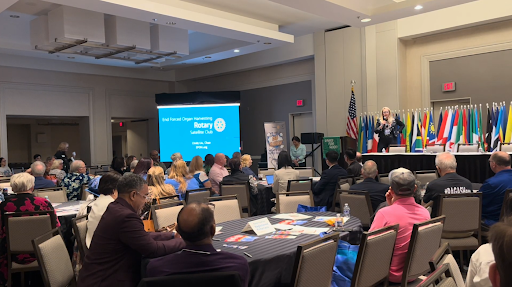
On Dec. 10, 2025, the organization Responsible for Equality and Liberty (R.E.A.L.) hosted a Human Rights Day commemorative event at the National Press Club in Washington, D.C., marking the anniversary of the adoption of the Universal Declaration of Human Rights (UDHR) in 1948.
The event revisited the declaration’s original purpose and called on the international community to continue defending human dignity, equality, compassion, and conscience. This year’s theme, “A New Hope for Global Human Rights,” brought together voices from across the human rights community to discuss concrete paths toward reform and moral accountability.
Lin Xiaoxu: standing with the Chinese people
Dr. Lin Xiaoxu, executive director of the Consilium Institute and senior adviser to the Global Service Center for Quitting the Chinese Communist Party (Tuidang Center), opened his remarks by noting the significance of International Human Rights Day.
He said that Dec. 10, 1948, marked the moment when the world collectively affirmed a timeless truth: human dignity is sacred. It does not come from governments, political parties, or ideologies. It is inherent, endowed at birth, and cannot be negotiated away or stripped by power.
Success
You are now signed up for our newsletter
Success
Check your email to complete sign up
Yet in the present era, Lin argued, that dignity is under sustained assault by one of the world’s most entrenched totalitarian regimes, the Chinese Communist Party (CCP).
A fundamental distinction, he emphasized, must guide any serious discussion of China: the CCP is not China, and it does not represent the Chinese people. Nor is it the inheritor of Chinese civilization. Instead, Lin described it as a political apparatus that, for decades, has inflicted profound suffering on the Chinese population, both within China and across the global Chinese diaspora.
Understanding this distinction, he said, is not only a matter of moral clarity but a prerequisite for sound national security policy.
State-driven persecution as a system, not an accident
Lin stressed that human rights abuses under the CCP are neither isolated incidents nor the result of bureaucratic excess. They form a comprehensive, mature system of state-directed violence.
In 2019, an independent tribunal chaired by British barrister Sir Geoffrey Nice concluded that Falun Gong practitioners had been, and continued to be, killed for their organs on a large scale, with victims numbering in the tens of thousands annually.
Lin noted that only weeks earlier, the Inter-Parliamentary Alliance on China (IPAC) formally affirmed these findings and introduced legislative models for parliaments worldwide. He said the Consilium Institute had participated in a Brussels summit alongside the International Coalition to End Transplant Abuse, contributing to what he described as a significant milestone in international accountability efforts.
Since 1999, Lin said, more than 70 million Falun Gong practitioners have been subjected to systematic persecution. At least 4,900 deaths have been confirmed, alongside hundreds of thousands of documented cases of torture and abuse. These figures, he added, represent only a fraction of the reality, as the CCP has worked relentlessly to conceal the full scale of repression.
He further cited the mass detention of between one and three million Uyghurs and other Muslim minorities in so-called reeducation camps, where evidence points to forced sterilization, family separation, forced labor, and organ harvesting.
In Tibet, Lin said, more than 6,000 monasteries have been destroyed, while Tibetan children are compelled to attend state-run boarding schools designed to erase language and faith. Across China, over 60,000 Protestant and Catholic churches have been shut down, demolished, or forced into state-controlled “Three-Self” institutions, with clergy pressured to pledge loyalty to the Party above religious belief.
All of these abuses, Lin argued, stem from a single ideological root: the CCP’s denial of the human soul. When a regime treats people as raw material to be shaped or discarded, atrocity becomes institutional rather than accidental.
Communism and the assault on conscience
Lin pointed to warnings issued by twentieth-century leaders who identified the nature of communist ideology. Former U.S. President Ronald Reagan cautioned that communism elevates the state above all else, with the ultimate aim of total domination. Lin said that warning remains relevant today.
The CCP, he argued, has built the most technologically advanced totalitarian system in history, combining artificial intelligence surveillance, digital censorship, social credit systems, and predictive policing. Technology has become an amplifier of repression. What the world faces, he said, is not a conventional geopolitical rivalry but a test of civilization and moral resolve.
Religious freedom as a strategic and moral response
Turning to U.S. policy, Lin said the 2025 National Security Strategy appropriately emphasizes sovereignty, economic resilience, and technological competition. Yet he argued that there remains a crucial opportunity to strengthen moral leadership, not by confronting China as a state, but by speaking directly to the Chinese people.
That opportunity, he said, lies in religious freedom.
Religious freedom is not provocation, he argued, nor is it anti-China. On the contrary, it resonates deeply with China’s cultural and spiritual traditions, from Confucian ethics and Daoist harmony to Buddhist compassion and the coexistence of diverse beliefs.
The CCP, Lin said, stands in opposition to all of these traditions.
By placing religious freedom at the center of policy, the United States sends a powerful message to the Chinese people: that it stands with their dignity, conscience, and spiritual heritage. Religious freedom, he argued, is both a universal value and a strategic asset, ensuring that technological and economic competition does not descend into moral disorder.
Why faith challenges totalitarian power
Lin outlined several reasons why religious freedom represents the CCP’s greatest vulnerability.
Faith, he said, anchors loyalty to a higher moral authority than the Party, something totalitarian systems cannot tolerate. Religious communities also form the most enduring foundations of nonviolent resistance, as seen historically in both the Soviet Union and China.
He noted that groups such as Falun Gong practitioners, house church Christians, and Tibetan monks challenge authoritarianism through conscience rather than force. Their refusal to abandon moral truth is precisely what the CCP fears most.
Religious freedom also creates a bridge between American society and the Chinese people. Compassion, dignity, and belief, Lin said, form a universal language. By defending religious freedom, governments also defend truth itself.
Transnational repression and the Chinese diaspora
Lin cautioned that human rights advocacy must also confront a domestic security challenge within democratic societies.
Many recent immigrants from China, he said, were raised under comprehensive censorship and have never had access to uncensored information. They are not supporters of the CCP but victims of long-term indoctrination and control.
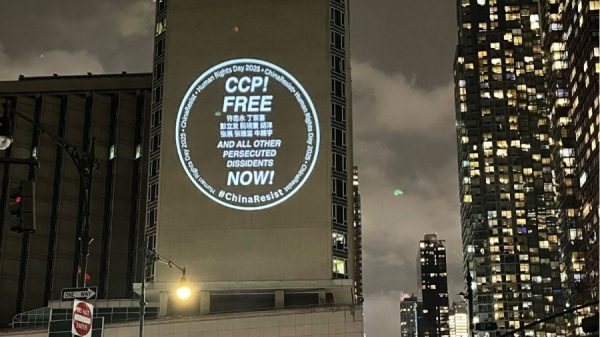
The CCP exploits this vulnerability through transnational repression, using threats against family members in China, mobilizing united front networks, and applying intimidation to enforce compliance abroad.
This does not make Chinese immigrants a threat, Lin emphasized. It makes them targets. Democratic societies, he argued, have a responsibility to help these communities break free from CCP influence, both for their own well-being and for national security.
The Tuidang movement as a quiet moral awakening
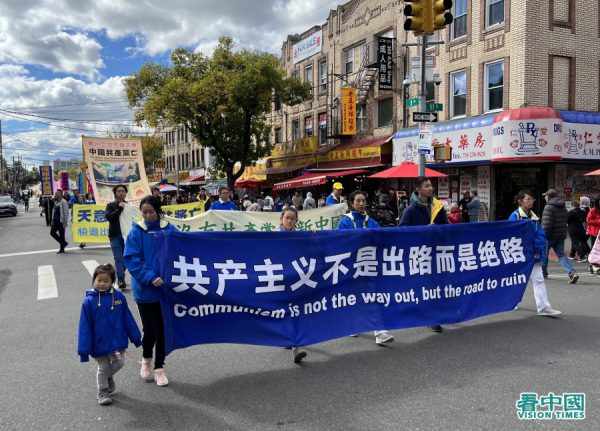
Lin highlighted the Tuidang (Quit the CCP) Movement, initiated by Falun Gong practitioners, as the largest nonviolent spiritual awakening movement in modern history.
More than 400 million people worldwide, he said, have declared their withdrawal from the CCP, the Communist Youth League, and the Young Pioneers.
Promoting the movement in the United States, Lin argued, yields three benefits: it helps immigrants sever psychological ties to CCP control; reduces the regime’s capacity for infiltration and coercion abroad; and sends a message of solidarity and hope to the Chinese people.
The movement is voluntary, peaceful, and grounded in truth, aligning closely with American values. Lin described it as one of the most underestimated assets in national security policy.
Standing with the people, not the regime
Some, Lin acknowledged, worry that criticizing the CCP could harm U.S.-China relations. He argued the opposite. The people who most desire freedom, justice, and dignity in China are the Chinese people themselves.
Policies grounded in conscience, faith, and human dignity, he said, place democratic societies alongside the Chinese people rather than in opposition to them. This approach represents not hostility, but hope.
On Human Rights Day, Lin concluded, the moment demands courage: to stand with victims of persecution, to defend religious freedom as both a human right and a strategic imperative, to help immigrants shed the final psychological chains of authoritarianism, and to amplify the voices of those seeking truth.
Truth, he said, is stronger than lies. Conscience is stronger than fear. Faith is stronger than tyranny. And once the human spirit awakens, no chain can hold it.
Jeffrey Imm: finding shared moral direction amid human rights uncertainty
Jeffrey Imm, head of Responsible for Equality and Liberty, reflected on the enduring warning embedded in the Universal Declaration of Human Rights: that disregard and contempt for human rights lead to barbarous acts.
In recent years, he said, escalating conflict, persecution, and violence have reinforced the fragility of universal human rights. Yet Imm urged audiences not to be overwhelmed by lists of atrocities, but to search for the sources of change.
Returning to the National Press Club under the theme of “A New Hope,” R.E.A.L. sought to reframe human rights as beginning with individual responsibility.
Human rights progress, Imm said, does not depend solely on governments or legal frameworks. It begins with personal choices. Cruelty and hatred often take root when indifference becomes normalized, eventually shaping institutions and empowering abuse.
Restoring kindness, empathy, and responsibility, he argued, is the first step toward rebuilding a human rights culture.
Kindness, forgiveness, and the rejection of violence
Imm warned that cruelty, confrontation, and revenge are increasingly framed as strength. Invoking Martin Luther King Jr.’s words, he said hatred is too heavy a burden for any society to carry.
Kindness and forgiveness, he emphasized, are not weakness but essential forces for social progress, especially when directed toward those who are different, vulnerable, or even hostile.
Violence, Imm said, is too often glorified in media and political discourse, raising society’s tolerance for harm. Violence should remain a last resort, never a default response. Nonviolence, he argued, represents an active commitment to human dignity.
Love as the foundation of human rights
Without the capacity for love, Imm said, human rights lose their meaning and momentum. Love embodies dignity, compassion, and connection. Societies that abandon these values risk being consumed by their own indifference.
When individuals choose openness and care, he said, they become sources of light within their communities.
Modern society, Imm added, encourages isolation and self-sufficiency at the expense of connection. Yet human rights depend on shared responsibility and collective care.
Hope, he concluded, comes from hearts willing to change. Human rights are written not only in declarations, but in daily choices. Choosing kindness over cruelty, forgiveness over hatred, nonviolence over aggression, and love over division remains the path forward.
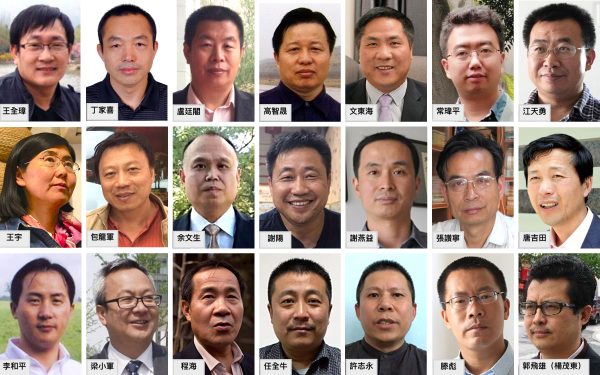
Karen Imm: food and human rights
Karen Imm, a founding member of R.E.A.L., focused her remarks on food security as a fundamental human right.
She described her long-standing work supporting food justice initiatives, including the global volunteer organization Food Not Bombs, which operates in more than 1,000 cities across 65 countries. The group provides food to the hungry while advocating nonviolently against war, poverty, and environmental destruction.
Today, she said, one billion people worldwide endure hunger each day. This reality demands reflection on what human rights truly mean and how societies can ensure access to basic necessities.
Imm cited recent discussions in Cleveland, Ohio, regarding the impact of reductions to the U.S. Supplemental Nutrition Assistance Program, which affects roughly 40 million Americans.
She reminded audiences that International Human Rights Day commemorates the UDHR’s adoption in response to historical atrocities, including mass famine and the use of starvation as a weapon of war.
Article 25 of the declaration, she noted, affirms the right to an adequate standard of living, including food, housing, medical care, and social security in times of need.
Freedom from hunger, Imm concluded, is as essential as freedom of expression or belief. A society that tolerates hunger as normal cannot meaningfully claim to uphold the right to life or any other human right.