High-profile rhetoric from Japan’s prime minister has sharply escalated tensions with Beijing, marking what many observers see as a decisive shift in Tokyo’s strategic posture.
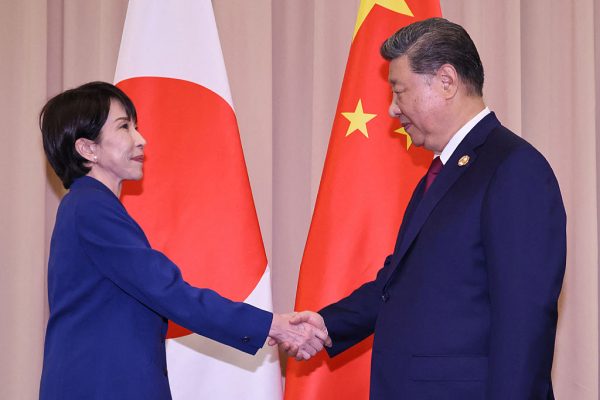
Since November 2025, Sino-Japanese relations have deteriorated rapidly after Prime Minister Sanae Takaichi stated unequivocally in the Diet that “a Taiwan contingency is a Japan contingency.” Beijing responded with a familiar mix of protests, economic pressure, and diplomatic intimidation, seeking to force Tokyo to retreat.
Takaichi did not.
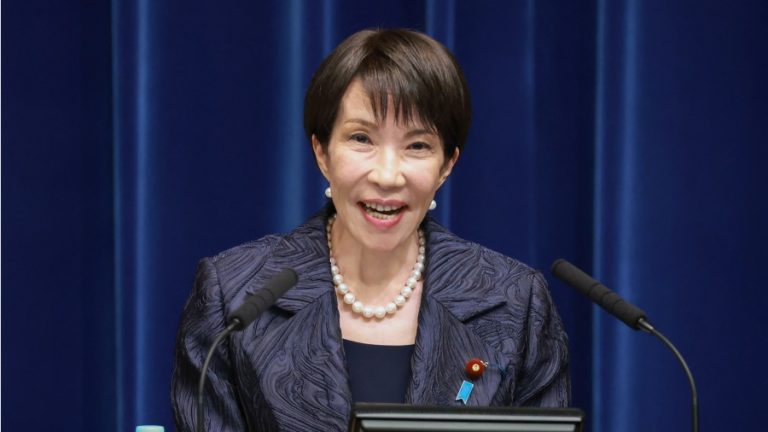
Instead, she delivered a pointed rebuttal on the international stage—borrowing a line from the popular anime Attack on Titan: “Just shut your mouths and invest everything in me.” What she was implicitly telling the Chinese Communist Party, Japanese media noted, was even clearer: “Be quiet—Japan is back.”
The remark instantly became the focal point of coverage in Japan, widely interpreted as a veiled but unmistakable counterstrike against Beijing.
Success
You are now signed up for our newsletter
Success
Check your email to complete sign up
Just two months into her premiership, the so-called “Iron Lady” has signaled that Japan is no longer the hesitant, inward-looking pacifist power of past decades. It is reasserting itself as a central strategic actor.
The breaking point
On Nov. 7, 2025, during a Diet session, Constitutional Democratic Party lawmaker Katsuya Okada pressed Takaichi with a direct question: If Taiwan were blockaded or attacked, would that constitute a “survival-threatening situation” allowing Japan to exercise collective self-defense?
Takaichi did not dodge. She replied that scenarios involving the use of force—such as a maritime blockade—could indeed meet the threshold of a survival-threatening crisis, though any decision would depend on the specific circumstances.
It was the first time a sitting Japanese prime minister explicitly linked Taiwan’s security to Japan’s national survival in parliament.
The statement was no accident. Takaichi has long aligned herself with the late Shinzo Abe’s strategic line. As early as 2021, she publicly endorsed the idea that “a Taiwan emergency is a Japan emergency.” In April 2025, she visited Taiwan and met President Lai Ching-te. In her book National Power Studies, she argued that a tightening alignment among China, Russia, and North Korea poses a direct threat to Japan.
Her Diet remarks were widely seen as the formal declaration of a new security orientation under the Takaichi cabinet.
Beijing erupts: diplomatic protests, threats, and economic pressure
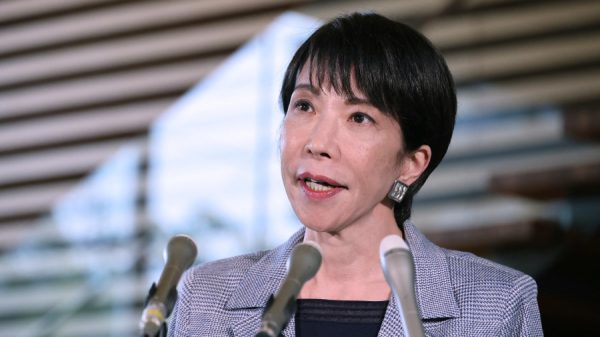
Beijing reacted immediately. On Nov. 8, China’s foreign ministry summoned Japan’s ambassador, demanding that Tokyo “retract its remarks and deeply reflect.”
The situation escalated further when Xue Jian, China’s consul general in Osaka, posted comments on X that Japanese commentators likened to a “decapitation threat.” The remarks triggered a political firestorm in Japan, with members of the ruling Liberal Democratic Party openly discussing whether Xue should be declared persona non grata.
Chinese state media soon joined the attack. Yuyuantantian mocked Takaichi as having her “head kicked by a donkey.” The Ministry of National Defense warned that Japan would “end up bleeding” if it intervened.
By mid-November, Beijing rolled out economic coercion: discouraging travel and study in Japan, halting talks on Japanese seafood and beef imports, issuing airline refunds, pulling Japanese films from distribution, and postponing a trilateral China-Japan-South Korea culture ministers’ meeting—blaming Tokyo for “damaging the cooperative atmosphere.”
It was a familiar playbook. What Beijing did not anticipate was the outcome.
Rather than collapsing, public support for Takaichi surged. Polls showed her approval rating climbing from roughly 80 percent to 85 percent. The storm, instead of weakening her, appeared to strengthen her position.
The counterstrike: anime, capital, and a global message
Tokyo chose not to trade insults. Takaichi made a calculated pivot—away from diplomatic sparring and toward economics and global investment.
On Dec. 1, she took the stage at the Future Investment Initiative (FII) summit in Tokyo, hosted by Saudi Arabia. There, she unveiled what Japanese media dubbed “Sanae Economics,” a strategy focused on investment in artificial intelligence, semiconductors, energy, and 17 designated strategic industries; strengthening supply-chain resilience; and reducing dependence on Chinese rare earths.
As she closed her speech, Takaichi smiled—and delivered the line that electrified the room: “Just shut your mouths and invest everything in me.”
The hall erupted in applause.
She followed it with a familiar refrain from Shinzo Abe: “Japan is back. Invest in Japan.”
The contrast was striking. As Beijing continued to demand apologies, Takaichi answered with confidence and capital.
Online reactions poured in. Japanese netizens cheered her for “using Attack on Titan to clap back at the CCP.” Others wrote that “Japan has finally woken up” and hailed the strengthening of the Taiwan-Japan partnership. Even some Chinese users mocked their own government’s bluster, joking darkly about why Beijing “dares not actually fight Japan.”
Chinese state media responded with crude meme attacks on Takaichi—moves that Japanese outlets dismissed as “low-level counterfire.”
Strategic implications: Japan’s normalization, China’s backlash
The episode highlights a broader transformation. Japan is accelerating its postwar “normalization.”
Under Takaichi, Tokyo is moving to reach defense spending equal to 2 percent of GDP ahead of schedule, loosening long-standing nuclear constraints to allow U.S. nuclear submarines to dock, and updating its core security documents to place a Taiwan contingency at the center of policy planning.
Japan, many analysts argue, is shedding the constraints of the post-1945 order and reentering the strategic mainstream.
China, by contrast, has suffered diplomatic blowback. Xue Jian’s remarks damaged Beijing’s image, while economic retaliation only made Japan a more attractive destination for tourists and investors. Efforts to suppress Takaichi have instead amplified her domestic support.
The BBC observed that Beijing’s pressure had the unintended effect of awakening Japan’s “sleeping giant.”
Taiwan, meanwhile, has gained strategic breathing room. President Lai openly voiced support for Takaichi, while Japan and the United States reiterated the importance of peace and stability in the Taiwan Strait. For Taipei, Takaichi represents a shift: Japan is no longer just logistical support, but a partner willing to shoulder real strategic risk.
A new era begins
Challenges remain. Takaichi faces an unstable coalition, inflationary pressures, and sustained pressure from Beijing. Yet among Japan’s younger generation, a rare sense of anticipation has emerged.
“For the first time,” one comment read, “I feel Japan might actually change the world.”
In a policy address, Takaichi said she believes deeply in Japan’s potential and aims to “turn anxiety into hope.” She quoted Prince Shōtoku: “Matters should not be decided by one alone, but discussed together.”
This “advancing Iron Lady” is leading Japan into what many see as the most consequential moment in seven decades. A bolder, more prosperous Japan—one prepared to defend its allies—is taking shape. Taiwan, Asia, and the wider world are likely to feel the impact of her ascent.