By Chen Jing
Not long ago, China’s consumer electronics market operated under an unspoken hierarchy. Buying an iPhone meant you were accused of being “worshipful of foreign things,” while buying Xiaomi branded you as a “Lei Jun fanboy.” Buying Huawei, however, signaled that you were “supporting domestic products” and standing up as the “backbone of the nation.”
Within this powerful discourse, consumers were neatly labeled. In a grand spectacle of patriotic marketing, countless ordinary buyers willingly became known as “leeks” — paying inflated prices and emotionally investing in the idea of national pride.
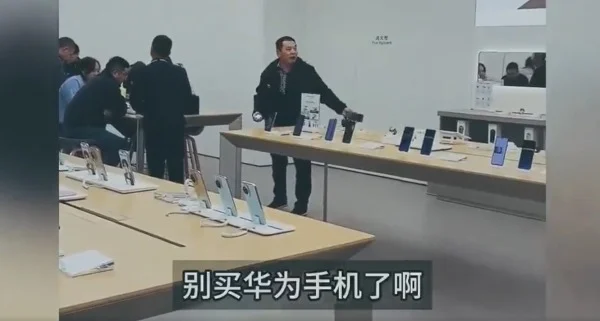
Times have changed. As economic conditions deteriorate and consumer awareness matures, a clear shift is underway: the “leeks” are waking up. They are increasingly refusing to pay the so-called “patriotism tax” and are no longer buying Huawei blindly. This is not a rejection of domestic technology, but a market-level backlash against emotion-driven marketing.
RELATED: Foreign Investors Flee as Huawei Expands Control and China Faces a Harsh Reality
When ‘patriotism’ becomes a sales strategy
Success
You are now signed up for our newsletter
Success
Check your email to complete sign up
For years, Huawei’s public-relations strategy successfully fused its corporate fate with national honor. From the Meng Wanzhou incident to U.S. chip sanctions, each crisis was converted into sales momentum. While never stated outright, the message was clear: “If you don’t buy Huawei, you’re not Chinese.” Even as Ren Zhengfei denied such rhetoric, and even as Meng Wanzhou herself continued using Apple products, the narrative persisted.
What did consumers actually receive? Higher prices than competing brands for similar configurations, persistent technology gaps beneath the slogan “遥遥领先” (meaning “far ahead” or “well advanced”), and low-spec, high-priced models aggressively marketed to older consumers.
As the emotional bubble burst, many began to realize: patriotism is sacred—but turning patriotism into a business model drains its meaning. Consumers started asking hard questions:
- “I love my country, but my wallet is innocent.”
- “I support technological progress, but I refuse to be harvested.”
A return to value-driven products
Another key factor behind this awakening is economic reality. In today’s era of consumption downgrading, purchasing decisions have become brutally pragmatic. Where consumers once paid two or three thousand yuan extra for “face” or sentiment, they now scrutinize specifications: Displays, processors, cameras, system fluidity.
RELATED: Inside China’s Expanding Intelligence Network in the UK: From Data to Political Influence
Huawei’s flagship prices now rival, or even exceed that of Apple, the American tech giant. Yet due to sanctions, its chips’ performance and energy efficiency have lagged in certain phases. For ordinary consumers, paying 10,000 yuan for a phone that overheats, lags, or fails to deliver its mythical signal advantage quickly extinguishes any remaining enthusiasm.
Perhaps the most profound shift is psychological. Consumers are growing tired of the attitude that says: “Because I’m a national brand, you must tolerate all my flaws.” As one user noted, “Even Ren Zhengfei’s own family uses iPhones, so why must ordinary people use Huawei?”
That sense of double standards has deeply wounded former loyalists. Buyers are realizing that commerce is a contract between equals: you deliver quality; I pay accordingly. Turning purchasing decisions into moral judgments is, at its core, emotional blackmail.
Younger consumers increasingly buy for self-satisfaction, not for grand narratives. They no longer feel the need to prove political loyalty through a smartphone.
From ‘pride of the nation’ to trust crisis
What began as financial restraint has evolved into a broader trust collapse. Huawei’s once-celebrated technical reputation is now overshadowed by something else: Public-opinion dominance.
On Chinese social media, Huawei is increasingly “beyond criticism.” Any complaint about overheating, lag, or pricing triggers coordinated attacks. A simple post saying “My Mate 60 drops frames in games” can earn accusations of being “unpatriotic,” “paid in U.S. dollars,” or “unable to stand up after kneeling too long.”
Consumers are pushing back. “I paid 7,000 or 8,000 yuan to be a customer — not to worship a deity, and certainly not to be called a traitor online,” wrote one user. When consumption becomes a political loyalty test, people leave.
The ‘mysticism’ of hidden specifications
In the tech world, transparency is a baseline. Yet Huawei’s product launches increasingly resemble religious sermons.
- Processor model? Not disclosed.
- Chip process? Classified.
- Benchmark scores? Blocked.
Instead, consumers are fed vague descriptors like “smooth” and “遥遥领先.” This “blind-box” approach insults an audience that lives in the age of information symmetry. But if the product is truly strong, why hide the numbers?
Huawei’s pricing strategy has also quietly abandoned its original base. Its current target audience is clear: Middle-aged institutional elites, or “Audi drivers in administrative jackets drinking Moutai.” For them, phones are status symbols.
For commuters juggling mortgages and practicality, Huawei’s premiums are unbearable. Supporting a brand only to see it flaunt elite superiority creates a bitter realization: “I treated the brand like first love — it treated me like disposable grass.”
No longer for the working class
Huawei’s Mate and P series once functioned as “electronic Moutai” — meaning social currency with resale value. But economic downturn stripped away that illusion. Once phones returned to being tools, consumers became more rational in their buying strategies: “If it’s just a tool, why pay 3,000 yuan more?” questioned one user.
Offline sales remain strong largely due to information gaps among older consumers. But this strategy is nearing exhaustion. Younger family members increasingly intervene, warning parents: “The same money gets you five years of smooth use elsewhere.” Long upgrade cycles among seniors cannot sustain rapid tech iteration or R&D costs.
As flagship sales stalled, Huawei’s marketing grew frantic. Phones were no longer evaluated on chip efficiency or real-world experience, but tossed into hot pots, submerged in water, and hyped as life-saving miracles. This “shaman-style” promotion insults consumer intelligence.
HarmonyOS, rushed to monetize before maturity, has been mockingly labeled “鸿蒙胎盘” (“Harmony placenta”) by users frustrated with bugs and forced ads.
A tanking secondhand market
Nothing exposes value like resale. Once a “financial product,” Huawei phones are now “free-fall champions.” Secondhand prices have collapsed, stripping away sentiment and revealing real worth. When resellers say “we won’t take it,” slogans ring hollow.
But perhaps the most painful blow is user migration. After overheating, throttling, and moral lectures, many former Huawei loyalists quietly switched to Apple — not out of ideology, but out of exhaustion.
Sometimes collapse happens in a single moment: A frozen payment scan, unexpected overheating, or watching someone else enjoy a smoother experience for less. No amount of “storefront beauties,” emotional slogans, or patriotic spectacle can replace real product strength.
Editorial note: Views expressed in this article are the opinions of the author and do not necessarily reflect the views of Vision Times.