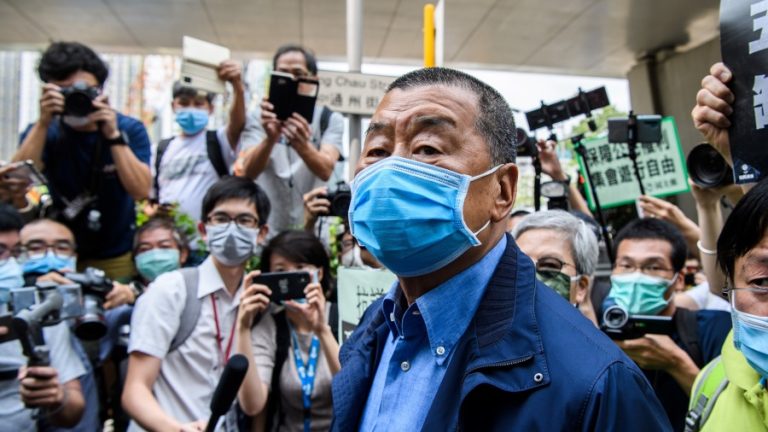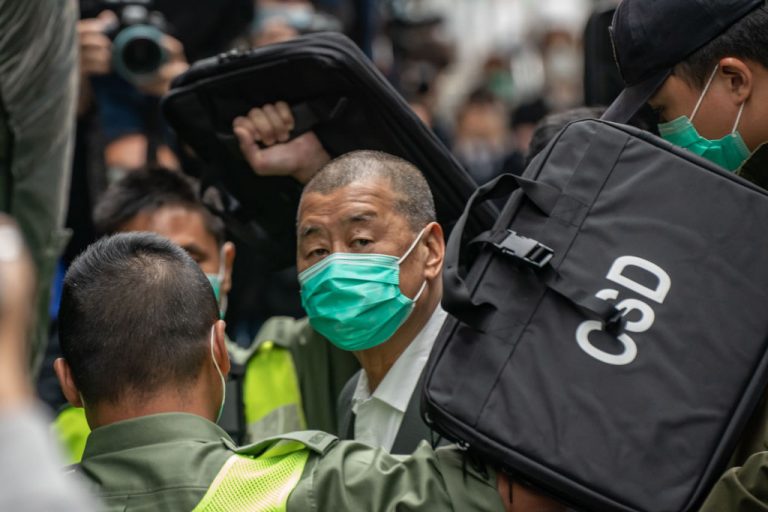
In the landmark national security case involving “Apple Daily” founder and former “Next Digital” chairman Jimmy Lai Chi-ying, the court has convicted Lai on two counts of “conspiracy to collude with foreign forces” and one count of “conspiracy to publish seditious publications.” Sentencing is scheduled for Jan. 12 next year.
The court ruled that Jimmy Lai was the “mastermind” behind all three conspiracies, finding that he harbored long-standing hatred and animosity toward the Chinese Communist Party (CCP).
MORE ON THIS: Jimmy Lai Convicted in Landmark Hong Kong National Security Case
Under the pretext of “helping Hong Kong,” the judgment said, Lai repeatedly invited U.S. intervention aimed at toppling the Chinese government. Regardless of whether his actions occurred before or after the enactment of the National Security Law (NSL), the court concluded that his sole intent and ultimate objective was the collapse of the CCP, even at the cost of harming the interests of people in both Hong Kong and mainland China.
Dubious charges
The court further found that Lai knowingly exploited “Apple Daily” and his personal influence to wage a sustained campaign intended to undermine the legitimacy and authority of both the central government and the Hong Kong SAR government.
Success
You are now signed up for our newsletter
Success
Check your email to complete sign up
While Lai did not openly call for sanctions after the NSL took effect, the court ruled that he continued to make indirect and implicit requests, with his intent remaining unchanged.
The court emphasized that Lai was not on trial for his political beliefs, which he was free to hold, but rather for attempting to translate those beliefs into unlawful actions. Based on the 855-page written judgment, the “Collective Press” has organized the key findings explaining how the court reached guilty verdicts on all three charges — and why it found Lai’s testimony “unreliable.”
I. Introduction: Deep-seated hatred toward the CCP led to Lai’s trial
The judgment opens by stating that “the core of this case centers on one person — Jimmy Lai.” To understand Lai, the court said, one must return to his origins.
According to Lai’s own account, he was born in 1947 into a wealthy family in mainland China, but political upheaval destroyed the family’s fortunes. His mother was sent to a labor camp, forcing Lai to work at age 10 to support the family. At 12, he illegally entered Hong Kong.
The court described Lai’s life as a genuine “rags-to-riches” success story. Through diligence and determination, he built a highly successful textile business, later selling it to enter the media industry and found “Apple Daily.” Lai once said he found business “boring,” while journalism gave him a cause worth fighting for.
However, the judges concluded that “despite being a very shrewd businessman, his deep hatred and animosity toward the CCP led him onto a thorny path that ultimately resulted in this trial.”
II. Court: Lai was not tried for political beliefs
The judgment stresses that Lai was not prosecuted for holding political views. He was free to hold any beliefs he wished. The court’s task was instead to determine whether he intended to turn those beliefs into action through unlawful means.
The court noted that Lai’s conduct before the NSL came into effect did not itself constitute the charged offenses, but formed relevant background evidence establishing his intent and objectives at the time of the alleged crimes.
III. Witness credibility: Co-Conspirators vs. Lai
The defense attacked cooperating witness Andy Chan Ho-tin, calling him a “serial liar.” The court acknowledged that accomplice witnesses may have incentives to minimize sentences but found their testimony well-supported by documentary evidence, including extensive communications with Lai and Mark Simon.
After thorough cross-examination, the court ruled that all cooperating witnesses were honest, reliable, and provided clear, compelling testimony.
In contrast, the court criticized Lai’s testimony as “self-contradictory, inconsistent, evasive, and unreliable.” Judges rejected claims that memory lapses, stress, or age explained these discrepancies.
But Lai’s testimony found inconsistent and untrustworthy. The court found that Lai frequently flatly denied allegations rather than claiming memory loss, and appeared to take calculated risks when testifying, hoping messages would not surface to contradict him. When confronted with documentary evidence, Lai offered explanations the court deemed implausible or strained.
IV. Charge one: Conspiracy to publish ‘seditious’ publications
Former senior “Apple Daily” executives testified that Lai acted as the paper’s “helmsman,” personally controlling editorial direction. Staff were expected to follow his instructions and could not refuse him. Editorials and opinion columns aligned with his views, and columnists required his approval.
The court found that Lai dominated and controlled the newspaper before and after the NSL, using it as a platform to disseminate his political agenda.
After reviewing 161 articles, the court found they consistently demonstrated “severe hostility and bias” toward the CCP, portraying the central government, Hong Kong authorities, and police as “enemies” intent on harming the public.
Officials were subjected to ridicule and vilification, including references to former Chief Executive Carrie Lam as “evil,” Xi Jinping as “Emperor Xi,” and police as “black cops,” fomenting hatred and contempt.
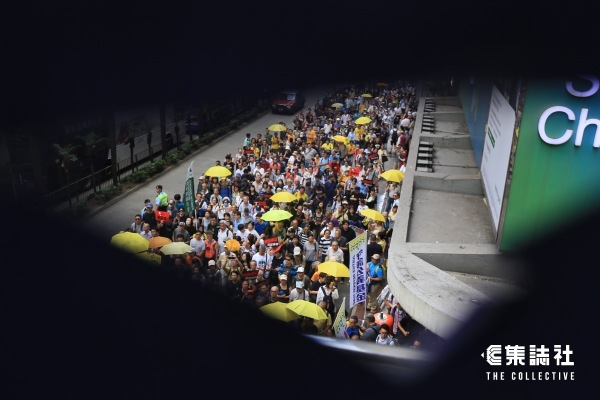
Even after the extradition bill was withdrawn in October 2019, articles continued urging resistance. Before the NSL, they openly called for sanctions; afterward, they continued to do so indirectly but unmistakably. Seventeen articles were found objectively seditious.
The court thus concluded that Lai knowingly approved these publications to sustain the protest movement, far exceeding legal protections for expression.
V. Charge two: Conspiracy to ‘collude’ with foreign forces
The court ruled that a “request” for sanctions need not be explicit; it may be implicit. The offense does not require sanctions to actually occur; it is a conduct offense, not a results-based one. Sanctions against officials, trade embargoes, and technology bans all fall within the statutory definition.
Though Lai stopped openly calling for sanctions after the NSL, the court found overwhelming evidence that he continued indirectly and implicitly. Examples included:
- Articles and commentaries on July 1 and July 4, 2020 supporting sanctions
- Lai’s columns stating sanctions would not diminish
- His Live Chat program portraying China as the “enemy” of the West
- Tweets subtly endorsing sanctions against election officials
- The court ruled that Lai’s intent never changed—only his method did.
VI. Charge three: Conspiracy with external activists
The court accepted testimony that Lai knew of and supported international lobbying efforts involving Stand With Hong Kong (SWHK) and the Inter-Parliamentary Alliance on China (IPAC).
Evidence showed that Mark Simon, described as Lai’s “mysterious figure,” acted as Lai’s intermediary, reporting lobbying efforts and coordinating activities with activists including Andy Chan, Simon Cheng, and Finn Lau.
The court accepted testimony that Lai endorsed a strategy involving three fronts: parliamentary, international, and street action, concluding that he knowingly participated in and directed the conspiracy.
VII. Conclusion: Lai as the mastermind
In its conclusion, the court stated that long before the NSL, Lai had considered what leverage the United States could use against China, including hiring former U.S. officials and lobbying through Taiwan. The court compared Lai’s conduct to a U.S. citizen pretending to help California while inviting Russia to overthrow the U.S. government.
Mark Simon was described as a trusted operative whom Lai relied on with “almost blind trust” to arrange high-level meetings and lobbying efforts.
The court concluded that the only reasonable inference from the evidence was that Lai’s ultimate objective, before and after the NSL, was the collapse of the CCP, regardless of the cost to Hong Kong and mainland China.
Accordingly, the court found that Jimmy Lai was the mastermind behind all three conspiracies, with the corporate defendants fully aware of and assisting in the scheme. All defendants were convicted on all counts.