By Fu Longshan
In 1951, as the United States and Japan signed a pair of treaties that would define the postwar order in Asia, the Chinese Communist Party was fighting for its life. Only two years had passed since Mao Zedong’s victory in the civil war, but the new regime was already beset by internal turmoil, factional struggles, diplomatic isolation, and the immense strain of the Korean War. To the outside world, Beijing projected confidence and revolutionary zeal. Inside the CCP’s inner leadership circle, however, the mood was anxious and defensive.
It was in this moment that Mao and his top lieutenant, Zhou Enlai, formed a diplomatic approach that would define the CCP for decades: loud ideological denunciations for public consumption, paired with quiet, pragmatic calculations aimed at preserving the Party’s rule. The CCP attacked the United States and Japan as imperialist threats—but privately, Mao and Zhou recognized that the emerging U.S.–Japan alliance actually limited Soviet power in East Asia. For leaders who feared Soviet dominance far more than American influence, this was an unexpected strategic advantage.
China’s early foreign policy, then, cannot be understood through the lens of nationalism or ideology alone. It must be seen as a series of decisions shaped by insecurity, suspicion of Moscow, and a relentless focus on regime survival.
It was Moscow, not Washington, that terrified the CCP
Despite the triumphant rhetoric of “liberation” that filled CCP propaganda between 1949 and 1951, the new regime was deeply unstable. Land reform campaigns spiraled into violence; mass executions meant to “suppress counterrevolutionaries” created widespread panic, even within Party ranks. Internal reports later acknowledged that “indiscriminate killings” in many regions had destabilized local governance rather than strengthening it.
Success
You are now signed up for our newsletter
Success
Check your email to complete sign up
The Korean War only intensified the crisis. China’s unexpected intervention drained manpower and resources at a pace the fledgling state could barely sustain. Senior commanders, including Peng Dehuai, privately complained that China was “selling our lives for the Soviet Union.” Internal assessments described the war as “wringing national strength dry.” These were not the words of a confident government.
Behind the façade of Sino-Soviet friendship lay Mao’s deepest fear. Stalin had embedded Soviet advisers throughout China’s most sensitive institutions—from economic planning to military industry to intelligence services. Their presence gave Moscow enormous leverage and confirmed Stalin’s suspicion that the CCP might deviate from the Soviet model. Many in Beijing worried that the Soviet Union, not the United States, posed the more immediate threat to the Party’s political survival.
As Ming Jü-cheng, a prominent specialist in modern Chinese politics, later observed, “In the early years of the regime, CCP diplomacy was not anti-American—it was anti-Soviet.”
This insight reframes the entire landscape of early Cold War diplomacy: the CCP feared Moscow’s influence far more than Washington’s weapons.
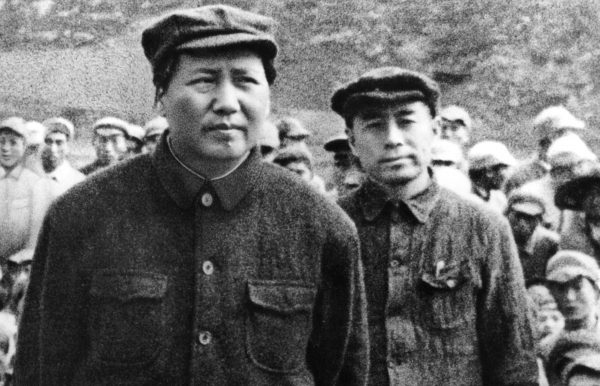
The CCP’s threat hierarchy: Soviets first, Americans second, Japan a distant third
According to later diplomatic recollections, Zhou Enlai often reminded senior Foreign Ministry officials of a blunt strategic assessment: the Soviets wanted China to submit, the Americans wanted confrontation, and Japan—defeated and under U.S. occupation—expected only resentment. None of the three, Zhou warned, were genuine friends of China, but each needed to be understood on its own terms.
Within this framework, the Soviet Union stood at the top of the threat hierarchy. Moscow alone possessed the ideological authority, military reach, and political access to undermine the CCP from within. Soviet advisers operated deep inside China’s planning ministries, security organs, and military industries. Their influence was intimate and potentially suffocating, and Mao knew that Stalin viewed the CCP as a junior, unreliable partner rather than an equal revolutionary force.
The United States, meanwhile, was a rival shaped by geography and ideology. It could pressure China, but it lacked the proximity and political penetration that made the Soviet Union truly dangerous. American power was real—but it was distant.
Japan ranked still lower. Defeated in war and firmly under American control, it lacked the autonomy to threaten China directly. For the CCP leadership, Japan mattered mainly as an extension of U.S. strategy, not as an independent actor.
This hierarchy shaped the core of Beijing’s early foreign-policy thinking. Public rhetoric condemned American imperialism and revived wartime animosity toward Japan. But inside the leadership, the overriding concern was clear: Moscow—not Washington—posed the greatest danger to the CCP’s survival.
The CCP viewed Japan’s US alignment as a constraint on Soviet power
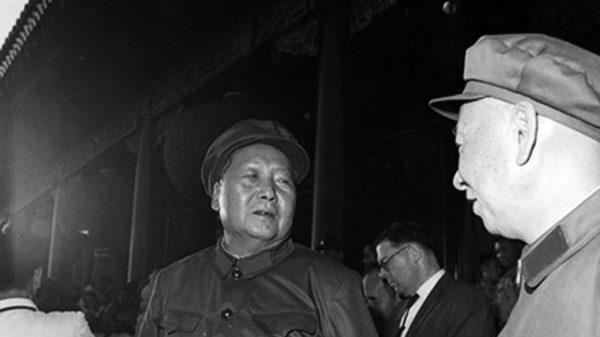
In September 1951, Japan signed the Treaty of San Francisco with forty-eight Allied nations, formally ending the postwar occupation and restoring its sovereignty. On the same day, Tokyo concluded the U.S.–Japan Security Treaty, placing Japan firmly within the American-led security framework in Asia. Neither the Republic of China nor the newly established People’s Republic of China was invited to participate in the negotiations.
Beijing’s public reaction was immediate and furious. State media denounced the treaties as a new stage of American imperialism and warned that the agreements threatened peace in Asia. Yet the internal response within the CCP leadership was far more complicated—and far more revealing.
Mao reportedly offered a terse but telling assessment: “The United States holding on to Japan is both bad and good. The good part is that Japan cannot be used by the Soviet Union.” For Mao, the nightmare scenario was not a resurgent Japan aligned with Washington, but a defeated Japan absorbed into the Soviet sphere. Such a development, he believed, would create a second communist great power in East Asia and leave China strategically encircled.
From this perspective, Japan’s alignment with the United States—while publicly condemned—actually served a critical strategic function for Beijing. The U.S.–Japan Security Treaty effectively “locked” Japan into the American camp, denying Moscow an opportunity to dominate the region. It was an outcome Mao and Zhou recognized privately as stabilizing, even as they denounced it in public.
The Treaty of San Francisco itself contained provisions that would have lasting implications. Japan renounced sovereignty over Taiwan and the Pescadores but did not specify a recipient, creating ambiguity that later shaped debates over Taiwan’s status. Japan also relinquished claims to Korea, Sakhalin, and the Kuril Islands. The treaty thus restructured the regional map while simultaneously binding Japan to the United States for security—a combination that quietly reassured, rather than alarmed, China’s new rulers.
In short, Japan’s U.S. alignment constrained Soviet power far more effectively than China could have on its own. And for a CCP leadership consumed by the fear of Soviet dominance, this constraint was strategically invaluable.

Mao’s dual strategy: Condemning the US in public but quietly relying on It to limit soviet influence
Recollections from Chinese diplomats—preserved in oral histories and later published accounts—offer a rare glimpse into Mao’s private thinking during the early 1950s. In these accounts, Mao repeatedly drew a sharp distinction between China’s “distant” and “nearby” enemies. “The United States is a distant enemy,” he reportedly said. “The Soviet Union is a nearby enemy. The nearby enemy must be guarded against more carefully.”
This simple contrast reveals the core of Mao’s strategic worldview. The United States, though powerful, lacked the proximity and political leverage to threaten the CCP’s hold on power. The Soviet Union, by contrast, was close both geographically and ideologically—and deeply intertwined with China’s new institutions. With Soviet advisers embedded across China’s military, security, and planning sectors, Mao understood that Moscow had the capacity to dominate, manipulate, or even replace the CCP leadership if it chose to do so.
From this vantage point, the U.S.–Japan alliance played an unexpected role: it prevented the Soviet Union from establishing uncontested dominance in East Asia. As Mao reportedly put it, “When the United States allies with Japan, the Soviet Union cannot dominate alone.” American power, in other words, created strategic friction that limited Moscow’s room to maneuver.
This did not make Mao pro-American. But it meant that American influence could serve China’s interests—so long as the CCP controlled the public narrative. And Beijing maintained that control by deploying anti-American rhetoric as a political instrument. Public denunciations of Washington mobilized the population, enforced ideological conformity, and concealed the leadership’s private relief that U.S. strategy was constraining Moscow.
The result was a diplomatic posture defined by contradiction. Mao condemned American “imperialism” in public speeches, mass rallies, and propaganda campaigns. Yet he quietly recognized that U.S. alliances in Asia created precisely the kind of balance that would help safeguard the CCP’s autonomy from Soviet pressure.
This dual strategy—public hostility, private pragmatism—became a defining feature of early CCP foreign policy. It allowed the Party to maintain ideological credibility at home while exploiting geopolitical realities abroad. And it set the pattern for China’s approach to the Cold War in the years that followed.

‘Diplomacy serves the Party’s leadership position first, not the national interest’
A recurring theme in internal CCP discussions during the early 1950s was the conviction that diplomacy existed first and foremost to protect the Party’s grip on power. This principle was stated explicitly in a 1956 internal meeting, where Zhou Enlai reportedly told senior officials: “Diplomacy serves the Party’s leadership position first, not the national interest.” It was a rare moment of candor, later preserved in collections of contemporary diplomatic documents.
Seen through this lens, several major decisions of the period take on a different meaning. The CCP’s entry into the Korean War, for example, was not chiefly motivated by fears of American encirclement or by a desire to defend territorial security. According to internal archives, Mao worried that refusing to intervene would lead Stalin to view the CCP as unreliable—and potentially withdraw critical political and economic support. The decision to fight, despite enormous human and financial costs, was therefore rooted in concern for the Party’s credibility with Moscow, not the well-being of the Chinese nation.
The same logic shaped domestic propaganda. Internal documents from 1951 acknowledged openly that anti-American campaigns were crafted to “unify thinking and stabilize the internal situation.” Anti-Americanism functioned less as a foreign-policy stance and more as a tool of governance, a way to channel popular frustration outward while reinforcing ideological discipline at home.
This pattern was not an exception; it was the essence of the CCP’s worldview. Nationalism and ideological slogans were deployed to legitimize the regime, but the real objective—visible only in private discussions—was always regime preservation. Whether the issue was Taiwan, the Korean War, or the emerging Cold War order, the Party evaluated foreign policy not by its impact on China as a nation-state but by its implications for the CCP’s authority.
In short, the CCP separated the interests of China from the interests of the Party—and placed the latter above the former. Diplomacy was simply one arena in which this hierarchy was enforced.
Regime survival at any cost: The logic underlying CCP foreign policy
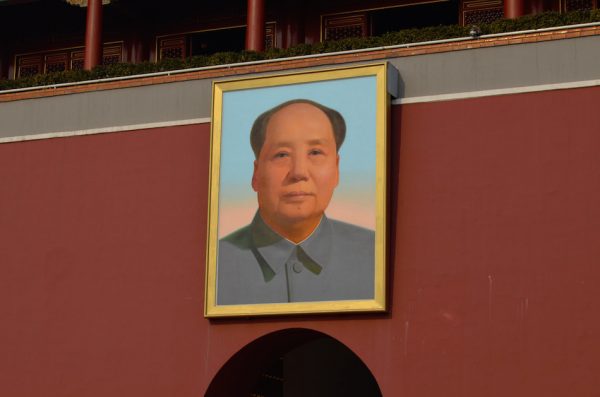
Historical evidence from the early 1950s reveals a consistent pattern: CCP diplomacy was never guided by national interest, but by the imperatives of regime survival. Internal archives show that China’s decision to enter the Korean War was shaped less by external security concerns than by Mao’s fear of losing Soviet trust. Declining to fight, he believed, would convince Stalin that the CCP was unreliable—a risk Mao considered more dangerous than the staggering human and economic costs of the war itself.
Domestic propaganda followed the same logic. Internal documents from 1951 openly admitted that anti-American campaigns were designed to “unify thinking and stabilize the internal situation.” Public hostility toward the United States was a tool to maintain ideological conformity, rally political support, and suppress domestic unrest—not a reflection of the regime’s actual geopolitical calculus.
In reality, American power played a stabilizing role for the CCP. The U.S.–Japan alliance, denounced in public, privately reassured Mao and Zhou by limiting Soviet influence in East Asia. What Beijing condemned as imperialist aggression externally served, internally, as a buffer against the power that truly threatened the Party’s autonomy: the Soviet Union.
The contrast between propaganda and strategy could not have been sharper. Public denunciations of the United States and Japan concealed the leadership’s private relief that the emerging American-led order constrained Moscow. Mao and Zhou understood that their survival depended on navigating between two superpowers—and, when necessary, exploiting tensions between them.
Taken together, these episodes reveal a durable pattern in CCP diplomacy: ideological confrontation outwardly, pragmatic reliance on geopolitical realities behind the scenes. The Party’s decisions were driven not by the interests of the Chinese nation but by the need to secure and preserve its own authority. In an era defined by domestic instability, Soviet pressure, the Korean War, and a shifting regional order, the CCP crafted a foreign policy designed above all else to safeguard its rule.
This pattern—public hostility, private pragmatism; nationalist rhetoric, regime-centered strategy—would remain a defining feature of the CCP’s behavior long after the 1950s. Understanding it is essential to understanding China’s foreign policy both then and now.