By Li Jingru
According to overseas media reports, a Hong Kong court ruled on Dec. 15 that Jimmy Lai, founder of Next Digital and Apple Daily, was guilty on three charges under Hong Kong’s National Security Law, including conspiracy to collude with foreign forces. The charges carry a possible sentence of life imprisonment.
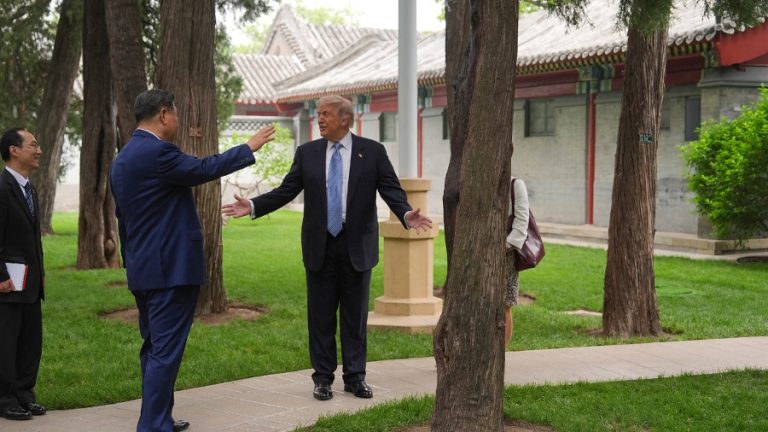
U.S. President Donald Trump was quoted as saying he was deeply disappointed by the verdict. Prior to the ruling, Trump had reportedly urged Chinese leader Xi Jinping to consider releasing Lai. Some overseas observers said the sentence amounted to intimidation against those who dare to speak out, calling it a form of political coercion.
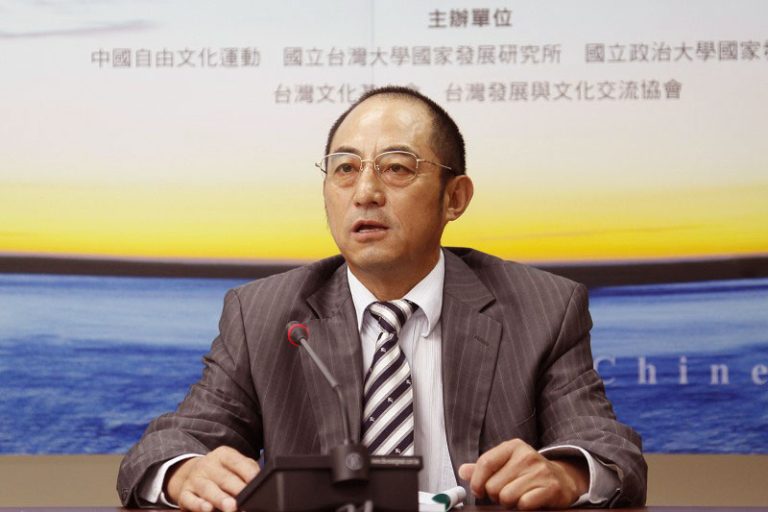
A Vision Times reporter interviewed Yuan Hongbing, a Chinese legal scholar living in Australia who has long commented on internal developments within the Chinese Communist Party (CCP), to discuss the case and related political developments.

Xi Jinping’s rule has become ‘thoroughly gangsterized,’ Yuan says
Yuan said Lai was “a hero who fought for democracy” and described him as someone who had the opportunity to leave Hong Kong but chose to remain.
Success
You are now signed up for our newsletter
Success
Check your email to complete sign up
“By offering his own life as a sacrifice to the cause of Hong Kong’s freedom and democracy, he walked into the dark prison of CCP tyranny,” Yuan said. He argued that the charges against Lai were fabricated and that the ruling reflected what he described as the CCP’s complete abandonment of basic legal principles.
Yuan claimed that the CCP’s political system has, in recent years, become increasingly “gangsterized,” not only in domestic governance but also in its diplomatic conduct. He cited remarks by Chinese diplomats overseas that he characterized as aggressive and threatening, arguing that such behavior reflected a broader political culture shaped from the top down.
According to Yuan, this pattern extends into internal governance. He alleged that senior CCP officials routinely use crude and threatening language in internal meetings, creating what he described as a political environment driven by fear and brutality. Yuan attributed this atmosphere to what he described as Xi Jinping’s personal traits and political style.
Allegations of secret executions involving military officers and Gao Zhisheng
Yuan cited what he described as information from “individuals of conscience” within the CCP system and rumors circulating in Beijing political circles. He claimed that after the CCP’s 19th National Congress, a secret detention and execution facility was established near Beijing’s Xiyuan area under Xi’s direct authority.
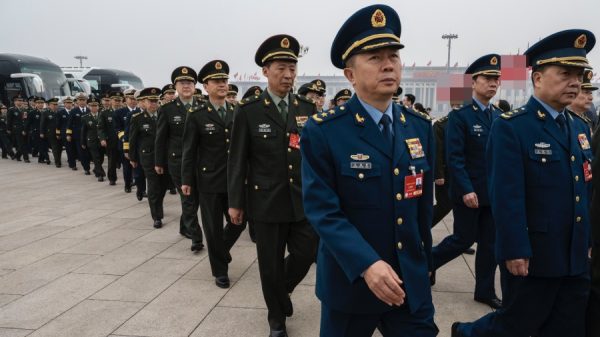
According to Yuan, a group of military officers at the rank of major, lieutenant colonel, colonel, and senior colonel—whom he said were implicated in cases of “political disloyalty” involving senior figures such as Miao Hua and He Weidong—were allegedly executed at this facility. He claimed their families were later notified that the officers had “died in the line of duty.”
Yuan further claimed that similar executions had taken place during earlier purges linked to former senior military leaders Xu Caihou and Guo Boxiong.
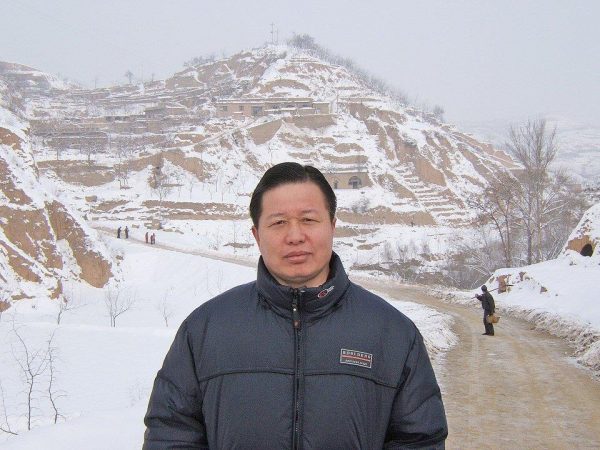
He also alleged that prominent Chinese human rights lawyer Gao Zhisheng had already been secretly executed on Xi’s direct orders and that Gao was subjected to severe torture prior to his death. These claims have not been independently verified.
Beijing fiscal strain and continued military expansion
Yuan said China’s economic and fiscal conditions were deteriorating sharply, even as military spending continued to expand. He claimed that internal sources indicated that, aside from Beijing’s Haidian District, most districts in the capital would only be able to pay civil servants eight to nine months’ worth of salaries in 2025.
According to Yuan, this fiscal strain in the capital suggested even more severe conditions in other provinces, particularly in poorer and remote regions.
He further claimed that China’s 2025 university graduate employment rate stood at around 60 percent, including what he described as large numbers of unstable or temporary jobs. Yuan estimated that newly unemployed graduates could number close to five million, with total graduate unemployment reaching approximately 20 million when combined with previous years.
Xi’s ambitions and alleged plans regarding Taiwan
Yuan said Xi’s determination to pursue military action against Taiwan stemmed from what he described as Xi’s personal political ambitions. He recounted a personal anecdote from 1988, when Xi was still a mid-level official, claiming that Xi spoke of ambitions for China to “manage the world” and fulfill the global objectives of communist ideology.
Yuan alleged that Xi’s inner circle has since echoed these ambitions, portraying Xi as a historical figure on par with Mao Zedong.
Alleged new directives on Taiwan policy
Yuan also cited information he attributed to internal CCP sources, claiming that Xi issued three new directives on Taiwan policy on Oct. 10, 2025. According to Yuan, these directives allegedly instructed CCP United Front and Taiwan-affairs bodies to work with figures in Taiwan’s opposition parties to block increased defense spending, advance legislation favorable to United Front objectives, and weaken the governing administration’s capacity.
Yuan claimed these measures were intended to pave the way for a future military resolution of the Taiwan issue.
Warning of a broader international confrontation
Commenting on recent joint military flights by China and Russia near Japan and South Korea’s air defense identification zones, Yuan argued that the maneuvers reflected what he described as a growing alignment among China, Russia, North Korea, and Iran.
He claimed this alignment posed a major threat to global peace and democracy, warning that continued international complacency toward Beijing could have severe consequences.