By Chen Jing
Over the past two weeks, tensions in Southeast Asia have sharply escalated, with the Thailand–Cambodia border witnessing its most intense military clashes in years. The fighting has displaced an estimated 900,000 people.
Unlike previous border disputes driven by territorial issues, the trigger this time was the proliferation of cross-border online scam compounds—operations widely blamed for severe financial losses and human suffering across multiple countries.
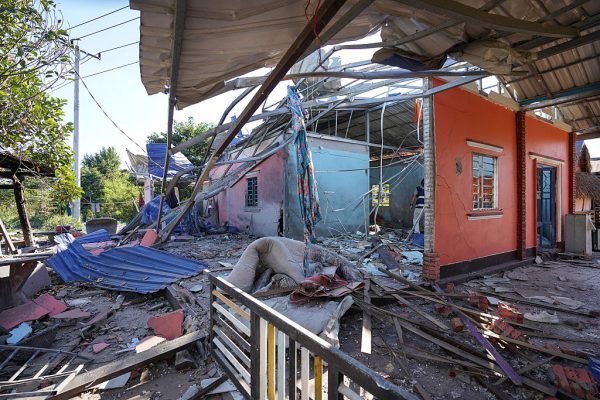
According to reports from the front lines, Thai forces deployed fighter jets to carry out airstrikes against several notorious scam compounds located on the Cambodian side of the border. These sites have long operated in border areas and have been linked to large-scale online fraud that targets victims across Asia and beyond. The strikes set the facilities ablaze and halted operations at those locations entirely.

Chinese public reaction contrasts with Beijing’s silence
News of the airstrikes quickly spread on China’s tightly controlled internet, sparking widespread reaction. Many Chinese internet users—among those most affected by online scams—expressed approval rather than condemnation, with some praising the Thai air force for taking decisive action.
Success
You are now signed up for our newsletter
Success
Check your email to complete sign up
By contrast, Beijing offered no immediate public response. The silence drew attention amid long-standing allegations that many large scam operations in Cambodia are backed by Chinese criminal networks and, in some cases, individuals with political connections. Some of these operations have also been linked to gray-zone economic activities operating under the broader framework of the Belt and Road Initiative (BRI).
For years, Chinese authorities have sought to deflect responsibility for rampant online scams by pointing to transit countries such as Thailand, citing local security conditions. This time, Thai officials made clear they would no longer accept that narrative.
By opting for direct military action, Thailand moved beyond diplomatic protests and law-enforcement cooperation. The strikes destroyed scam facilities and intensified scrutiny over who has benefited from the operations, placing Beijing in a difficult position: condemning Thailand risks inflaming domestic anger among scam victims, while remaining silent leaves unanswered questions about the financial interests involved.
Bangkok summit brands online scams a global enemy
As fighting continued along the border, a parallel diplomatic effort unfolded in Bangkok.
From Dec. 17 to 18, Thailand’s Ministry of Foreign Affairs and the United Nations Office on Drugs and Crime (UNODC) co-hosted the Global Partnership to Counter Online Scams International Conference. More than 300 representatives from 60 countries attended the event.
On Dec. 19, participants issued a major outcome document, the Bangkok Joint Declaration 2025. The declaration marked Thailand’s decision to elevate the fight against online scams to a top national strategic priority.
Under the declaration, participating countries committed to strengthening law-enforcement cooperation, expanding intelligence sharing, and improving asset recovery. The document also highlighted efforts to combat money laundering and the misuse of virtual assets linked to scam networks.

Cambodia absent as Thailand adopts a tougher stance
One notable detail drew attention during the conference: Cambodia, widely regarded as hosting the densest concentration of scam compounds in the region, did not attend.
Thai Foreign Minister Sihasak Phuangketkeow referenced Cambodia’s absence in his opening remarks. While he said the meeting was “not aimed at any specific country,” the comment was widely interpreted as an effort to isolate a neighbor accused of tolerating criminal activity within its borders.
At the closing session, Thai Deputy Foreign Minister Wijavat Isarabhakdi said the damage caused by online scams extends far beyond financial losses, describing it as a destruction of human rights and social trust. Official figures presented at the conference showed that Thailand alone lost approximately $3.16 billion over the past three years and helped rescue more than 10,000 victims from over 40 countries.
UN representatives said East and Southeast Asia collectively suffer losses approaching $40 billion annually due to online scam networks.
Thailand shifts to combined military and diplomatic pressure
Taken together, the border clashes and the Bangkok declaration signaled a shift in Thailand’s approach to combating online scams. Bangkok has moved from a strategy focused primarily on investigation and coordination to one combining military action with diplomatic pressure.
Thai officials said the goal is to dismantle scam networks operating along the border and disrupt the financial and logistical structures that allow them to function. The combination of airstrikes and international coordination has intensified worldwide scrutiny of cross-border scam operations.
As pressure increases, questions have emerged over accountability within the broader scam ecosystem, including the role of transnational criminal networks and the jurisdictions in which they operate.