The Tuidang movement, started in November 2004, encourages Chinese around the world to renounce their oaths made to lay down their lives for communism when they joined the Chinese Communist Party (CCP) or its affiliated youth organizations. Over the past two decades, hundreds of millions of people have given their assumed or real names to voice their separation from the CCP, the single most deadly regime in human history.
Individuals from all walks of life have taken part in the Tuidang movement. Here, Vision Times translates from the Chinese the statement of an elderly resident of Jining city (濟寧市), Shandong Province, recounting the ravages of communist rule in the community over the decades.
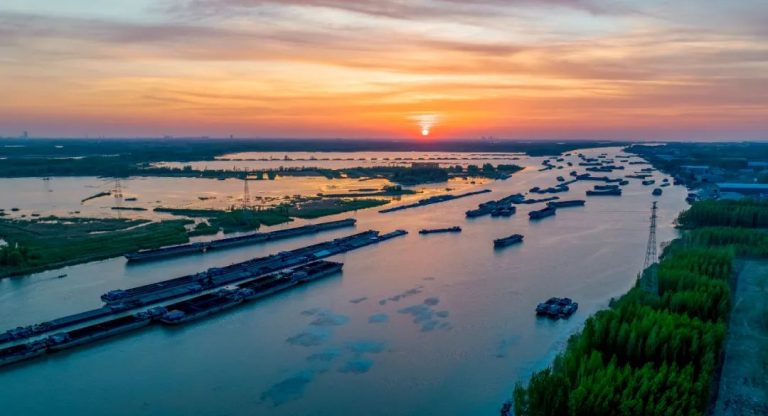
I am now over eighty years old. The mottled mud on the walls crisscrosses like the wrinkles of old age. Through the gaps in the roof where the wind leaks in, an occasional bone-chilling cold seeps through. Outside the window lies the eternal canal [1] that flows by. Under the fading glow of the setting sun, its waters shimmer with ripples of light, like a silver ribbon winding through this ancient land. Yet this glimmer no longer reflects the youthful, unlined face I once had.
Whenever night falls and all sounds fade away, I feel as though I am plunging into an abyss. The past surges back like a tidal wave. Those days torn apart by time are like a rusted sickle, mercilessly slashing open old wounds in my heart, leaving them mangled and bleeding, the pain piercing to the core. This pain is not a brief stab, but a slow-acting poison, seeping gradually into my bones, devouring every last trace of vitality I have left.
The city of Jining, once as warm as a mother’s embrace, is for me a wound that will never heal. Every inch of its land is carved with blood, tears, and despair. What I wish to tell is not a heroic legend, nor some whitewashed tale of splendor, but rather how we — ordinary people as insignificant as dust — were ruthlessly crushed into the mud by the giant cyclones of a red storm, ground into the ashes of history, with not even the echo of our cries left behind.
- ‘The CCP has done great harm to China’s international reputation’: Statements From the Tuidang Movement (May 2025)
- 453 Million Quit the CCP: Inside the Global Spiritual Awakening Taking Over China
Success
You are now signed up for our newsletter
Success
Check your email to complete sign up
Looking back, it all seems to have begun only yesterday. It was the early 1950s, and I was just a ten-year-old boy, living in a remote village south of Jining city. The village nestled along the canal, whose waters were clear and abundant, nourishing the land. My father was an honest, hardworking “rich peasant,” his hands thick with calluses from year after year of tilling a few mu of land. My mother wove cloth by the canal, diligently producing rough yet warm fabrics.
We were not wealthy, but our lives flowed steadily and orderly, much like the canal itself. In spring, willow branches sprouted green buds, and children played along the riverbanks, their laughter ringing like bells. At harvest time, the rice fields turned golden. My father would return home carrying his sickle, a satisfied smile always on his face. My mother would cook a steaming pot of rice porridge, and our family would sit together on the kang, savoring that simple happiness.
Who could have imagined that this calm was as fragile as glass? The storm of “land reform” arrived like dark clouds pressing down, sweeping in silently. They claimed to “liberate” poor peasants and overthrow the “exploiting class,” yet where in our village were there any “heinous landlords” to be found? My father merely earned more through harder work, a laborer dependent on the weather like any other farmer. At that moment, my heart sank into an icy abyss. I sensed that merciless shackles were about to be fastened onto our family.
That unforgettable night, village militiamen burst into our home like ravenous wolves. They wielded crude clubs, their eyes glowing with a frenzied brutality, as if possessed by starving demons. The air was suffocating, and reeked of tobacco and sweat.
“Old Mr. Ma, you are an evil landlord, exploiting the masses!” they roared, violently dragging my father off the brick kang stove.
My mother rushed in upon hearing the commotion. Her knees buckled, and she fell to the ground, tears pouring down as she begged hoarsely, “Sirs, please spare him…” But they paid no heed. They hauled my father like a chicken to the ancient scholar tree at the village entrance. Moonlight filtered through the swaying branches.
I clutched my younger brother tightly, shrinking into a dark corner. My heart pounded like a drum, my legs trembling. Fear wrapped around my body like icy tentacles. My father was bound tightly to the tree trunk, draped in rags scrawled with filthy insults, a tall paper “landlord hat” perched on his head. The villagers were forced to form a circle — some compelled to throw stones, others to spit. The air echoed with curses and muffled sobs.
A stone smashed my father’s forehead, blood snaking down his face. In a trembling yet resolute voice, he murmured, “I am not a landlord. I am just a farmer…” At that moment, my heart was shredded by blades. His eyes, the ones that once gently looked at my face, were now filled with grievance and helplessness, an image I will never forget.
But the militiamen were deaf to it all. They raised their shovel handles and smashed them down on my father’s legs. The sharp crack of breaking bones exploded in the silent night like firecrackers, drilling straight into my ears and echoing endlessly. The pain was not only his — it surged through me like a flood. I clenched my teeth, tears streaming silently, wishing I could rush forward and shield him with my small body. Yet I could only tremble helplessly, watching him collapse in a pool of blood, his twisted shadow stretched long under the moonlight, like a broken soul.
From that day on, my father was permanently crippled. His legs were twisted, and he could no longer work the fields. Overnight, our land was confiscated. Our family became members of the despised “black five classes.” Neighbors’ gazes turned distant and fearful. Former smiles dissolved into cold, retreating backs.
For our family’s survival, my mother dragged her exhausted body to the canal every morning to collect clams. Their shells were sharp as knives, slicing her palms. Blood mixed with river mud, staining the shallows red. She sold the clam meat for a few handfuls of grain, always forcing a smile when she returned. “Children, eat. Mother isn’t hungry.” Yet her eyes were sunken deep like dried wells, filled with endless sorrow and despair.
Then the famine arrived, like a beast of the end days. It was 1958, the era of the Great Leap Forward. The CCP shouted slogans about smelting steel, forcing villagers to smash their pots and pans — even heirlooms passed down for generations — into twisted scrap metal unfit for any use. Smoke rose sky-high, and the air stank of scorched rust. Crops rotted in the fields, unharvested.
We swallowed tree bark, gnawed on clay, going so far as to catch rats to stave off hunger. The bitterness of soil and the stench of rats still linger on my tongue to this day. From 1959 to 1961, rural Jining became a living hell. Corpses lay everywhere. Bodies floated in the canal — some said desperate famine victims had jumped in, others that the water carried them there. The stench rose from the water as flies swarmed. Children’s cries intertwined with mothers’ sobs into a dirge of despair.
I remember that winter night when my brother was reduced to skin and bones, his eyes sunken like a ghost’s. Curled up on the kang, he first cried weakly, then lacked even the strength to cry, leaving only faint breaths like a dying candle. I sneaked to a neighboring village in the snow to steal a few sweet potatoes. The frostbitten pain in my hands was nothing compared to the terror in my heart.
I was discovered by the militia. They hung me from a tree and whipped me with thick leather belts. My flesh split open, the pain burning like fire. The scars on my back still ache faintly today, indelible brands. My brother did not survive long enough to see me return. He died in the bitter winter of 1960. By the time I got home, he was already barely breathing. Holding his cold body, my tears burst like a broken dam. “Brother failed you…” My mother returned to find him dead. She collapsed into madness, wailing until her voice was hoarse. She carried his body to the canal and sat on the stone steps crying for three days and nights, her tears freezing into frost on her aged face. Then the ripples swallowed her too.
I witnessed my mother throw herself into the river from afar. My heart turned to ashes. Why was heaven so cruel? The Great Leap Forward — this man-made disaster falsely labeled a “natural calamity” — how many innocent souls did it kill? Jining’s streets echoed with heart-wrenching cries, yet no one dared call it what it was: tyranny. People could only whisper in the dark, praying for mercy.
My sister and I became orphans and later lost contact entirely. I was sent with others to a collective farm in the barren wastes on Jining’s eastern outskirts. It was a place of endless wind and sand. People labored from dawn till night, digging ditches, planting fields, repairing tools. Their hands blistered and bled, yet they received only watery porridge and bitter wild greens. We lived in drafty mud huts. In winter, the north wind cut like knives, cracking hands and feet until flesh split open.
There I met an elderly intellectual, Professor Zhang, a retired teacher from Jining Normal School. He was sent there merely for raising questions about farm management and labeled a “Rightist.” During a struggle session, Red Guards forced him to drink ink he had hidden. The black liquid slid down his throat, his face contorted in agony. Then they beat him to death with clubs. I watched the light fade from his eyes, filled with despair, defiance, and one final question to humanity: “Why? We only wanted to live…”
The Cultural Revolution erupted when I was in my twenties. I worked at a textile factory in Jining. In 1966, Red Guards rampaged through the streets like rabid dogs. Temples were smashed, books burned, even ancient steles at the Confucian Temple were shattered into rubble. The canal water turned murky, as if soaked in blood and tears. Willow branches drooped as though mourning the dead.
My uncle, a devout Buddhist, kept only a small Buddha statue to give him spiritual strength. His neighbors reported this “superstitious” behavior. Red Guards burst in, smashed the statue to powder, and tied my uncle to a pillar. They burned his soles with hot coals. The stench of scorched flesh filled the air. His screams echoed like ghosts’ wails. I hid in the shadows, fists clenched, nails digging into my palms, powerless to help. Before dying, he murmured “Amitabha.” Why must faith be crushed to ashes?
Tragedies followed endlessly. A neighbor of mine was paraded for saying “there are flaws in the government’s policies.” Another starved to death in a labor camp. A widow froze to death on the street. Jining’s canal seemed forever stained with crimson.
Chairman Mao died in 1976. The Cultural Revolution ended, but the shadow lingered. Reform and opening brought skyscrapers, but our wounds never healed. In 1989, my son joined student demonstrations for democracy. He was arrested, tortured, released a broken man, and later hanged himself in despair.
Now Jining is unrecognizable — the new parkgrounds are filled with the laughter of happy visitors. Yet as I walk with my cane, I still hear whispers of the buried dead. The CCP still rules, now dressed in fine suits, speaking of the “Chinese Dream.” But to us, it is only a continuation of the old nightmare. I hear of Falun Gong practitioners having their organs harvested while still alive, of protesters disappearing for petitioning the government of Hong Kong youths crushed. Tyranny has never stopped, it has only grown more insidious.
I am old now. I sit by the canal, watching the rippling water. The wind carries the salty stench of the past, its blood and tears. Perhaps only in death will I find peace.
I am an old man who wishes only to be left undisturbed. Today I suddenly remembered that I once joined the CCP, the Communist Youth League, and the Young Pioneers. I never thought much of my membership in them. Today, I solemnly declare my withdrawal from all three of these organizations.
世界是一扇窗,
透进微光,却挡不住旧日的阴影。
窗台上积尘如霜,
轻抚一触,碎成河影清清。
运河蜿蜒,银带缠腰肢,
映照柳影婆娑,谁家儿童笑语低?
春风拂过,绿意初醒,
却总有秋叶飘零,落入无声的旖旎。
The world is a window,
letting in faint light, yet unable to block old shadows.
Dust gathers on the sill like frost;
a gentle touch, and it shatters into the reflections on the water.
The canal winds like a silver sash,
mirroring swaying willows—whose children’s laughter is that?
Spring awakens in green,
yet autumn leaves always fall, their beauty drifting into silence.
— “A Man of the Righteous Path” (正道之人)
Dec. 15, 2025
[1]: A reference to the Grand Canal, completed in the early 600s AD.