Following criticism from the Philippine Department of National Defense that the Chinese Communist Party’s (CCP) military exercises encircling Taiwan undermine regional peace and stability, Philippine Senator Francis “Kiko” Pangilinan also issued a strong rebuke, saying the drills have brought hostility to the entire region. He stressed that peace cannot be built on threats of invasion, military expansion, or war exercises, but rather on the right of individuals and peoples to self-determination, free from bullying or annexation by any major power.
In a statement released on Jan. 1, Pangilinan said that at a time meant to demonstrate goodwill during the year-end and New Year period, the CCP’s military exercises instead brought “ill will” to the people of Taiwan, to Filipinos living, working, or vacationing in Taiwan, and to the whole of East and Southeast Asia.
The statement noted that peace cannot be founded on threats of invasion, military expansion, or war drills, but on the individual and collective right to self-determination, free from bullying or annexation by any great power, whether China or the United States.
Pangilinan said that humanity shares one planet, and that the future should not be determined by missiles or expedient alliances, but by the ability to cooperate on social justice, climate action, and democratic rights. “Let us guide the Fire Horse of 2026 toward progress rather than destruction,” he said.
In response, the Chinese Embassy in the Philippines singled out Pangilinan by name, stating that the Taiwan issue is “purely China’s internal affair and does not allow interference by external forces.” It claimed that when the Philippines established diplomatic relations with China, it clearly pledged to adhere to the one-China principle, and called on relevant Philippine figures to abide by the government’s position and stop interfering in China’s internal affairs.
Success
You are now signed up for our newsletter
Success
Check your email to complete sign up
Taiwan–Philippines relations
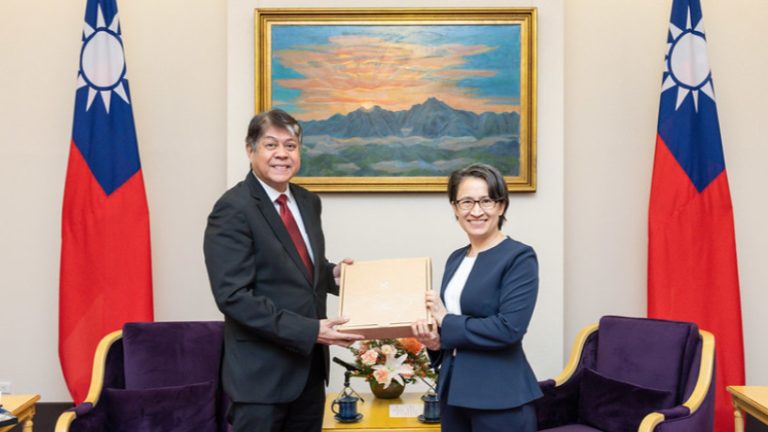
Pangilinan currently serves as chair of the Philippine Senate’s Committee on Agriculture and Committee on Justice. In October last year, he visited Taiwan and met with Vice President Hsiao Bi-khim and Foreign Minister Lin Chia-lung, among others, to exchange views on enhancing substantive Taiwan–Philippines relations.
The Philippine government estimates that about 200,000 Filipinos currently live or work in Taiwan. In an interview with local media in India last August, Philippine President Ferdinand Marcos Jr. said that if a conflict were to break out in the Taiwan Strait, the Philippines would not be able to stay on the sidelines.
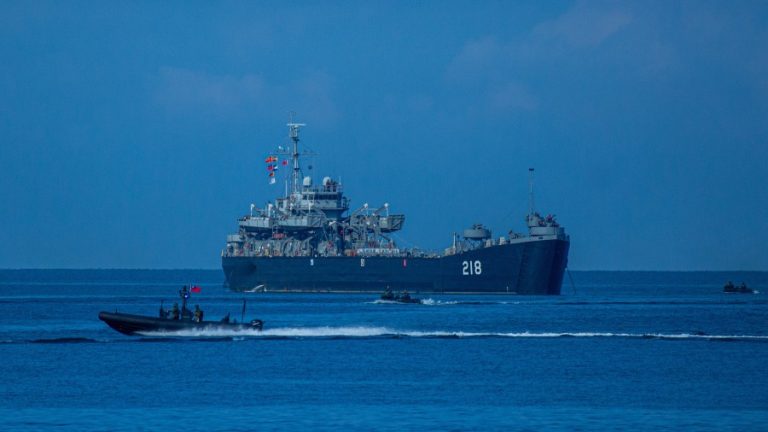
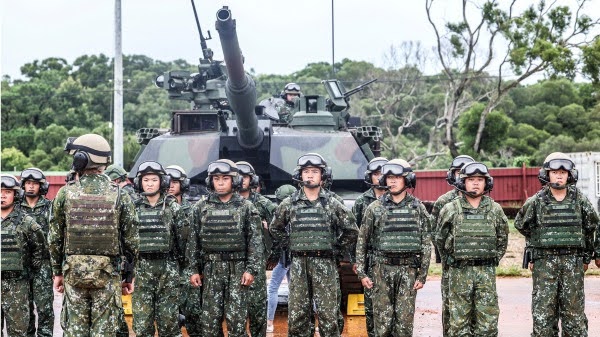
On Dec. 29 last year, the PLA’s Eastern Theater Command announced that it had launched military exercises in the sea and airspace surrounding Taiwan. In recent days, the Philippine think tank Stratbase, the Manila Economic and Cultural Office (MECO), and the Philippine Department of National Defense have all issued statements expressing concern.
MECO, which serves as the Philippines’ de facto embassy in Taiwan, said such developments could affect the safety and livelihoods of Filipinos in Taiwan, and called on all parties to exercise maximum restraint and avoid escalatory actions.
The Philippine Department of National Defense, which rarely comments on the Taiwan situation, also expressed deep concern over China’s military drills and coast guard actions toward Taiwan, stressing the importance of upholding international law and regional norms, including the principle of resolving disputes peacefully.