By Yang Tianzi, Vision Times
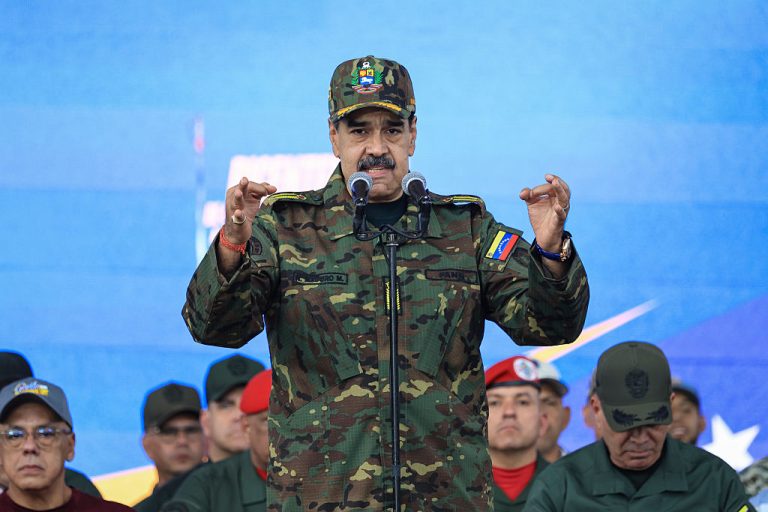
The global political landscape was jolted at the start of 2026 after U.S. forces carried out a surprise operation that resulted in the arrest of Venezuelan President Nicolás Maduro and his wife Cilia Flores in the early hours of Jan. 3. U.S. President Donald Trump later announced that the U.S. would assume governance over Venezuela, in an unprecedented move that has fundamentally reshaped South America’s political order and triggered shockwaves across the world.
Among those most rattled by the development is the Chinese Communist Party (CCP), which for years had been one of Maduro’s staunchest international backers.
- Venezuela’s Opposition Declares Freedom Following Maduro’s Arrest
- Maduro Indicted on Multiple Felonies, Including Cocaine Conspiracy
- US Forces Capture Maduro: China’s Influence in Venezuela Crippled
Beijing reacts
Beijing responded swiftly and forcefully to the political earthquake. China’s Ministry of Foreign Affairs issued two statements in rapid succession condemning the U.S. military action — an unusually intense diplomatic reaction that underscored the leadership’s alarm.
Success
You are now signed up for our newsletter
Success
Check your email to complete sign up
Terry Haines, founder of Washington-based consultancy Pangaea Policy, told the South China Morning Post that the operation was far from an isolated incident. Instead, he described it as a concrete implementation of the Trump administration’s revised National Security Strategy in Latin America.
“The strategic intent from Washington is unmistakable,” Haines said. “The goal is to comprehensively limit, contain, and weaken China’s economic and geopolitical influence in Latin America.”
Haines added, “Whether it’s Venezuela, Colombia, Panama, Argentina, or elsewhere in South or Central America, the United States will not allow China to continue expanding within its traditional sphere of influence,” he added.
A ‘direct’ blow to China’s LATAM strategy
For Beijing, Maduro’s arrest represents far more than the loss of a diplomatic ally. Over the past decade, China had built a vast economic footprint in Venezuela through oil-backed loans, infrastructure projects, and Belt and Road investments. With regime change now underway and U.S. control looming, those investments face the risk of total loss.
Haines bluntly warned that the U.S. action would have a “direct and negative” impact on China’s geopolitical interests across Latin America. Even more troubling for Beijing, analysts say, is the demonstration effect: a formerly China-aligned leader being forcibly removed by U.S. military power.
Jeremy Chan, senior analyst at Eurasia Group and a former U.S. official stationed in Shenyang, summed up the broader psychological impact with a key observation: “Overall, from Havana to Beijing, dictators are certainly more uneasy today than they were yesterday.”
Beijing scrambles for new energy sources
The most immediate economic fallout for China lies in energy security. As the world’s second-largest oil consumer, China has also been Venezuela’s largest crude buyer. Through advance payments and long-term contracts, Beijing secured steady supplies of Venezuela’s heavy crude — an important pillar of its diversification strategy.
Simon French, chief economist at Panmure Liberum, wrote in The Times that Trump’s announcement raises a pressing question for Beijing: “After the U.S. move in Venezuela, how will China secure continued access to Venezuelan oil? It will be forced to seek alternative sources.”
Finding replacements is no simple task. Beyond locating new suppliers, China faces higher prices, renegotiated terms, and supply-chain uncertainty at a time when global energy markets are already tight.
Haines cautioned investors that U.S.–China tensions could escalate rapidly following Maduro’s arrest. If Beijing concludes that Washington’s action was a deliberate strike against Chinese influence in Latin America, retaliation across other fronts may be inevitable.
US-Sino relations at stake
Potential U.S. countermeasures could include new tariffs, export controls, or targeted restrictions on specific technology or financial sectors. This time, Washington did not rely on sanctions or diplomatic isolation—it deployed military force to detain a sitting head of state. That shift, analysts say, has dramatically altered authoritarian leaders’ calculations regarding regime security.
From Cuba’s Castro successors and Nicaragua’s Ortega to Iran’s Khamenei and Russia’s Putin, leaders long opposed to Washington must now confront a sobering question: When the United States chooses “decapitation” tactics, how much protection do alliances and geopolitical backing truly offer?
Trump’s declaration that the United States will govern Venezuela raises another critical issue: how Washington will manage Venezuela’s oil reserves and massive foreign debt—particularly the tens of billions owed to China.
A new world order
U.S. control over Venezuelan energy assets could allow Washington to redirect exports toward allies, weaponize energy supply, and use debt restructuring as leverage in negotiations with Beijing. Such a strategy would not only weaken China’s energy security but also pressure it to concede on other strategic fronts.
The U.S. military operation marks a new, more confrontational phase in U.S.–China strategic rivalry. Venezuela is no longer merely a South American domestic matter — it has become a frontline battleground in a new Cold War.
For Beijing, the setback represents not only financial loss but a serious blow to strategic credibility. For Washington, the successful operation demonstrates resolve and capability, but also risks accelerating broader confrontation and raising global geopolitical volatility.
From Caracas to Beijing, from Washington to Havana, the world is witnessing the collapse of an old order and the emergence of a new one. And as Jeremy Chan observed, the unease among authoritarian leaders — from Havana to Beijing — may only be beginning.
Editorial note: Views expressed in this article are the opinions of the author and do not necessarily reflect the views of Vision Times.