By Li Jingyao, Vision Times
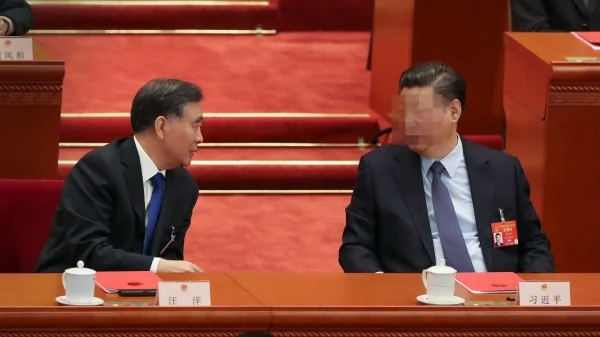
Factional infighting at the highest levels of the Chinese Communist Party (CCP) continues to intensify, centering on whether current leader Xi Jinping will step down — and, if so, who will succeed him. Some analysts now predict that senior CCP elders may convene a Fifth Plenum before March to formally remove Xi, whom critics describe as having been reduced to a “political figurehead.”
The 19th meeting of the 14th National People’s Congress (NPC) Standing Committee concluded on Dec. 27, 2025, but official coverage suggested unusually sharp internal divisions, as well as a failure to reach consensus on key matters.
RELATED: Is Ma Xingrui the Next to Fall? Inside Beijing’s Three-Stage Purge Playbook
Deadlock at the top
According to state media outlet Xinhua, NPC Standing Committee Chairman Zhao Leji presided over the closing session, during which 14 legislative items were reviewed, but only six were passed. These included laws or amendments related to hazardous chemicals safety, fisheries, civil aviation, the national common language, foreign trade, and an interpretation of Article 292 of the Criminal Procedure Law.
Success
You are now signed up for our newsletter
Success
Check your email to complete sign up
Former Wen Wei Po journalist Jiang Weiping, now operating an independent media channel, noted that eight draft laws failed to pass and were not publicly named. He argued this was a strong signal of intense internal disputes, likely tied to power struggles and sensitive personnel issues.
RELATED: Xi’s Authority Appears Weakened as Rumors Swirl of Politburo Pushback
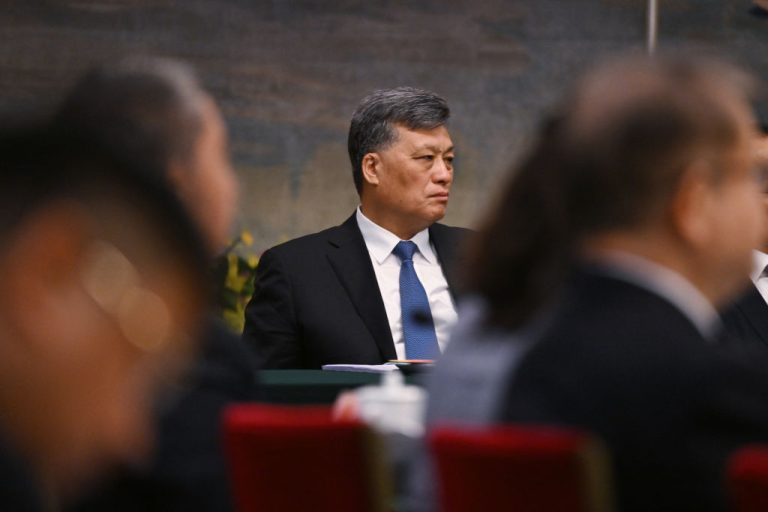
“The bills that passed were largely non-controversial,” Jiang said. “Those that stalled likely involved personnel matters, possibly including the Ma Xingrui case.”
Talks of a Fifth Plenum
With the CCP’s Third Plenum held in July 2024 and the Fourth Plenum delayed until October 2025, attention has now shifted to when a Fifth Plenum might be convened. Jiang believes recent political developments, such as year-end Politburo meetings and internal “democratic life meetings,” suggest that a Fifth Plenum could be called at any time.
“Whether a meeting is held is no longer Xi’s decision,” Jiang said. “It’s now determined collectively by the elder statesmen, figures like Hu Jintao and Wen Jiabao, through a decision-coordination mechanism.”
RELATED: Quiet Removal of Xi Jinping Propaganda Reported Across China
According to Jiang, Xi has long feared internal meetings, delaying them whenever possible due to mounting criticism and the risk of removal. However, he argues that Xi has effectively lost control of the military, allowing the elder faction to reclaim the initiative.
On Dec. 27, the NPC Standing Committee approved a decision to convene the Fourth Session of the 14th NPC on March 5, 2026. Jiang interprets this timeline as a strong indication that a Fifth Plenum could be held before March. “In theory, even the Fifth, Sixth, or Seventh Plenum, or an early 21st Party Congress, are all possible,” Jiang said, adding, “It depends on how prepared each faction is and how far the struggle escalates.”
He added that Hu Chunhua is increasingly being positioned as a successor, particularly if Hu Jintao’s health allows him to exert steady influence behind the scenes.
Party ‘elders’ regain control
Jiang pointed to recent кадров changes as evidence that preparations are underway. Several officials linked to the Communist Youth League faction have reemerged, including Lu Dongliang, now serving as governor of Shanxi Province.
He also cited recent handling of a high-profile urban enforcement (chengguan) death in Fujian Province as a sign that central authority has shifted away from Xi’s traditional power base. In previous years, such cases, especially in Fujian, long considered Xi’s political stronghold, would likely have been tightly suppressed. This time, however, the officer involved was arrested and publicly named.
“This would have been unthinkable before,” Jiang said. “It shows that Xi’s protective shield is gone.”
Setbacks for Wen Jiabao
Despite the elder faction’s apparent advantage, recent developments suggest the power struggle remains intense. On Jan. 5, the Central Commission for Discipline Inspection (CCDI) announced an investigation into Tian Xuebin, a former vice minister of water resources and one-time secretary to Wen Jiabao.
The case sparked speculation that Wen himself might be under renewed pressure. However, political commentator known as “Wall Insider” dismissed the notion, saying Tian had long distanced himself from Wen after Xi sidelined the former premier. “Tian used his post for personal gain, and Wen had no involvement,” the analyst said.
According to this assessment, Xi lost military control at the Third Plenum and party control at the Fourth Plenum, leaving him in a position comparable to Hua Guofeng, a leader in name only. “Even if negative rumors about Wen Jiabao surface now, they can no longer change the broader trajectory,” the commentator said. “Xi’s exit and Hu Chunhua’s rise are already baked in.”
China watchers agree that much hinges on timing, elite consensus, and the health of key elder figures. What is increasingly clear, however, is that Xi’s ability to reverse his political decline appears severely constrained.
As Jiang Weiping concluded, “Xi is no ordinary opponent — he has no bottom line and is skilled in power games. But even so, all signs suggest a decisive meeting before March is unavoidable.”
Editorial note: Views expressed in this article are the opinions of the author and do not necessarily reflect the views of Vision Times.