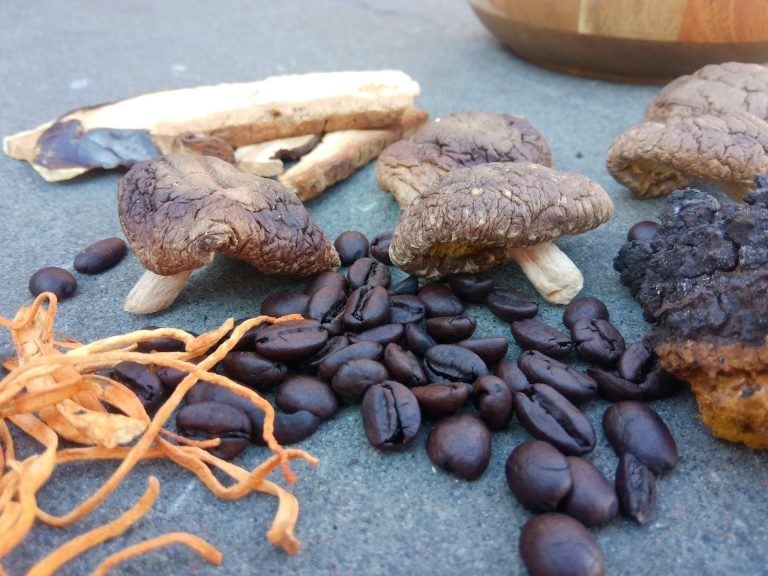
Have you transformed your morning routine with the latest and greatest trend, or did you miss the memo? Wake up and smell the mushroom coffee! What may sound like a choke-it-down concoction, is actually catching on. It doesn’t taste half bad, and is touted as providing incredible benefits for health, stamina, and mental clarity; key word being “incredible.”
Here we’ll take a look at what you can actually expect from these popular blends, and what to look for if you opt to try them.
Why mushrooms?
As you may know, I’m wild about mushrooms. They’re fascinating, useful, beautiful, and many are downright delicious. On top of that, some mushrooms are prized for their remarkable health benefits. Although they don’t taste much like coffee, who wouldn’t want their morning brew to give them a boost wherever they need support? Actually, the idea is not new.
During World War II, chaga, a parasitic fungus that grows on birch trees, was used as a coffee substitute in Finland. Chaga has a mild, earthy flavor with a touch of bitterness. It helps sustain energy, not with caffeine, but with its adaptogenic properties.
Similarly, in Japan, as a banned import, coffee was blended with dried shiitake mushrooms to make a scarce commodity go further. Shiitakes are the second-most-consumed mushroom in the world, and offer many science-backed health benefits.
Success
You are now signed up for our newsletter
Success
Check your email to complete sign up
80 years later, we can thank a growing focus on wellness, as well as some smart marketing techniques, for the recent popularization of mushroom coffee blends.
Common claims for health benefits of mushroom coffee
Most mushroom coffee blends include a variety of medicinal mushrooms, including chaga, cordyceps, lion’s mane, reishi, turkey tail, and more. Each is called out for a specific health benefit, although most mushrooms boast multiple medicinal properties.
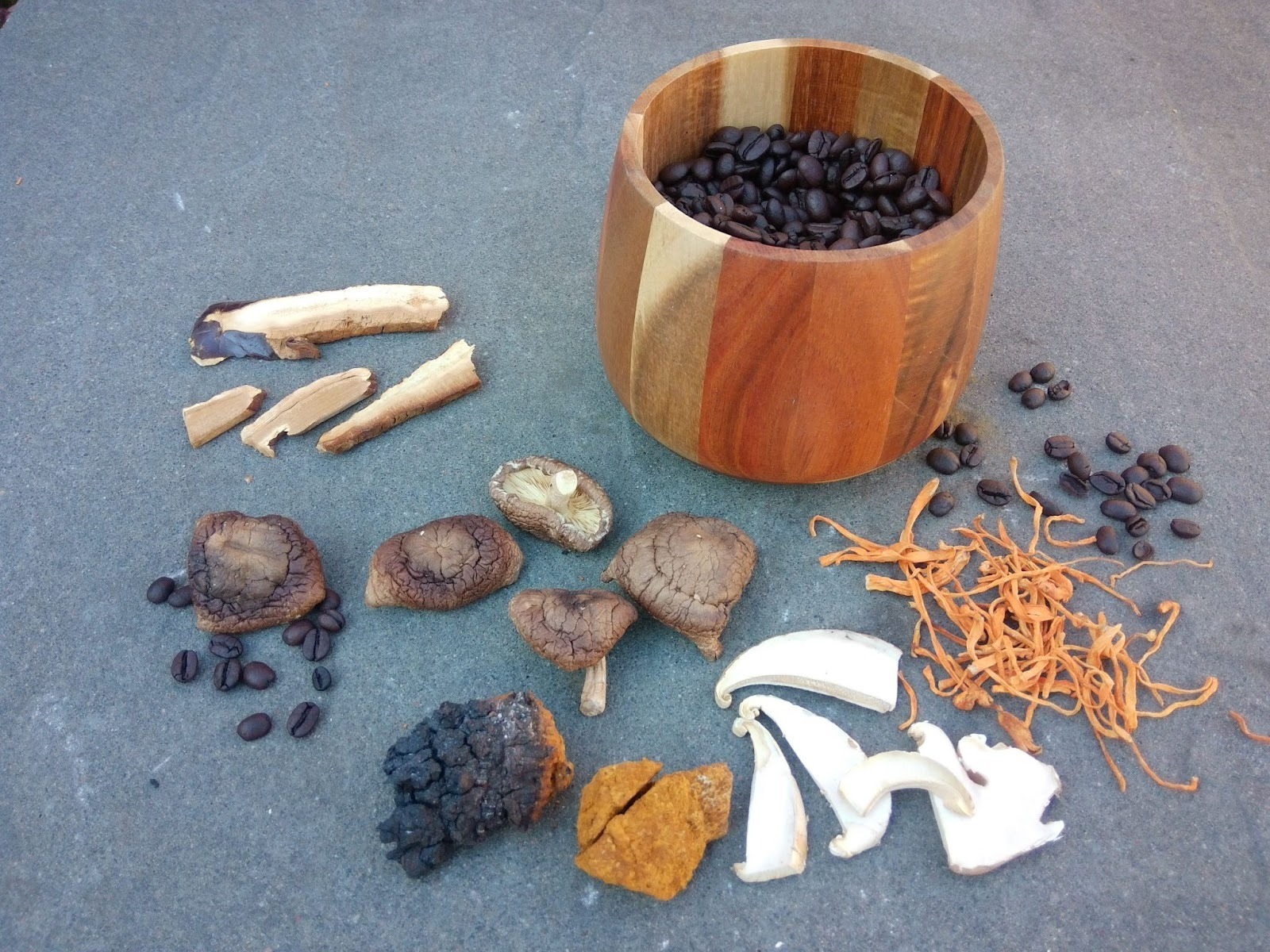
Chaga (Inonotus obliquus) is high in antioxidants, may lower cholesterol levels, support immune function, and reduce blood pressure. It has been found to exhibit anti-tumor activities.
Cordyceps (C. militaris) have long been applied in traditional Chinese medicine (TCM) to boost energy and endurance. These parasitic fungi were traditionally painstakingly collected from the wild, where they grew out of parasitized caterpillars. Today they are commonly cultivated on a grain substrate.
Lion’s mane (Hericium erinaceus) is believed to enhance focus and cognitive function. TCM also uses it to support healthy digestion.
Reishi (Ganoderma lucidum), also called “the mushroom of immortality,” is a known adaptogen, and is considered beneficial to cancer treatment.
Turkey tail (Trametes versicolor) has been shown to support immune function, reduce inflammation, and improve gut health.
And the list goes on, with some blends incorporating medicinal herbs or other superfoods as well.
One clear benefit of mushroom coffees is the reduced caffeine content. Blends that call themselves “coffee” typically contain about half the caffeine of a normal cup of coffee. There are also “coffee alternatives.” These may contain caffeine from other sources, such as black tea or cocoa, or they may be entirely caffeine free.
What is mushroom coffee like?
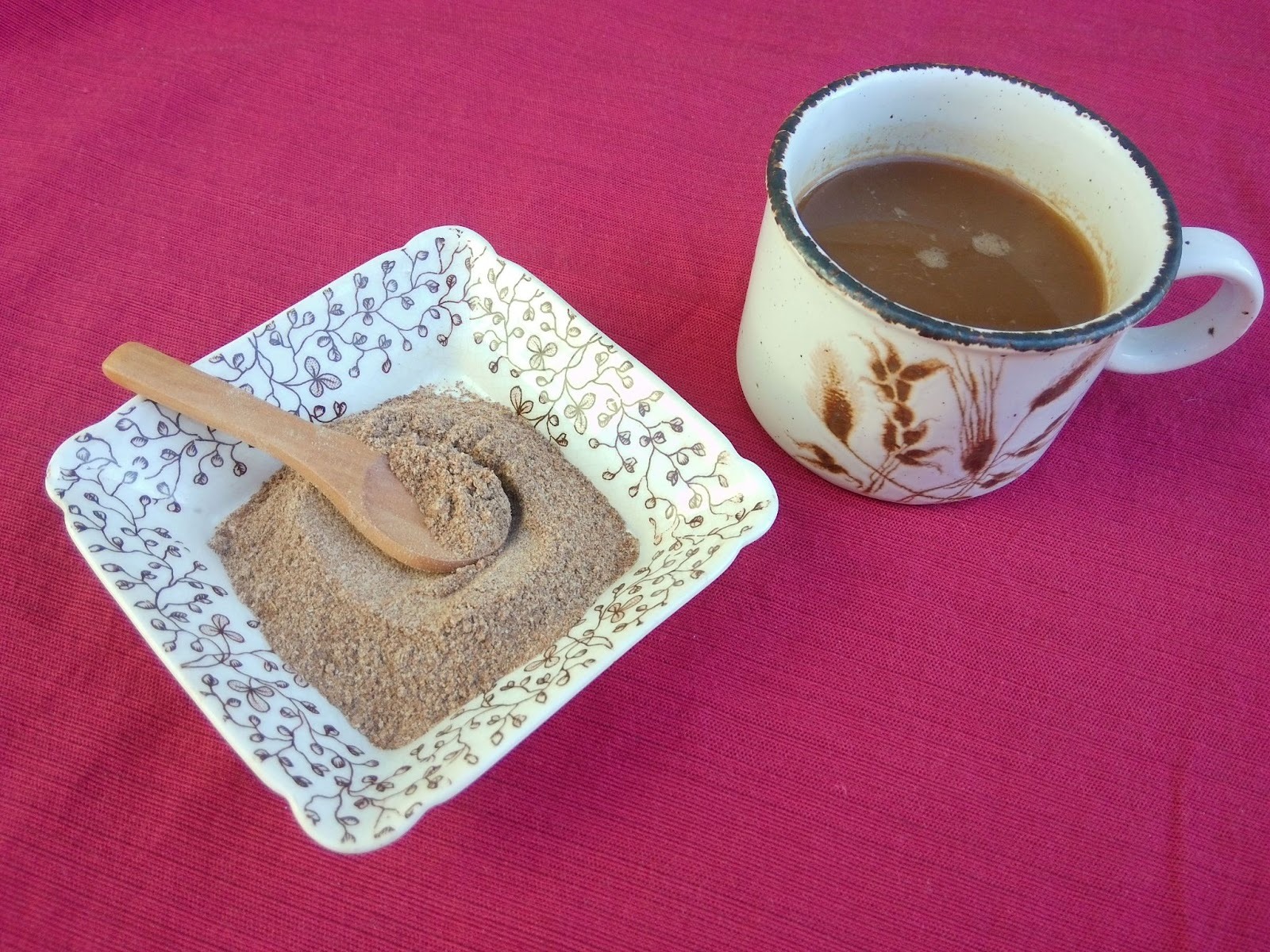
Considering their popularity, I would say it’s safe to assume mushroom coffees and coffee alternatives with mushrooms are generally well-liked by consumers.
Although I’m not a coffee drinker myself, I received one canister of each as gifts on account of my affinity for fungi. I found them equally drinkable, especially with a splash of cream; but I can’t say I saw any noticeable difference in my physical or mental state while I worked my way through them. Both were probably similar in caffeine content to my daily tea intake.
Generally speaking, mushroom coffees are more convenient than brewed coffee, loose tea or even tea bags, as you just add hot water and you’re good to go. However, both of the products I tried were purchased through a pricey subscription. I was certainly not impressed enough to sign up for that.
What to consider:
While the potential benefits are enticing, clinical studies on mushrooms are generally limited to extracts, the traditional form in which medicinal mushrooms have been ingested for hundreds, even thousands of years.
The cell walls of fungi are primarily made of chitin, a polysaccharide that is difficult for us to digest. In order to extract the medicinal compounds from mushrooms, they are simmered in water. With reishi, a further extraction in ethanol is required to obtain its full benefits.
The fungi found in the majority of mushroom coffee blends and alternatives are in raw, powdered form. This raises an important question. While further research may prove otherwise, ancient wisdom suggests that if you just add hot water, the bulk of desirable compounds may never be released while passing through your gut.
In this case the greatest benefit you’ll achieve is a reduction in caffeine — a good goal, but there are many, more-affordable ways to achieve this. Furthermore, the dosage required to achieve results in current findings far exceeds anything you will obtain in a serving of mushroom coffee.
Then again, a modest placebo effect from wishful thinking is not inconceivable.
What to look for
In any case, if you’re keen to try mushroom coffee or a coffee alternative with mushrooms, it certainly can’t hurt (unless, of course, you have some sort of reaction to the mushrooms). There are dozens of these products available online, and they each try to offer something unique; so chances are you can find something tailored to your tastes. Follow these tips for a positive experience:
- Try to find a blend that lists extracted mushroom powder rather than raw, and choose products that are organically grown, without fillers or preservatives.
- Look for the more potent fruiting bodies, which is the actual mushroom, rather than mycelium, which is sort of like the root from which the mushroom grows.
- Be clear about what you’re getting. Beware of the subscription catch on many trial deals, and opt out early if you’re not satisfied.
Conclusion
There is no question in my mind that mushrooms are amazing, but what you can expect from mushroom coffees is dubious. If you are serious about getting real benefits from mushrooms, try incorporating them the traditional way — in simmered decoctions or culinary applications.
Better yet, join the growing family of fun-gals fascinated by fun-guys or visa-versa. There are endless possibilities in both scientific study and creative endeavors featuring fungi, along with other mycological activities such as cooking, cultivating, and foraging for mushrooms. Any of these could be an enriching experience with considerable therapeutic benefits in itself.