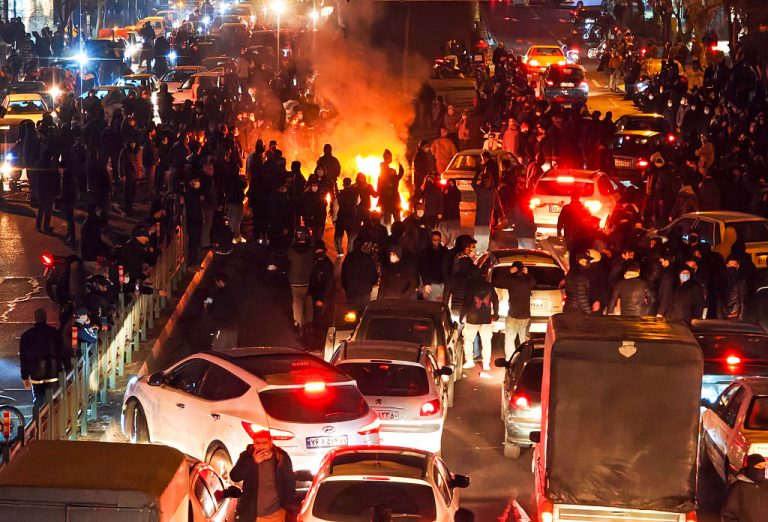
Now in their third week, sweeping demonstrations across cities in all 31 of Iran’s provinces have seen thousands killed as the Islamic Republic resorts to deadly force to quell the unrest.
The protests began on Dec. 28, 2025, as throngs of Iranians took to the streets over severe inflation, a collapsing currency and deepening economic hardship. What was initially driven by bread-and-butter concerns quickly became one of the most sustained challenges to the Iranian leadership in decades, with demonstrators demanding fundamental political change and an end to the clerical establishment’s rule.
By Jan. 14, the U.S.-based Human Rights Activists News Agency (HRANA) reported that at least 2,571 people had been killed in the nationwide unrest, including protesters, civilians and government-affiliated individuals, and that security forces had detained more than 18,000 people. HRANA’s figures are drawn from activist contacts on the ground and represent the highest verified death toll as communication blackouts and internet shutdowns hamper independent verification.
Mass protests meet with regime backlash
The protests represent pent-up popular anger against the Islamic clerical authorities that have been in power since deposing Iran’s monarchy in 1979, and are the largest since unrest of similar scale in 2019, which also resulted in hundreds or thousands dead.
From Tehran’s sprawling boulevards to the bazaar districts of Shiraz and the industrial hubs of Isfahan, demonstrations have persisted despite heavy repression. Videos verified by international news outlets show security forces firing live ammunition into crowds in at least six cities, pushing the death toll ever higher. Hospitals and morgues have been overwhelmed, with footage and witness testimony showing bodies piled in alleys and corridors.
Success
You are now signed up for our newsletter
Success
Check your email to complete sign up
The Iranian government itself acknowledged on Jan. 11 that roughly 2,000 people had died in the unrest, although officials attributed the fatalities not to their security forces but to what they described as “terrorist operatives” and violent agitators from Israel, the CIA, or even ISIS. An Iranian official speaking to Reuters said authorities believed the unrest was driven by groups carrying out “extreme atrocities” that were “unrelated to genuine public protests.”
Iranian state media has spotlighted funerals for security personnel killed during the clashes, and Iran’s judiciary has signaled a hard line against thousands of detainees, with some officials suggesting rapid trials and harsh sentences, including for people charged under broad provisions of Islamic law.
International condemnatiom
Despite its waning legitimacy, the regime is seen as being able to stay in power due to its well-armed and motivated security forces, such as the Islamic Revolutionary Guards Corps. In total, such formations boast about 1 million personnel.
Multiple countries have condemned Iran’s leaders for resorting to bloodshed to quell the protests, while regime authorities have cut internet access nationwide in an effort to stifle communication and reporting.
In response, many demonstrators and families have turned to Elon Musk’s Starlink satellite internet service, which is reportedly being used inside Iran to bypass some of the blackout’s constraints. However, connectivity remains limited and authorities are attempting to jam or confiscate satellite terminals.
The protests and the brutal crackdown have drawn sharp international attention. On Jan. 13, U.S. President Donald Trump used his Truth Social platform to condemn the bloodshed and express support for protesters. “Iranian patriots, KEEP PROTESTING — TAKE OVER YOUR INSTITUTIONS!!! … Help is on the way,” Trump wrote, urging demonstrators to “save the names of the killers and abusers… because they’ll pay a very big price.”
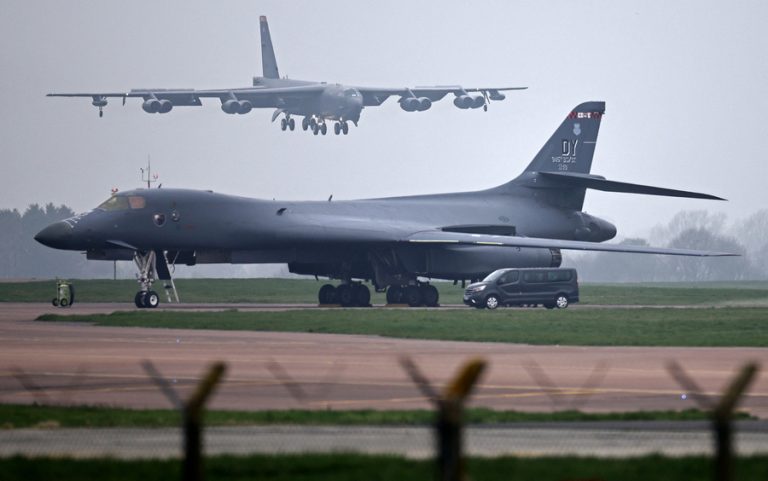
Trump also announced the cancellation of meetings with Iranian officials until the violence ceases, but at the time of writing has not elaborated on whether the United States was considering a military intervention, as it did when it sent stealth bombers to attack Iran’s nuclear research facilities during the 12-day war between Iran and Israel last June
The U.S. president also threatened punitive measures against nations that maintain commercial relations with Tehran. He said the U.S. would impose 25-percent tariffs on imports from countries doing business with Iran, a move intended to isolate the Iranian government economically and deter external support.
Observers have suggested the tariff threat could re-inflame trade tensions with Communist China, a long-term backer of the Iranian regime.
Leo Timm contributed to this report.