By Li Muzi
The nationwide protests in Iran have drawn close attention inside China, prompting widespread discussion online and reactions that extend beyond support for Iranian demonstrators. While mainland netizens have overwhelmingly voiced support for Iranian protesters, reports circulating online suggest that Chinese social media platforms have also seen a surge in videos and discussions related to the homemade production of “weapons,” drawing public attention.
On Jan. 12, a political commentary account known as Lao Beijing Teahouse: Political Crosstalk released a video claiming that after Iran’s nationwide protests erupted, China’s Douyin platform saw a wave of content focused on making improvised tools or weapons. The account claimed that some of the videos showed improvised devices presented as having lethal potential. Viewers were quoted as saying that because such items cannot be legally purchased, “the only option is to make them.”
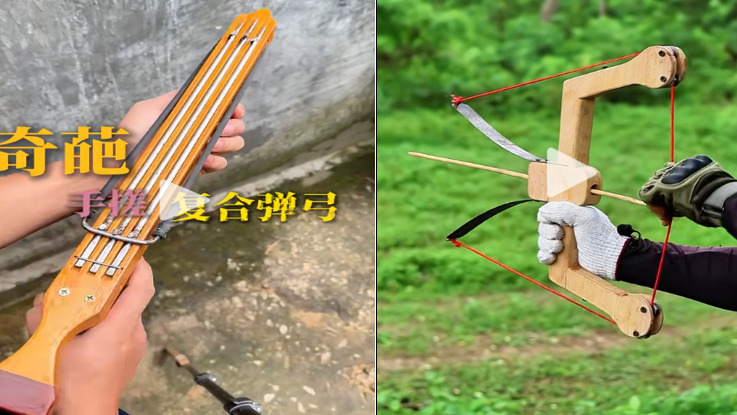
The demonstrations featured a range of improvised devices, including spring-loaded rubber-band mechanisms, multi-shot harpoon-style crossbows, pulley-assisted slingshots, and wooden crossbows. In the videos, these devices were shown striking targets such as wooden boards or balloons.
On Jan. 12, searches conducted on Douyin suggested that many recent videos related to homemade weapons had already been removed by authorities. However, search prompts such as “homemade weapons,” “self-made weapon videos,” and “recommended homemade weapons” were still visible in the search bar. Videos with similar themes dating back to December 2025 or earlier were also reportedly found.
Success
You are now signed up for our newsletter
Success
Check your email to complete sign up
Some netizens commented on the remaining content, with remarks including: “Compound bows are already the pinnacle of long-range cold weapons—efficient, powerful, and stable. If the materials are right, their penetration at close to mid-range can exceed that of a handgun, and they’re relatively easy to learn.” Others wrote: “This looks like a tutorial,” and “If this pierces flesh, it would be devastating.”
Years of economic decline, sharp currency depreciation, and persistent governance problems have left large segments of Iranian society under mounting strain. On Dec. 28, 2025, protests broke out in Tehran and rapidly spread nationwide. Iranian authorities have attempted to suppress the demonstrations through violent means. Human rights organizations have reported that at least 500 protesters have been killed to date.
Online reactions from mainland China have overwhelmingly voiced support for Iranian protesters and their actions. Comments included messages such as: “Brave Iranian people, save yourselves,” “If you want the next generation to live with dignity, this must be done,” and “The facts show that even without guns, success is possible—unity is strength.”

‘They are not rioters’
While Iranian state media described attacks on a police station as acts by “rioters,” this framing triggered widespread backlash among Chinese netizens. One user counted 6,390 comments under a related post, noting that “not a single one supported the Iranian police.” Others responded directly: “They are not ‘rioters,’ they are heroic Pahlavi people,” and “Those who stand against the people are the real thugs.”
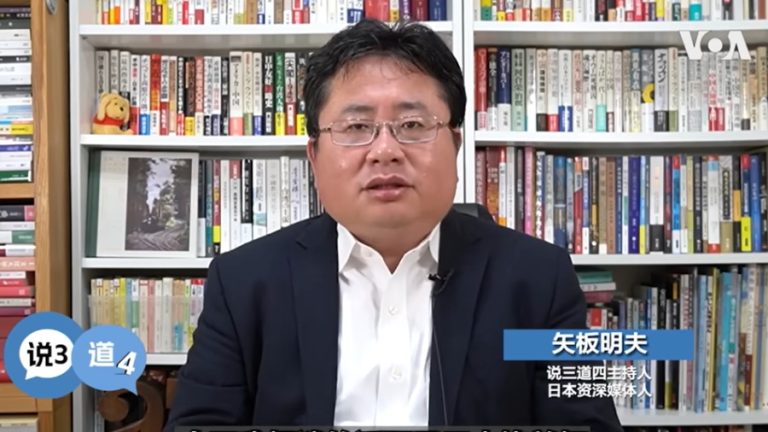
Political commentator Jiang Feng said the CCP has tightly restricted information related to the Iran protests. According to Jiang, terms such as “Tehran” and “rial” were flagged as sensitive on WeChat to prevent public association. During the height of the protests, People’s Daily published an article quoting Iranian “experts” urging Iran to learn from China and join the Shanghai Cooperation Organization. Jiang described the response as “whistling while walking through a dark alley,” saying it revealed anxiety over a potential “broken-window effect”—the concern that the collapse of Iran’s theocratic regime could prompt Chinese citizens to question their own political system.
Jiang further compared Iran’s elite behavior to patterns seen in China, saying that Iranian power holders have transferred assets and prepared exit strategies, similar to Chinese state-owned enterprises before financial collapses, when major shareholders withdrew while the public absorbed losses. He noted that Iran’s traditional bazaar merchants, once beneficiaries of the revolution, have now become opponents, offering a cautionary lesson to China’s middle class and private entrepreneurs.
British psychic Craig Hamilton-Parker, known for predicting events such as Brexit and the prolonged war in Ukraine, also commented on China’s outlook. He said the coming “Red Horse Year” would be marked by severe turmoil, arguing that economic stress and external conflict could create conditions for renewed internal unrest. According to Parker, the CCP’s rule would come to an end, and Xi Jinping’s health would sharply decline, possibly requiring an organ transplant, with his departure from power no later than 2027.