“Halfway through selling the apartment, the landlady just broke down crying. ‘It’s okay, it’s okay—this is just how the market is now.’ Honestly, I didn’t even know how to comfort her.”
China’s property market continues its downward spiral, and the real estate sector has entered a deep winter. Data released by China’s National Bureau of Statistics (NBS) on Jan. 19, 2026, reveal the scale of the collapse: total property sales in 2025 plunged to 8.4 trillion yuan, barely half their 2021 peak. Investment and total floor space sold both fell off a cliff.
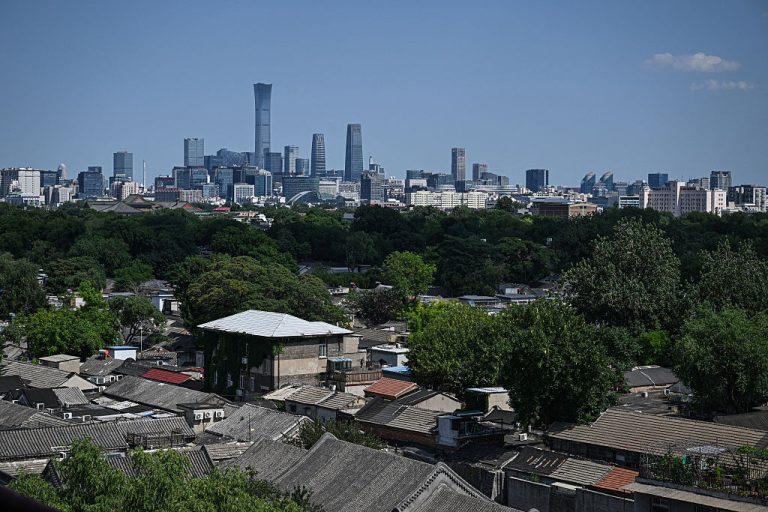
Despite more than 500 government “rescue” policies rolled out by the Chinese Communist Party (CCP), housing prices in China’s 70 largest cities kept sliding in December 2025. Even first-tier cities such as Beijing and Shanghai—once considered untouchable—were hit hard, especially in the secondary (resale) market. Foreign media have warned that the real estate crisis could drag on until at least 2030.
Banks no longer want the houses
“If you stop paying your mortgage now, the bank might not even bother auctioning off your place. Take Zhengzhou, for example—at least 500,000 households have already defaulted. In the first quarter of 2025 alone, more than 100,000 homes entered judicial auction, several times more than a year earlier. Just wait until the full-year numbers come out—it’s terrifying.”
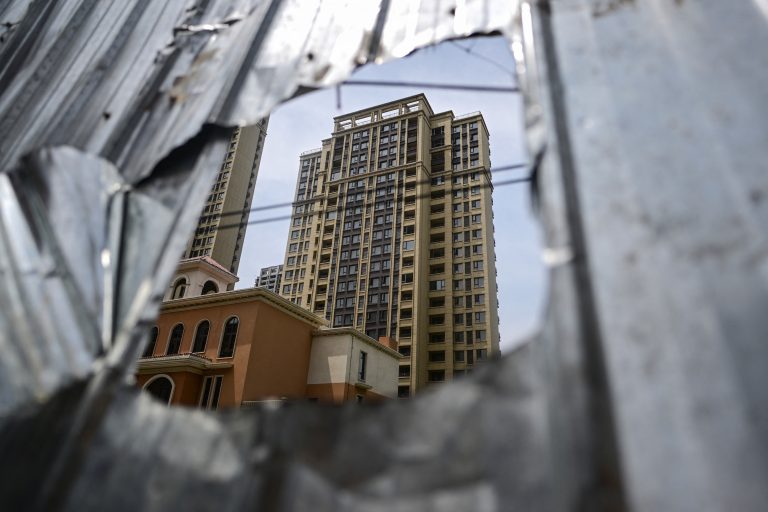
What makes the situation even more alarming is that fewer than 20 percent of these foreclosed homes actually sell. In other words, hundreds of thousands of apartments seized by banks are essentially unsellable—reduced to worthless piles of concrete and steel.
Success
You are now signed up for our newsletter
Success
Check your email to complete sign up
Recent media reports indicate that some banks have begun outright refusing to repossess defaulted properties. In certain cases, homeowners who stopped paying their mortgages one or two years ago have not faced foreclosure at all. Instead, bank managers reportedly call them daily, show up with fruit baskets, and plead with them to make even token annual payments.

‘Bloodbath’ in the secondary market
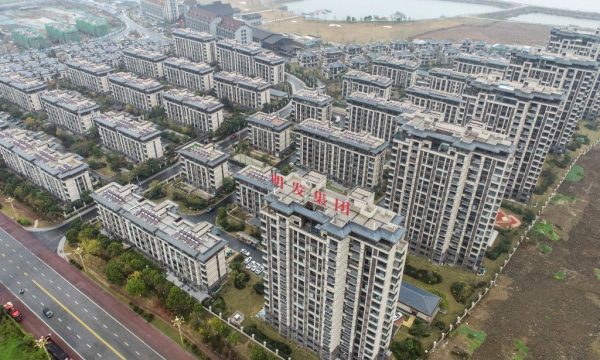
“Housing prices really can’t fall any further—brothers, do you know how brutal the secondhand market in Ningbo is right now? It’s absolutely savage. Some of the prices that have closed deals recently are beyond anything I could have imagined. Places in Ningbo Mansion are going for just over 4 million yuan now—there was even a second-floor unit that sold for 3.9 million.”
“Last week I sold a villa under my name, and I felt awful afterward. I lost over a million yuan—every cent I spent on renovations was gone. Why did I sell? Because I couldn’t afford to keep bleeding. If I held onto it, the renovation would keep depreciating, and I’d still have to pay sky-high property management fees every year. For me, it had become a liability, a negative asset. I’m no longer making the kind of money I used to, so all I can do now is try to protect what little I have left.”
Official data confirm the collapse
According to the NBS data released on Jan. 19, 2026, December 2025 marked a grim milestone. New-home prices across China’s 70 major cities fell 2.7 percent year-on-year—the steepest decline in nearly five months.
The secondary market was even worse, with prices down 6.1 percent year-on-year, the largest drop in 15 months. Most strikingly, first-tier cities fell across the board. Beijing led the plunge, with secondhand home prices down a staggering 8.5 percent, followed by Guangzhou at 7.8 percent. Shanghai and Shenzhen were not spared, posting declines of 6.1 percent and 5.4 percent respectively.
Real estate investment across the 70 cities fell 36.3 percent year-on-year in December. New-home sales volume dropped 15.5 percent, while total sales value sank 23.6 percent.
Yet even as prices, investment, and sales all deteriorated, China’s state media continued to strike an optimistic tone, emphasizing that “the month-on-month decline in new-home prices in first-tier cities has narrowed,” portraying this as evidence that the market is “stabilizing and rebounding.”
On the ground, however, the reality could not be more different:
“Let me give everyone a piece of advice: if you already have a place to live—big or small—just make do. As long as it’s livable, stay put. Try your best not to touch property right now.
“Whether it’s new homes or secondhand ones, prices just keep dropping wave after wave. It’s not just buyers who are scared—even those of us who work in real estate are afraid to buy. You might purchase a place this month, only to see the price fall again next month. Even we don’t understand pricing anymore.”
“I can’t afford my mortgage anymore. I’m getting ready to default. The apartment is worth just 1 million yuan now, but I still owe the bank over 1.3 million. My monthly payment is 6,400 yuan, and I can’t keep up. I can’t sell it either. So the first thing I’ll accomplish in 2026 is becoming a ‘deadbeat debtor.’”
“I can’t sell it—there’s absolutely no way. I bought this place in 2020 for 1 million yuan, 108 square meters. The property certificates finally came through recently, so I thought I could sell. I checked the listings yesterday—more than 1,000 units in my compound alone. There are eight sections, each with about 1,700 households.
“Basically, everyone in our entire section is trying to sell. The place is only worth 500,000 yuan now, but I still owe the bank 660,000. A friend suggested ‘selling the house with a loan attached.’ I was completely stunned.”
“If housing prices keep crashing, the consequences will be terrifying. First, your home could end up worth less than the mortgage itself. Then everyone rushes to sell, and prices spiral down even faster. The ones who will suffer most are middle-class families—people who used to have decent incomes. They won’t be able to hold on. Layoffs will come in waves, even bankruptcies.
“Once you lose your job, how do you keep paying the mortgage? Defaults will multiply. Foreclosed homes will pile up everywhere.”
According to data from the mainland financial information provider WIND, as of Jan. 20, 2026, 27 property developers had released earnings forecasts or preliminary results for 2025. Of these, 26 reported losses, with total losses ranging from 47.5 billion to 62.5 billion yuan. Among them, China Fortune Land Development and Greenland Holdings each posted losses exceeding 10 billion yuan.
About Vision Times (看中国)
Vision Times is an independent overseas Chinese-language media outlet operating beyond the reach of CCP censorship. For nearly two decades, it has relied on volunteers around the world to pursue frontline reporting. In 2019, its Facebook monetized news accounts were forcibly shut down for covering Hong Kong’s anti-extradition protests. Its YouTube channels were later demonetized for reporting on Taiwan’s democratic elections and the truth about the CCP virus. Despite mounting pressure, Vision Times continues its mission to report the facts without compromise.
Copyright © 2001–2026 Vision Times. All rights reserved.