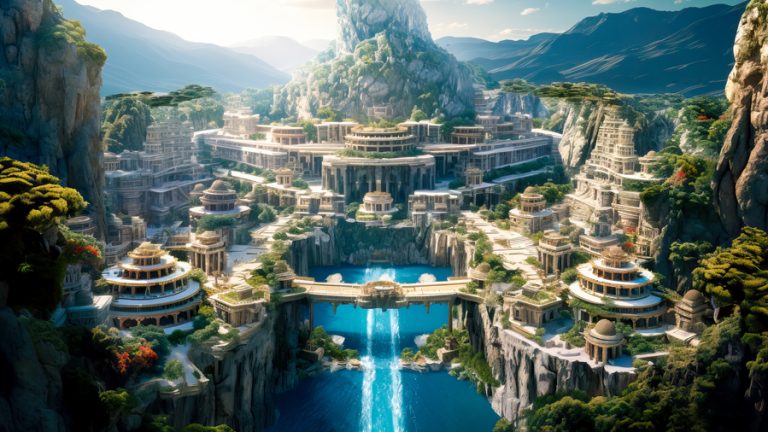
There was a figure of remarkable legend, known as the “Sleeping Prophet” and often referred to as “America’s Prophet.” His name was Edgar Cayce.
What distinguished Cayce was his reported ability to enter a sleep-like trance and engage in what he described as long-distance perception. In this state, he said he could observe events unfolding thousands of miles away and, at times, appear to move across time, perceiving connections between a person’s past lives and present existence. Through such readings, Cayce claimed he could identify the deeper origins behind an individual’s illness, misfortune, or difficult fate in their current life.
Accounts from that period suggest that many patients suffering from chronic conditions, considered difficult or impossible to cure under the medical standards of the time, experienced noticeable improvement after receiving Cayce’s guidance. His recommended “treatments” rarely involved medication or complex medical procedures. Instead, he frequently urged patients to confront and alter deeply rooted patterns of thought. In Cayce’s view, mental and spiritual states exerted forces that shaped life at a level deeper than physical symptoms alone.
Cayce’s trance readings extended well beyond individual health and personal destiny. Over the course of his lifetime, he left behind nearly 15,000 recorded readings addressing a wide range of subjects, including personal past lives, the rise and decline of societies, the fate of nations, and the future direction of human civilization.
Claims that appeared improbable
Within these records were statements that followers later associated with major historical developments. Cayce spoke of the outbreak and conclusion of World War II, the 1929 Great Depression in the United States, India’s independence, the founding of Israel, and the deaths of several U.S. presidents while in office. He also described events that would occur decades later, including the dissolution of the Soviet Union and Russia’s departure from communism in favor of a new social system. Such claims appeared improbable at the time, but were later regarded by adherents as aligning with subsequent historical events.
Success
You are now signed up for our newsletter
Success
Check your email to complete sign up
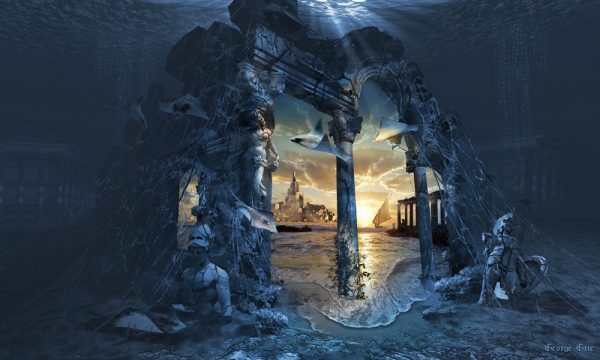
Among Cayce’s many readings on civilization, none proved as systematic or as controversial as those concerning Atlantis, the legendary prehistoric civilization said to have sunk beneath the Atlantic Ocean. This subject occupied a significant portion of his later life. Over roughly two decades, Cayce conducted hundreds of trance readings concerning Atlantis, spanning a period of tens of thousands of years, and recorded what he described as his observations in detail.
Researchers later noted that Cayce had not read the works of the ancient Greek philosopher Plato related to Atlantis prior to conducting these readings. This point was subsequently confirmed by scholars examining his background and study habits. Yet the Atlantis described in Cayce’s readings closely resembled Plato’s account in its overall structure, chronological framework, and manner of destruction.
Any discussion of Atlantis inevitably returns to Plato’s two dialogues, Timaeus and Critias, which are widely regarded as the most valuable written sources on Atlantis in the historical record.
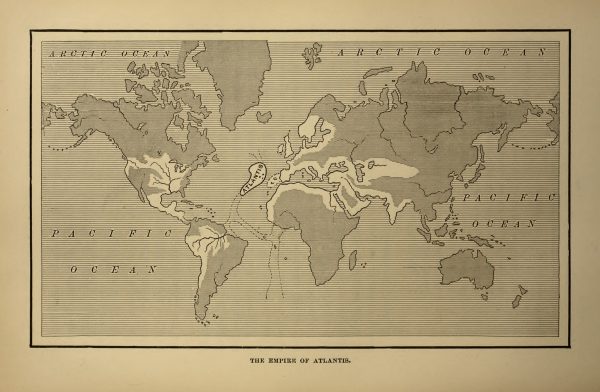
Plato wrote that approximately 9,000 years before the time of Solon, beyond the “Pillars of Heracles,” there existed a vast island. From this island, travelers could reach other islands, and beyond them lay a great continent surrounded by the ocean. This powerful and prosperous land was known as the kingdom of Atlantis.
Solon, one of ancient Greek’s Seven Sages
Solon, who lived between 638 and 559 BCE, was one of ancient Greece’s Seven Sages. A statesman, reformer, and poet, he was also an ancestor of Plato. In his dialogues, Plato recorded Solon’s account of a conversation with an elderly Egyptian priest during Solon’s travels abroad. It was during this exchange that the priest recounted the history of Atlantis.
According to the Egyptian priest, Atlantis possessed exceptional natural conditions and immense resources. Gold and silver were abundant, its cities were strongly fortified, and its territory expansive. The Atlanteans once ruled over vast surrounding regions. Eventually, however, a catastrophic earthquake and flood struck, and within a single day and night, Atlantis was destroyed. Its warlike people were buried beneath the earth, and the entire landmass sank into the sea.
Ancient Egyptian records placed the sinking of Atlantis at roughly 9,000 years before Solon’s lifetime. Based on this timeline, Atlantis would have met its final collapse around 10,000 BCE.
Cayce’s readings expanded upon this account in greater detail. He maintained that Atlantis did not vanish in a single event but experienced destruction in multiple stages. In its earliest period, the Atlanteans were described as gentle in nature and inclined toward peace. They understood the individual as part of a greater whole and took from nature only what was necessary to sustain life.
Highly developed abilities
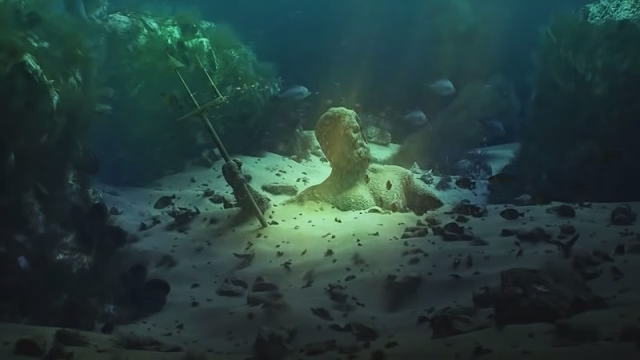
Cayce also described the Atlanteans as possessing abilities he characterized as highly developed. They were said to engage in “thought travel” and also perform physical movement across space, appearing to move beyond conventional limits of time and distance. These abilities were closely linked, according to Cayce, to a special energy medium referred to as “crystals.” The crystals were said to regulate forms of energy believed to originate beyond the Earth, connecting individual consciousness with more fundamental forces.
As the civilization advanced and material desires expanded, Cayce claimed the Atlanteans began to misuse technology and natural resources. Crystal energy, once employed for construction, balance, and healing, was redirected toward the creation of weapons with immense destructive capacity. Cayce attributed subsequent upheavals to the uncontrolled use of this energy, which he said disrupted tectonic structures and even altered the Earth’s polar balance, reshaping the planet’s natural environment.
Cayce attributed these developments to an imbalance that preceded a series of large-scale disasters. The first occurred around 50,000 BCE, when part of the continent sank into the ocean, splitting what had once been a unified landmass into five islands. A second disaster followed more than 20,000 years ago, marked by volcanic eruptions, powerful earthquakes, and polar shifts, leaving only three principal islands remaining.
These events, in Cayce’s account, set the conditions that preceded Atlantis’s final and most extensive collapse.