By Li Zixi
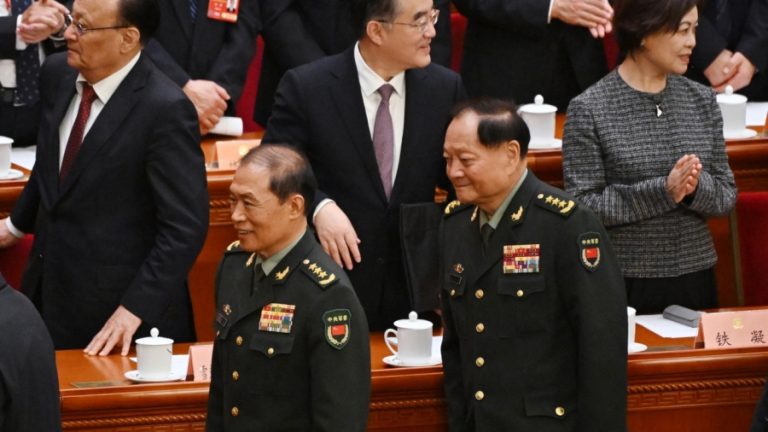
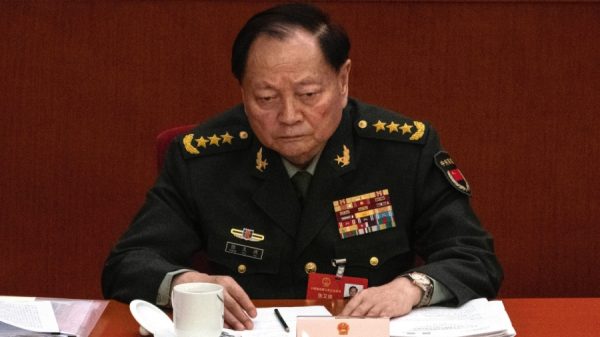
As news of the detention of Central Military Commission (CMC) Vice Chairman Zhang Youxia and CMC Joint Staff Department chief Liu Zhenli continues to circulate, a growing number of conflicting accounts have emerged regarding how Zhang was taken into custody.
Some individuals described as informed sources have claimed that Zhang was detained at the Central Party School following a carefully planned operation. Others have offered a far more dramatic version, alleging that Zhang was seized at the Jingxi Hotel in western Beijing, and that an armed confrontation briefly broke out between security forces loyal to Xi Jinping and personnel linked to Zhang, resulting in dozens of casualties.

Conflicting accounts of a violent confrontation
On Jan. 26, independent political commentator Cai Shenkun said during a self-media broadcast that he had received information from contacts in Beijing indicating that Zhang had confronted Xi Jinping directly during a small internal meeting over a month earlier.
According to Cai’s account, Zhang questioned Xi’s direction for the country and the state of the military, saying years of upheaval had left the armed forces weakened and demoralized. Zhang was quoted as asking whether there would ever be an end to the turmoil, and at one point allegedly remarked, “If I don’t let you leave here today, would that count as a coup?”
Success
You are now signed up for our newsletter
Success
Check your email to complete sign up
Cai stressed that the information could not be officially confirmed, but said that if accurate, it would suggest longstanding tensions between the two men and help explain the speed with which Xi moved to remove Zhang and his associates.
Cai also said that, based on what he had learned, Zhang was detained by the Central Guard Bureau at the Central Party School on Jan. 19.
A sharply different account was offered by Sheng Xue, vice chair of the Global Chinese Democracy Coalition. Sheng said Zhang was taken into custody at the Jingxi Hotel and that an exchange of gunfire occurred at the scene. She claimed that Xi’s side suffered around nine casualties, while more than 20 personnel linked to Zhang were killed or injured.
Sheng argued that Zhang’s downfall was not a routine military anti-corruption case, but a political purge aimed directly at safeguarding Xi’s personal authority. She said Xi has replaced dozens of generals over the years, ultimately weakening the military by dismantling his own command structure.
Reports of armed resistance within the ranks
Zhen Fei, host of the program Real Perspectives, cited a former officer from the 31st Group Army who claimed that a firefight may have taken place during Zhang’s detention. According to this account, security units under Public Security Minister Wang Xiaohong overpowered Zhang’s protective detail, allegedly linked to the Snow Leopard Commando Unit.
The same source said that commanders across several group armies have declined to publicly express support for Xi Jinping, describing the current mood within the military as one of “passive resistance.” He claimed that officers at the regiment and division levels are submitting resignation or transfer requests, while senior commanders are reluctant to take public political positions.
The former officer predicted that serious instability could emerge within the military within days or weeks.

Allegations of leaks and competing narratives
The Wall Street Journal reported that before Zhang was formally placed under investigation, a briefing was held in Beijing outlining alleged violations, which was attended by senior military officers. Shortly afterward, China’s Ministry of National Defense announced that Zhang Youxia and Liu Zhenli were under investigation for “serious disciplinary and legal violations.”
Because no detailed charges were released, speculation intensified over the true reasons behind the move. The report cited unnamed Chinese officials as claiming that Zhang had leaked sensitive nuclear weapons data to the United States and had accepted bribes in connection with the promotion of former defense minister Li Shangfu.
Tang Hao, host of the program Crossroads of the World, rejected these explanations. He argued that corruption is pervasive within the CCP system and that Zhang, given his age and long military career, was unlikely to be motivated by money. Tang also said that as the son of founding general Zhang Zongxun, Zhang Youxia would have been acutely aware of the reputational cost of being accused of treason.
According to Tang, accusations of leaking nuclear secrets served as political cover for Xi to justify moving against one of his closest former allies. He further claimed that Zhang, together with elder party figures, had temporarily constrained Xi’s control over the military following what he described as a “soft coup” in April 2024, only for Xi to later regain the upper hand.
Who faces the greatest risk next?
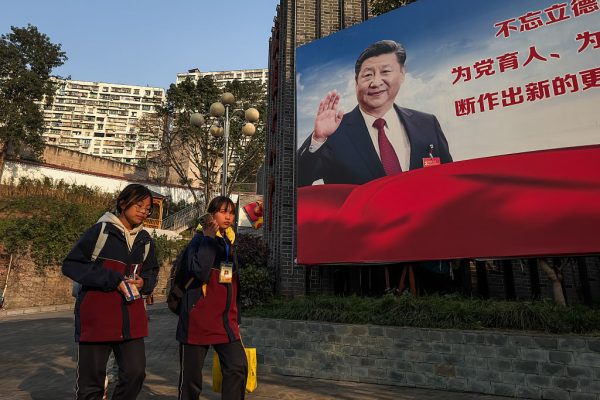
Looking ahead, Tang Hao argued that the individuals facing the highest risk may not be senior generals aligned with Zhang, but rather members of Xi Jinping’s own family.
He suggested that military commanders and intelligence operatives across China may be attempting to track the whereabouts of Xi’s relatives, potentially viewing them as leverage to halt further purges. The objective, he said, would not necessarily be to rescue Zhang or Liu, but to prevent additional waves of retaliation that could claim the careers or lives of hundreds of officers.
At the same time, Tang warned that Xi’s camp may also be detaining or restricting the families of military figures as a means of coercion. In his assessment, an unprecedented internal struggle is unfolding within the CCP, with the possibility of localized armed conflict no longer unthinkable.
“Xi has no military he can fully trust, and the military has no leader it can fully trust,” Tang concluded. “When the ruler and army lose faith in each other, it is a recipe for disaster.”
Editor’s Note: This article compiles claims circulating among overseas commentators, self-described insiders, and independent media. Allegations involving armed clashes, casualties, intelligence leaks, or attempted power seizures within the Chinese Communist Party and the People’s Liberation Army cannot be independently verified and are presented strictly as unconfirmed accounts attributed to the cited sources.