By Dan Fengchen
The shockwaves triggered by Zhang Youxia’s reported downfall have already overshadowed crises involving Nicolás Maduro, Ali Khamenei, and even the Russia–Ukraine war. As the episode has unfolded, a series of anomalies has emerged that defy established CCP political patterns. This article lays out those irregularities and assesses three possible paths along which the situation may continue to escalate.
Displays of loyalty are a defining feature of CCP political culture. Global Times recently reported that the Party committee of Harbin Aircraft Industry Group convened a meeting at which “members of the standing committee spoke in turn, unanimously expressing firm support for the Party Central Committee’s decision and the decision of the Central Commission for Discipline Inspection and the National Supervisory Commission.”
On Jan. 25, the PLA Daily published an editorial titled “Resolutely Winning the Protracted and Overall Battle Against Military Corruption.” It declared that “all officers and soldiers must firmly support the Party Central Committee’s decisions, consciously maintain a high degree of unity in thought, politics, and action with the Party Central Committee with Comrade Xi Jinping at its core, and resolutely obey the commands of the Party Central Committee, the Central Military Commission, and Chairman Xi.”
Yet despite this unmistakable demand for public allegiance, as of Jan. 26 no senior commanders from the PLA’s theater commands, major formations, provincial military districts, or local garrisons had issued official statements endorsing the so-called “Central Committee decision.” This silence stands in stark contrast to the aftermath of the purges of Guo Boxiong and Xu Caihou, when senior officers and regional commanders rushed to voice their support.
Success
You are now signed up for our newsletter
Success
Check your email to complete sign up
According to an alleged insider from the former 31st Group Army, not a single officer at the army-commander level has been willing to be the first to publicly back Zhang Youxia’s arrest. Commentators cited this as evidence that Xi Jinping’s move has failed to win broad acceptance.
This collective silence closely resembles the logic of the White Paper protests. A blank sheet of paper conveys everything people wish to say, precisely because it says nothing. In the same way, the PLA has responded through silence. It is, in effect, a vote against Xi.
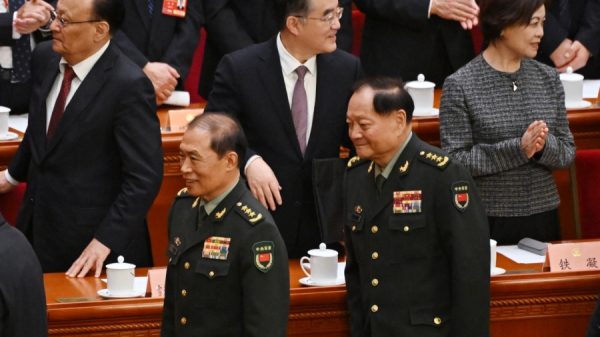
One question echoed across the ranks
Democracy activist Tang Baiqiao has stated bluntly that the power struggle between Xi Jinping and Zhang Youxia represents the most evenly matched and perilous internal confrontation since the founding of the People’s Republic of China. Analysts argue that the downfall of Zhang and others has shattered the implicit red line within the PLA’s anti-corruption framework. From this point forward, no one can assume immunity.
A source close to the military said Zhang Youxia and Liu Zhenli served for long periods at the highest levels, and their personnel influence extended far beyond a small circle of senior posts. Through years of promotions and recommendations, their networks penetrated deep into multiple layers of the system. “This isn’t about replacing a few individuals,” the source said. “It disrupts an entire personnel chain. Officers at battalion level and above could all be affected.”
Commentator Zhou Xiaohui wrote that Zhang Youxia and his family cultivated influence within the military for decades, leaving behind a dense web of protégés. Discontent with Xi among senior officers, he argued, is widespread. Xi may continue arresting people, but he cannot command loyalty. As more senior officers are purged, fear spreads across the ranks. How long, Zhou asked, can this endure?
Zhou predicted that once more Party and military figures realize they themselves could become targets, they will face a stark choice: wait passively for elimination, or resist at all costs.
Some within Xi’s camp are said to believe that officers aligned with or sympathetic to Zhang Youxia account for roughly 80 percent of combat officers, about 40 percent of political officers, and approximately 75 percent of technical specialists. From this perspective, arresting Zhang inevitably pushed these groups into open opposition. That, in turn, explains why a large-scale follow-up purge would be required to “stabilize” the military. Whether to submit or to resist has now become a question confronting the entire PLA.
Xi Jinping’s unresolved dilemma
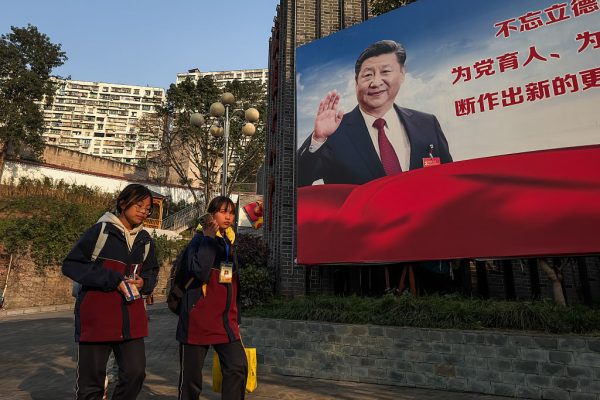
Multiple sources say Xi Jinping moved to entrap and arrest Zhang Youxia only after learning of alleged coup plotting. Acting under acute pressure, Xi struck hastily. What to do afterward, however, was never fully mapped out. Faced with the military’s silent resistance, Xi appears uncertain. Zhang has become a political hot potato: difficult to hold, impossible to release. Xi is now said to be hesitating, with the final outcome still unclear. Several signs point to this indecision.
First, Zhang Youxia’s name remains listed among Politburo members on the CCP’s official website, and both Zhang and Liu Zhenli still appear on the Central Military Commission roster. Given that investigations have reportedly been announced, this situation is unusual and has fueled speculation over how the leadership intends to proceed.
Second, CCTV did not prominently report the investigation when news first surfaced. Notices posted on the CCDI website were reportedly deleted within seconds. To date, no army-level PLA commanders have publicly commented on Zhang’s detention, underscoring the uncertainty inside Zhongnanhai.
Third, a Beijing-based scholar identified as Mr. Chen told reporters that coverage across official outlets has been notably restrained. “CCTV mentioned Zhang once in a midday broadcast, but the evening Xinwen Lianbo did not revisit the story,” he said. “People’s Daily ran related coverage on an inside page, and some publicly visible pages were later adjusted.” According to Chen, hesitation at the top has left Party media outlets watching cautiously from the sidelines.
Fourth, on Jan. 25 Tang Baiqiao posted on X that he had obtained first-hand information indicating the case remained unresolved. According to Tang, both sides were disputing the legality of the arrest. Zhang’s family members and some subordinates had openly voiced dissatisfaction and demanded corrections, prompting authorities to halt further action. “Xi’s absolute authority has been challenged for the first time,” Tang wrote.
An X account known as “Bugle” wrote on Jan. 26 that while the full truth remains unclear, two things are certain: regardless of whether Xi still firmly controls the military, he has already lost its loyalty; across the entire cadre system—including provincial- and ministerial-level officials—he is said to no longer command confidence or respect.
Military movements as political pressure
Shen Ming-shih, a research fellow at Taiwan’s Institute for National Defense and Security Research, said many units remain in a wait-and-see posture because they do not know whether Zhang Youxia and Liu Zhenli have truly been arrested, where they are being held, or whether resistance continues. “The situation is not yet clear,” he said.
U.S.-based political commentator Chen Pokong expressed similar doubts, noting that many view the reported arrests with suspicion. “This does not resemble a typical anti-corruption case,” he said. “The CCP usually follows a procedure—disciplinary review, investigation, removal from office. Here, a message appeared without that process.”
Taiwanese political economist Wu Jialong wrote on Facebook on Jan. 26 that the matter remains unresolved. Xi’s camp, he argued, has tightened its grip on media narratives, reflecting how tense the standoff has become and raising warnings that “China’s situation could deteriorate.”
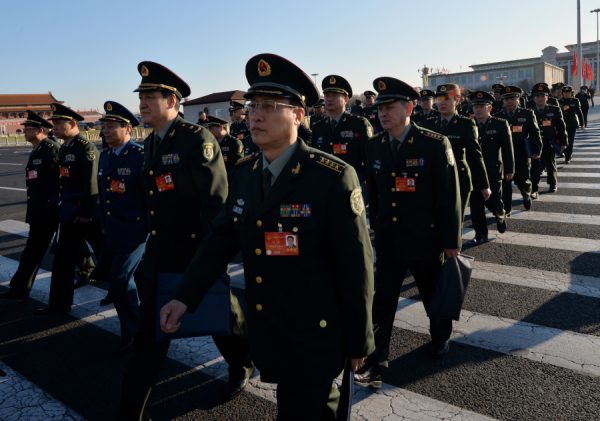
The article cited sources claiming that troops loyal to Zhang Youxia were moving toward Beijing, raising the possibility of internal conflict. Videos circulating online after Zhang’s reported arrest appeared to show military convoys on Chinese highways, allegedly heading for the capital.
If these reports are accurate, such movements may not signal an immediate attempt to use force. Rather, they could represent probing maneuvers aimed at political coercion. Before the truth of the Zhang Youxia case is clarified, any action would lack a clear mandate. The likely purpose would be to apply pressure on Xi’s leadership. Even if Xi were not compelled to show leniency, such pressure could still force a partial retreat.

Three possible outcomes
Based on current conditions, three paths appear possible.
Xi could gamble everything and move decisively against Zhang, using the officially cited “five serious offenses” as justification, sentencing him to death with a reprieve and confining him to Qincheng Prison for life. Power struggles framed as coups are inherently zero-sum. This option aligns with Xi’s temperament but could accelerate the collapse of both his rule and the CCP system.
Alternatively, under intense pressure—primarily from the military—Xi could reach a compromise. This would involve downgrading the political characterization of the case, slowing its pace, publicly arresting others while quietly shelving Zhang’s fate, and using propaganda and reassurance to stabilize morale. Over time, Zhang could be eased into a “semi-soft landing.” Xi may resent this outcome, but it could extend his hold on power.
A third possibility is a calibrated blend of coercion and concession. Zhang would be stripped of office but retain benefits, while both sides reach a face-saving tacit understanding. Zhang would then spend the remainder of his life under soft detention.
The life-and-death contest has only just begun. Who will prevail? Will it end in total victory, total defeat, or mutual destruction?
“The red horse runs free; the red sheep grazes on wild apples.” Let the tides rise and the mountains shake.
Editor’s Note: This article is based on commentary by overseas Chinese-language analysts, dissidents, and media reports circulating online. Claims regarding internal Chinese Communist Party and People’s Liberation Army dynamics, alleged troop movements, and elite decision-making cannot be independently verified and are presented as assertions attributed to the cited sources.