
By Li Jingyao, Vision Times
China’s political landscape is reaching a boiling point after the country’s Ministry of National Defense announced on Jan. 24 that Zhang Youxia, Vice Chairman of the Central Military Commission (CMC), and Liu Zhenli, Chief of the PLA Joint Staff Department, were under investigation for “serious violations of discipline and law.”
The announcement sent shockwaves through China and overseas Chinese communities, spawning a cascade of online claims, including an alleged gunfight at Beijing’s Jingxi Hotel and reports that a senior Chinese Communist Party (CCP) officer may have died.
RELATED: Zhang Youxia Accused of Leaking China’s Nuclear Secrets to the United States
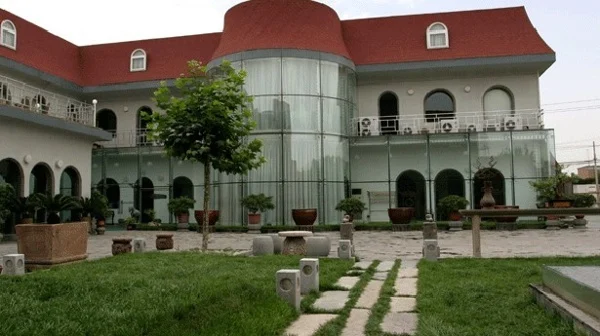
Shots fired at Jingxi hotel?
Following the investigations into Zhang and Liu, the People’s Liberation Army’s (PLA) Daily ran an editorial condemning the pair for “seriously betraying the trust of the Party Central Committee and the CMC,” and for “undermining the CMC chairman responsibility system” and “endangering the Party’s governing foundation.”
Success
You are now signed up for our newsletter
Success
Check your email to complete sign up
Multiple online versions of events emerged. One widely circulated claim alleged that Zhang and Liu were detained at Jingxi Hotel.

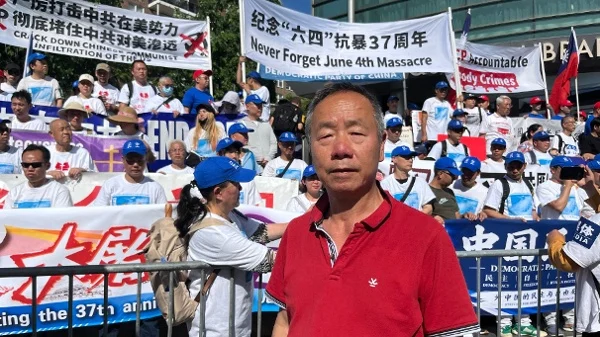
Sheng Xue, vice chair of the Federation for a Democratic China, wrote on social media that a contact (identified only as “Mr. X”) informed her on Jan. 19 that Zhang had been detained and that “something big” had occurred within the CCP. She said she recorded the exchange while attending meetings in Ottawa.
RELATED: China’s Anti-Corruption Campaign Withholds Names of 66 Disciplined Senior Officials
According to Mr. X, Zhang and Liu allegedly planned to move against Chinese President Xi Jinping on the evening of Jan. 18, when Xi was expected to stay at the Jingxi Hotel — where, Mr. X claimed, Xi has frequently changed lodgings in recent years. The plan was allegedly leaked two hours before execution, prompting Xi to leave the hotel and quietly arrange countermeasures.
Sheng Xue further relayed the claim that a gunfight occurred at the Jingxi Hotel, resulting in casualties on both sides, figures she cited but could not independently verify. She added that after she shared the information, she faced online attacks, which her source said reflected official sensitivity to the claims. No official confirmation of any gunfire has been issued.
Signs of a countermove
Political commentator Li Dayu said that, based on circulating accounts, Zhang and Liu may have been detained when they went to the Central Party School around Jan. 20 for a Fourth Plenum study session. He suggested security was lighter at the venue and alleged they were seized upon entry by Central Guard Bureau personnel, with Public Security special units and discipline inspectors present.
Li likened the episode to an “Xuanwu Gate–style” reversal, arguing that while the historical incident stabilized a dynasty, this alleged move represented the opposite. He contended that Xi’s authority had previously been constrained and that, according to multiple leaks, Xi faced unusually sharp criticism at a late-December internal meeting.
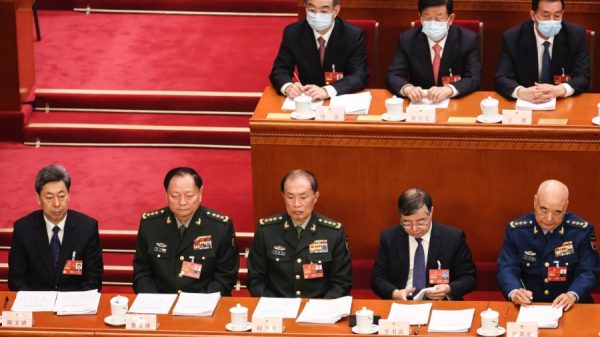
After the alleged detentions, Zhang’s residence was reportedly ringed by plainclothes officers. On Jan. 24 at 3 p.m., authorities announced the investigations much faster, Li noted, than in earlier cases involving senior officers.
RELATED: Xi Jinping’s Military Inner Circle Shrinks as PLA Generals Vanish From Command Roles
That evening, state television did not carry the story, but Xinhua News Agency published a detailed denunciation, using harsher language than in prior cases, describing the conduct as “endangering the Party’s governing foundation.” Li interpreted the wording as implying a “political” problem, suggesting opposition to Xi’s governing line, and thus indirectly acknowledging prior constraints on Xi’s power.
Reports on Zhu Rongji
Following the announcements, speculation grew. On Jan. 24–25, online commentator Jiang Wangzheng posted that major announcements were imminent, naming Hu Jintao and Zhu Rongji. Separately, an X account known as “Petrichor” claimed Zhu Rongji had died at Shanghai’s Huadong Hospital and that his remains would be transferred to Beijing, adding that no obituary had yet been issued.
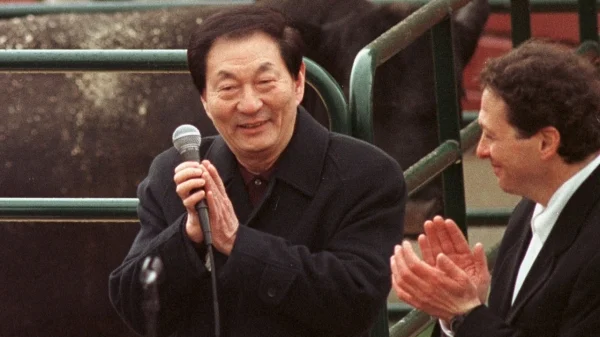
As of publication, Chinese state media have released no obituary, and the claim remains unverified. Commentators note that Zhu’s advanced age and long absence from public view make such rumors plausible to some, but caution that confirmation is lacking. Analysts also point to historical precedents in which deaths of senior leaders were announced days or weeks later for political reasons.
RELATED: Confirmed: Xi Jinping Purges Top PLA Commanders as Military Turmoil and Taiwan War Fears Mount
Commentator Zhang Tianliang argued that extreme centralization often precedes backlash. He claimed that when loyalty becomes universal, it loses value, and fear dominates elite politics. Drawing a historical analogy to Stalin’s final days, he suggested that elites may privately welcome an end to unchecked power because survival feels uncertain.
Zhang urged restraint should unrest occur, arguing that hesitation and delay could protect both civilians and officers. “When everyone feels endangered,” he said, “no one is willing to defend the leader. That is why the end of extreme centralization can lead to freedom.”
Editorial note: This article is based on publicly circulating reports and commentary from independent analysts. The claims described have not been independently verified by Vision Times, and relevant authorities have not publicly confirmed the allegations.