By Xiao Ran
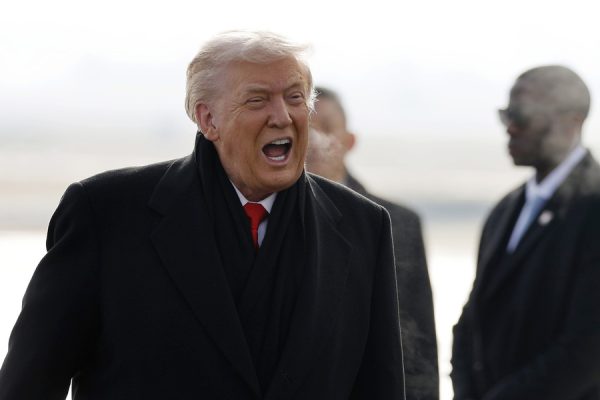
U.S. President Donald Trump said on Jan. 29 that the United States would “decertify” Bombardier’s Global series business jets and “all Canadian-made aircraft” unless Canada immediately approves airworthiness certification for Gulfstream’s G500, G600, G700, and G800 models.
Posting on Truth Social, Trump warned that if Ottawa failed to reverse its position, Washington would impose a 50 percent tariff on all Canadian aircraft sold into the U.S. market. The move is widely viewed as one of the most severe tests of U.S.–Canada relations since the start of Trump’s second term.
Political commentator Feng Zhiqiang told Vision Times that the move reflects Trump’s broader strategic calculus rather than a narrow aviation dispute.
Trump accused Canada of “wrongfully, illegally, and stubbornly” refusing to certify Gulfstream aircraft, which he described as “the greatest, most advanced aircraft ever built.” He argued that Canada’s certification process effectively blocks Gulfstream from selling in the Canadian market and said the restrictions would remain until the jets receive “full certification, as they should have received years ago.”
Success
You are now signed up for our newsletter
Success
Check your email to complete sign up
At the same time, Trump explicitly threatened a 50 percent tariff, directly targeting Bombardier, Canada’s flagship aerospace company.
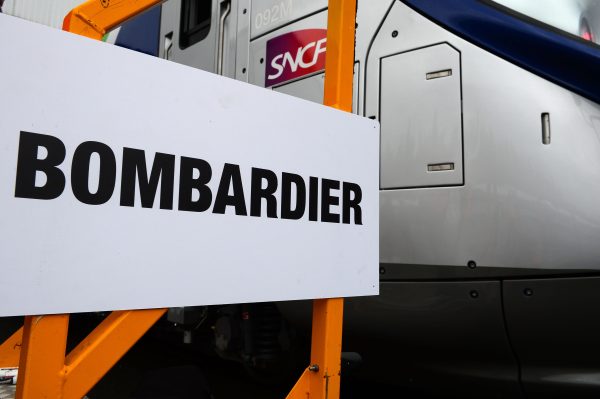
Bombardier, headquartered near Montreal, has long benefited from Canadian government financial support. The company manufactures the Challenger and Global series business jets and competes directly with Gulfstream in the global ultra-long-range executive jet market. In a statement issued Thursday evening, Bombardier said it is in close contact with the Canadian government and is working to resolve the issue as quickly as possible to avoid serious disruption to air travel and passengers.
The dispute is the latest flashpoint in a series of escalating tensions between Washington and Ottawa.

Canada’s Carney reaches deal with China
In January, Canadian Prime Minister Mark Carney visited China and reached a trade-easing arrangement that reduced tariffs on Chinese electric vehicles and Canadian agricultural products such as canola. Some analysts interpreted the agreement as an effort by Canada to diversify amid U.S.–China frictions, and as an indirect rebuke of Trump’s pressure-based trade approach.
Last week, Trump warned that if Canada were to sign a free trade agreement with China, the United States would impose a 100 percent tariff on all Canadian imports. Carney later clarified that Ottawa had no intention of pursuing a comprehensive free trade pact with Beijing, saying the agreement was limited to tariff adjustments on specific product categories.
According to U.S. Census Bureau data, the United States imported more than USD six billion worth of helicopters and aircraft from Canada in 2024. Aviation data firm Cirium reports that 2,678 Canadian-made Bombardier aircraft are currently registered in the United States.
Regional airline SkyWest is the largest operator, with 238 aircraft in service. The company said it believes the U.S. government understands the critical role Canadian-built regional jets play in providing access to the national airspace system for hundreds of small communities. Other major users include NetJets, Delta subsidiary Endeavor Air, and PSA Airlines, which operates flights for American Airlines. Most have declined to comment.
Eric Miller, head of the Washington-based consultancy Rideau Potomac Strategy Group and a former senior Canadian official, said Trump’s team is well aware of how politically sensitive the Bombardier issue is in Canada. He noted that U.S. and European regulators have already approved Gulfstream aircraft, and that the White House may be frustrated with what it sees as slow approvals by Transport Canada.
The dispute, he said, reflects long-standing frictions over mutual recognition of aviation certification and market access.
Legal experts speak up
Aviation experts have questioned the legal and technical basis of the “decertification” threat, noting that aircraft certification falls under the authority of the Federal Aviation Administration (FAA) and is governed by international bilateral agreements. They argue that a president would have limited ability to unilaterally revoke certification for aircraft already in service.
The White House later partially clarified that the threat does not apply to existing aircraft. However, analysts warned that if tariffs were implemented, they would directly hit Bombardier’s exports to the United States and could also affect U.S. airlines’ fleet maintenance and regional air services.
Later this year, the Trump administration is set to launch a formal review of the United States–Mexico–Canada Agreement (USMCA). Trade experts expect Washington to push for further concessions from Canada. Currently, roughly 80 percent of Canadian exports to the United States qualify for tariff-free treatment under the agreement. The aviation dispute could become a bargaining chip in the negotiations.
Feng Zhiqiang told Vision Times that Trump’s move is fundamentally a countermeasure against what he described as Ottawa’s “balancing act” between Washington and Beijing. He said Trump’s MAGA agenda seeks to reshape the post–World War II political and economic order.
After the war, Feng said, the United States supported Europe through the Marshall Plan, but today Europe should shoulder greater economic and military responsibility. He described the Chinese Communist regime as a hybrid of feudal authoritarianism and communist violence aimed at undermining democratic systems, arguing that Trump has been more clear-eyed about this challenge than his predecessors.
Countries ‘courting’ Beijing
According to Feng, countries that “court Beijing” inevitably become targets of Trump’s pressure. He said Carney’s China visit made the USMCA renegotiation the central battleground, and accused the Canadian prime minister of compromising national security by signing joint investigative memoranda with the Chinese Communist Party. Trump’s actions, he argued, amount to helping Canadians “remove parasites.”
Following the incident, Bombardier’s share price fell sharply amid concerns over supply chain disruption and job losses. If the dispute escalates, it could affect North American air services and thousands of jobs.
Citing the National Post, reports said the White House clarified on Jan. 30 that Trump does not intend to revoke certification for Canadian aircraft already in operation, and that the measure would apply only to new models, easing fears of mass groundings.
Bombardier said the threat would severely disrupt air transportation and public travel. The company employs 10,000 people in the greater Montreal area and another 2,000 in Toronto, leaving workers deeply concerned.
Canadian Industry Minister Mélanie Joly said the government’s diplomatic team is gathering facts behind the scenes and that she has spoken directly with Bombardier’s CEO. Foreign Minister Anita Anand emphasized the deep integration of the two economies, noting that Bombardier employs 3,000 people in the United States. She said the government will fully support the aerospace sector and defended Canada’s certification process as world-class.
Canada’s transport minister is in contact with U.S. officials and Gulfstream executives, she said, to defend the country’s aviation safety standards. Quebec’s premier and the province’s economic minister have also pledged full support for the local aerospace industry.