By He Qinglian
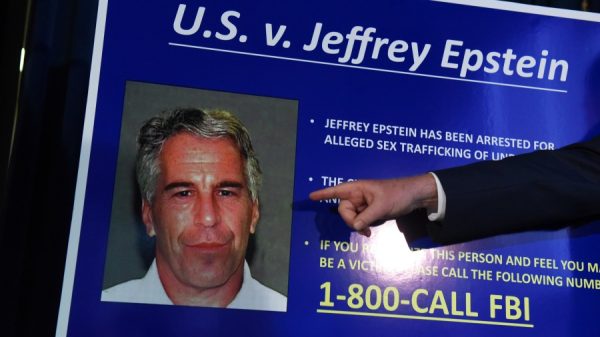
On Jan. 30, 2026, authorities released what they described as the “final batch” of records related to Jeffrey Epstein. The disclosure included more than 3.5 million pages of documents, roughly 2,000 videos, and approximately 180,000 images. Taken together, the materials further document Epstein’s extensive connections with political, business, and social elites across Western countries, including prominent figures in the United States.
The impact of the release quickly extended beyond the United States, drawing attention in Britain and across parts of Scandinavia. The matter, however, remains unresolved. A central point of contention concerns both scale and transparency. The U.S. Department of Justice has acknowledged identifying roughly six million pages of Epstein-related records, yet only about 3.5 million have been made public. The question of why the remaining documents remain withheld continues to dominate debate.
Former CIA contractor Patrick Byrne, speaking on Alex Jones’ program, characterized the disclosure as incomplete. He described the released materials as only the “clean half,” asserting that more than three million pages remain undisclosed. He publicly questioned what those unreleased files might contain. Transparency has emerged as a persistent flashpoint. Of the documents released so far, 550 pages are entirely redacted, while many others remain classified or heavily censored. Tensions between Congress and the executive branch over demands for “full transparency” are expected to persist.
Despite these limitations, the records already released point to what appears to be a vast and opaque gateway into an American sphere operating beyond effective legal oversight.
Success
You are now signed up for our newsletter
Success
Check your email to complete sign up
Why elites were drawn to Epstein
For individual researchers, tracing the full scope of Epstein’s relationships and understanding the motivations behind them presents a formidable challenge. U.S. media outlets have attempted to address this gap. On Feb. 6, The Wall Street Journal published an article examining why prominent figures continued to associate with Epstein even after his conviction, in some cases portraying him as a victim rather than a criminal.
That reporting highlighted a pattern of denial. Numerous political, academic, and cultural elites who had interacted with Epstein maintained that they were unaware of the nature of his crimes. Recently disclosed private communications, however, suggest a different picture. Figures such as Noam Chomsky were shown to have expressed personal reassurance and sympathy toward Epstein.
The reporting also revealed, perhaps unintentionally, the central mechanism through which Epstein sustained his inner circle: he tailored benefits to the specific desires of his associates.
Within technology, academia, and cultural circles, Epstein often acted as a generous patron. Psychologist Stephen Kosslyn received approximately $200,000 in donations from Epstein between 1998 and 2002. In 2018, Epstein transferred an additional $270,000 to the former MIT professor. Such financial support helps explain why numerous Nobel laureates and senior academic figures appeared within Epstein’s orbit.
Elite academics frequently rely on sustained fundraising, both for their institutions and personal initiatives. Former Harvard University president and former U.S. Treasury Secretary Lawrence Summers benefited in both respects. During Summers’ tenure as Harvard president from 2001 to 2006, Epstein donated more than $9 million to Harvard and its affiliated programs. In 2016, Epstein also donated $110,000 to a video education project run by Summers’ wife, Elisa New.
For wealthy tycoons and political figures, Epstein offered a different form of access. In September 2013, British billionaire Richard Branson wrote to Epstein after hosting him on Necker Island, remarking on how much staff enjoyed the visit and inviting him to return with his “harem,” a reference to Epstein’s access to sexual resources.
Such figures were not generally lacking sexual opportunities. What they sought, according to the reporting, was indulgence unconstrained by social ethics or legal norms. Britain’s Prince Andrew and Microsoft co-founder Bill Gates remain among the most widely cited names linked to such allegations.
Political access and sensitive information
Epstein also cultivated relationships that provided political intelligence. Former British cabinet minister and former U.S. ambassador Peter Mandelson has been repeatedly linked to the Epstein scandal. As large volumes of documents were released between late 2025 and early 2026, additional details surfaced, raising serious political and legal questions.
U.S. Justice Department officials are reportedly preparing subpoenas that would require Mandelson to testify about his financial ties to Epstein, including direct payments, tuition assistance, and travel sponsorships. In exchange, Epstein is alleged to have received sensitive government information.
Emails indicate that while serving as Britain’s business secretary, Mandelson may have shared market-sensitive intelligence with Epstein. In 2009, Mandelson discussed proposed punitive taxes on bankers’ bonuses and advised JPMorgan Chase CEO Jamie Dimon to exert pressure on then-Chancellor Alistair Darling. In 2010, only hours before the European Union announced a €500 billion eurozone rescue package, Mandelson allegedly warned Epstein in advance.
Two pleasure domains beyond the law
Epstein’s social network encompassed Western politics, royalty, technology, culture, and academia. These individuals already occupied the highest levels of social power, yet they shared a common attraction to what Epstein provided: indulgence that lay beyond legal and social restraint.
To accommodate his elite guests, Epstein invested heavily in two properties that functioned as de facto zones beyond the reach of law.
The first was Little Saint James Island, a private island in the U.S. Virgin Islands measuring approximately 70 to 78 acres. Epstein purchased the island in 1998 and allegedly used it to facilitate large-scale sexual exploitation of minors. Local residents stated that even after Epstein was registered as a sex offender in 2019, underage girls continued to be transported to the island.
The island became widely known under several names, including “Epstein Island,” “Island of Sin,” and, most infamously, “Lolita Island,” reflecting its association with the abuse of underage girls. After Epstein’s death, FBI agents reportedly searched the island, though the results of those searches were never publicly released.
The second property was Zorro Ranch in New Mexico, a sprawling estate of approximately 7,500 to 8,000 acres that Epstein purchased in 1993 from former governor Bruce King. Located near Stanley, southeast of Santa Fe, the ranch has been the subject of numerous allegations.
Victims including Annie Farmer and Virginia Roberts Giuffre stated that, as minors in the mid-1990s, they were trafficked to the ranch and sexually abused by Epstein and his associate Ghislaine Maxwell. Media reports also cited Epstein’s alleged “genetic seeding” plan, in which he intended to impregnate multiple women using his own DNA, a claim reported by The New York Times in July 2019.
Emails released by the U.S. Justice Department show that Epstein invited a range of high-profile figures to Zorro Ranch over the years, including author Deepak Chopra, linguist Noam Chomsky, billionaire Tom Pritzker, former Israeli prime minister Ehud Barak, and film producer Bill Sieger.
Epstein maintained close relationships with successive New Mexico governors, including Bill Richardson and Bruce King, and made substantial political donations to them. Newly disclosed documents indicate that even after Epstein’s 2006 conviction in Florida, Richardson met with him at least nine times and reportedly visited his private island.
Despite persistent rumors and victim testimony, Zorro Ranch remained largely untouched by law enforcement. While the FBI searched Epstein’s New York residence and his Caribbean island, the ranch was never raided. In 2019, the Santa Fe County Sheriff’s Office confirmed that it had conducted no criminal investigation into the ranch prior to the national exposure of the Epstein case.
Power, secrecy, and unresolved questions
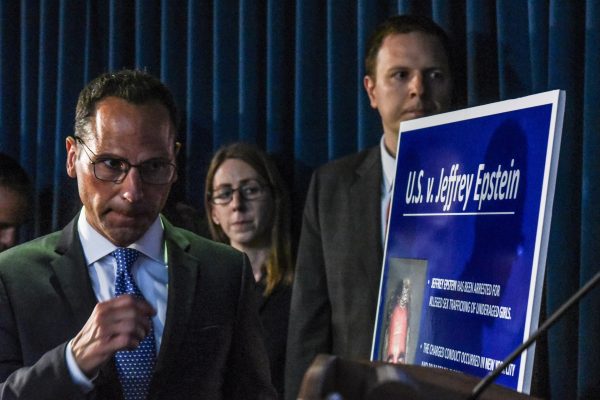
Before his death, federal prosecutors focused on Epstein’s ties to influential figures across government, business, academia, science, and fashion. Accusers hoped the investigation would ultimately explain how Epstein was able to commit repeated crimes over many years and how his wealth, privilege, and connections protected him.
Epstein’s death in custody removed a central witness and sealed many unanswered questions. Since then, the partial release of the Epstein files has become a tool in U.S. partisan conflict. When Democrats controlled Congress, Republicans demanded disclosure. During Donald Trump’s campaign, he pledged to release the files but later resisted doing so after taking office, nearly triggering internal divisions within the MAGA movement. Democrats, aware of the contents, argued that disclosure could damage Trump and Republican allies and pressed for release.
To date, approximately 3.5 million pages have been disclosed. Despite extensive redactions and withheld materials, the documents already depict a troubling picture. Epstein and those around him appear to have operated within a space inside the United States that lay beyond the reach of ordinary law and ethical constraint, where participants enjoyed privileges that placed them above normal social rules.
As independent researchers continue examining the remaining three million pages and as Congress convenes further hearings involving high-profile witnesses, public testimony may provide a clearer view into the depth of this concealed domain.
(This article is reprinted with permission from Up Media. The views expressed are those of the author.)