By Huang Qing
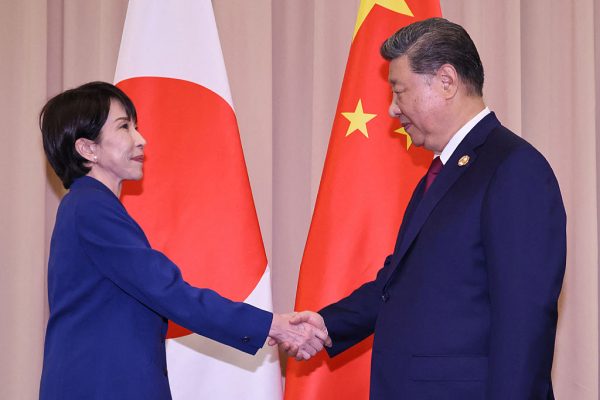
Sanae Takaichi’s landslide victory in Japan’s February 8 House of Representatives election has thrust Chinese Communist Party leader Xi Jinping into one of the most acute strategic crises of his rule. This is not a routine diplomatic embarrassment, nor merely another episode of fraying China–Japan relations. It is a comprehensive indictment of Beijing’s strategic judgment—on Japan, on Taiwan, and on the use of coercion as a substitute for statecraft.
For a leader who has repeatedly proclaimed “strategic composure” and insisted that “the East is rising while the West declines,” Takaichi’s mandate functions as an unforgiving mirror. It reflects the structural failure of the CCP’s Japan policy and the growing mismatch between Xi Jinping’s worldview and political reality in Asia’s leading democracies.
First dead end: strategic miscalculation laid bare
The most immediate blow to Xi Jinping comes from the public collapse of Beijing’s long-standing Japan strategy. For years, the CCP has relied on a familiar toolkit—diplomatic threats, economic pressure, and aggressive propaganda—to deter Japan from pursuing “military normalization” and to warn Tokyo against involvement in the Taiwan issue.
Beijing’s assumption was clear: sustained pressure would frighten Japanese voters, empower so-called moderates, and force restraint in Japan’s China policy.
Success
You are now signed up for our newsletter
Success
Check your email to complete sign up
The opposite occurred. Takaichi, one of the most openly hawkish figures in Japanese politics, won an overwhelming and historically significant majority. She has long supported visits to Yasukuni Shrine, constitutional revision to formally recognize the Self-Defense Forces, and explicit backing for Taiwan’s democracy. Japanese voters were fully aware of these positions—and endorsed them anyway.
Even more damaging for Beijing, every denunciation from Chinese officials strengthened Takaichi’s hand. Each warning about her “erroneous Taiwan remarks” and every accusation that Japan was “returning to militarism” reinforced her central campaign message: that China represents a direct and growing threat to Japan’s security.
This “the more Beijing scolds, the stronger she gets” dynamic does more than invalidate China’s influence over Japanese public opinion. It exposes a fundamental strategic misreading. In a political system that concentrates authority in one man, such a visible failure inevitably raises questions—quietly but persistently—about Xi Jinping’s judgment.
Second dead end: a no-win policy choice
Takaichi’s victory leaves Xi Jinping trapped in a classic but unforgiving dilemma. Beijing has only two theoretical options: escalate pressure or seek accommodation. In reality, both paths are politically toxic.
Escalation without leverage: If Xi doubles down—maintaining Foreign Ministry demands that Japan retract Takaichi’s Taiwan statements as a precondition for dialogue—he risks compounding the damage. Continued pressure will only solidify Takaichi’s domestic legitimacy, accelerate Japan’s constitutional and military reforms, and deepen Tokyo’s alignment with the United States and other Indo-Pacific partners. At a time of economic strain at home, open confrontation with a major trading partner is strategically reckless.
Accommodation without retreat: Yet pivoting toward engagement carries its own dangers. Xi has spent years elevating the Taiwan issue into an existential test of resolve. Any hint of compromise would be seized upon by nationalist forces as weakness. Worse still, Takaichi has already stated her position publicly. If Beijing seeks dialogue without securing visible concessions, Xi risks being portrayed domestically as capitulating to a “pro-Taiwan” Japanese leader.
The core problem is self-inflicted. Years of maximalist rhetoric and “wolf warrior diplomacy” have left Beijing no political escape route. Xi Jinping is now constrained by the very posture he cultivated to project strength.

Third dead end: Taiwan as a strategic trap
Compared with previous crises in China–Japan relations, the current standoff is far more volatile. Under former Prime Minister Shinzo Abe, disputes focused on the Senkaku/Diaoyu Islands and historical memory—issues that could be managed through ambiguity and temporary shelving. The Xi–Abe meeting in late 2014 exemplified that flexibility.
Takaichi’s challenge is different. She has centered Japan’s China policy on Taiwan—Beijing’s most sensitive red line. For the CCP, Taiwan is not simply a sovereignty dispute; it is bound up with regime legitimacy and Xi Jinping’s promise of “national rejuvenation.” By defining Taiwan as the “core of core interests,” Xi has left himself almost no room to maneuver.
This rigidity has backfired. When Takaichi frames stability in the Taiwan Strait as integral to Japan’s national security, Beijing has no effective response. It cannot accept Japan’s position, yet it lacks the means to reverse it.
More damaging still, China’s hardline stance has accelerated the internationalization of the Taiwan issue. The more Beijing insists it is an internal matter, the more other countries treat it as a regional security concern. Takaichi’s electoral mandate reflects this shift—and underscores the strategic trap Xi has set for himself.
Fourth dead end: nationalism turns inward
Xi Jinping’s predicament is compounded by domestic politics. For years, CCP propaganda has portrayed Japan as a resurgent militarist threat, casting hostility toward Tokyo as patriotic duty. Chinese Defense Ministry statements condemning Takaichi’s call to constitutionalize the Self-Defense Forces as a “return to militarism” are not aberrations; they are the logical product of this narrative.
Nationalist mobilization may consolidate short-term support, but it destroys diplomatic flexibility. Any move toward dialogue now invites domestic outrage: why negotiate with “militarists”? Official rhetoric has hardened public attitudes, which in turn further restricts policy options.
At the same time, a quieter pressure looms within the system. If China’s coercion has not only failed but strengthened Japan’s resolve, then the effectiveness of Xi’s foreign policy line itself comes into question. Such doubts are rarely voiced publicly, but they linger within elite circles.
Xi is thus doubly trapped—by nationalism he cannot disown and by policy failures he cannot acknowledge.

Fifth dead end: international credibility erodes
Globally, Takaichi’s victory has dealt a serious blow to Xi Jinping’s image. To international observers, the election reads as a clear rejection of Beijing’s charm-and-coercion diplomacy. A major democracy has chosen a leader openly committed to resisting China, undermining claims of Beijing’s growing soft power.
International media, including Bloomberg, have described Xi as facing a “strategic dilemma.” For a leader who promotes the inevitability of China’s rise and the superiority of the “China model,” such framing is deeply damaging. It signals a China reacting to events rather than shaping them.
Chinese scholars urging Takaichi to “follow the trend” and improve relations have been widely dismissed abroad as wishful thinking. Analysts note—correctly—that a leader with a strong democratic mandate has little incentive to appease Beijing.
Eurasia Group analysts captured the imbalance succinctly: China can only watch—cabinet appointments, U.S. visits, policy execution—without exerting real influence. This posture sits uneasily with Beijing’s claim to regional leadership.
Sixth dead end: strategic initiative lost
Perhaps the most humiliating outcome is the loss of initiative. For decades, Beijing sought to dominate China–Japan relations through economic leverage and political pressure. Takaichi’s victory has inverted that equation.
Armed with popular support and alliance backing, Takaichi can decide when and how to engage China. Xi Jinping, by contrast, is forced into waiting. Japanese officials have openly suggested that China will eventually have “no choice” but to reengage—an extraordinary reversal of roles.
Compounding this, Takaichi has shown no urgency. She signals openness to dialogue while refusing to dilute core positions. The message is unmistakable: talks are possible, but only on Japan’s terms.
Time now works against Beijing. Delay strengthens Japan’s defenses and alliances; haste risks exposing Chinese weakness. Xi finds himself in a strategic posture he has rarely tolerated—and clearly did not anticipate.

Seventh dead end: hardline policy validates its critics
The final irony is the most damaging. Beijing’s response has validated Takaichi’s worldview. She has argued that Japan must strengthen its military, revise its constitution, and play a more active role on Taiwan precisely because China poses a growing threat. China’s reaction has supplied her with proof.
Foreign Ministry demands for retractions and Defense Ministry accusations of militarism have been widely reported in Japan. Far from intimidating voters, they have reinforced public support for a tougher China policy.
This self-reinforcing cycle is inescapable: the harder China pushes, the more Japan hardens; the more Japan hardens, the more Beijing escalates. The result is a spiral driven less by necessity than by strategic myopia.
Worse still, the effect is regional. South Korea, the Philippines, Vietnam, and others are watching closely. Beijing’s treatment of Japan under Takaichi will shape how these states calculate risk—and may push them further toward Washington.
When face politics collides with power politics
At its core, Takaichi’s landslide marks a collision between Japan’s power politics and the CCP’s face-centered diplomacy. Xi Jinping’s traditional tools—economic inducements, military intimidation, historical guilt—are losing effectiveness against a leader backed by voters and anchored in the U.S.–Japan alliance.
Beijing’s ultimate dilemma is stark. Strategically and economically, China should stabilize relations with one of Asia’s most important neighbors. Politically, it cannot be seen embracing a prime minister portrayed domestically as “anti-China” and “pro-Taiwan.”
Xi Jinping’s room for maneuver is vanishing. Any genuine course correction would require admitting past mistakes—an admission the current political system cannot accommodate.
What this episode ultimately exposes is not merely a failure of tactics, but a deeper crisis of leadership and strategic vision at the heart of Xi Jinping’s rule.