By Gao Yun
U.S. Secretary of War Pete Hegseth said on Monday, Feb. 9 that after the U.S. military discovered an oil tanker attempting to flee the U.S.-imposed Venezuelan oil exclusion zone in the Caribbean, it launched a month-long pursuit. The tanker, named Aquila II, was ultimately seized by U.S. forces in the Indian Ocean.
Hegseth wrote on social media, “It ran, so we chased it. On land, in the air, or at sea, our armed forces will find you and deliver justice. You’ll run out of fuel before you shake us.”
According to The Wall Street Journal, since the Trump administration began taking direct action against illegal oil transportation in the Caribbean, the U.S. military has seized multiple similar vessels. The Aquila II is the eighth such ship.
Data from shipping intelligence firm Lloyd’s List Intelligence show that on Dec. 6 last year, the tanker loaded nearly one million barrels of heavy crude oil at Venezuela’s Jose terminal. At the time, it broadcast falsified location data to conceal its true position and cargo—deceptive practices commonly used by illegal oil transport vessels known as the “shadow fleet.”
Success
You are now signed up for our newsletter
Success
Check your email to complete sign up
Lloyd’s List Intelligence said that in early January this year, after the United States captured then–Venezuelan President Nicolás Maduro, several ships, including Aquila II, fled the area.
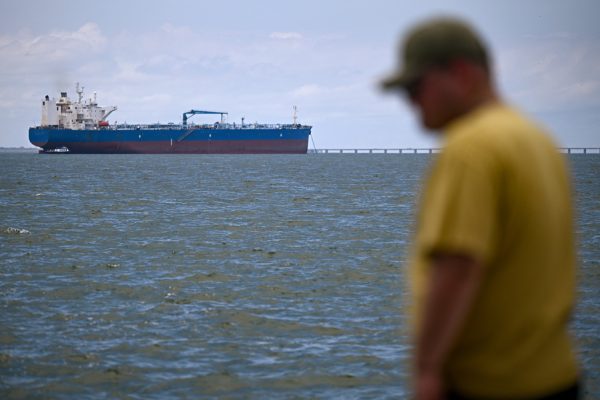
According to vessel-tracking data compiled by Bloomberg, Aquila II was bound for China. The ship was intercepted while en route to the Sunda Strait between the Indonesian islands of Java and Sumatra.
On Jan. 10, the United States sanctioned Aquila II, saying it was involved in transporting Russian oil. At the time, the vessel was sailing under the Panamanian flag. The United Kingdom had previously sanctioned the tanker as well due to its ties to Russia.
Video released by the U.S. military shows American troops approaching the tanker by helicopter and rappelling onto its deck. The seizure was carried out without incident.
This operation marks the farthest-from-home pursuit and interception ever conducted by the U.S. military. Earlier in January, U.S. forces chased another Russia-linked tanker in the Caribbean and successfully boarded it south of Iceland.
Although the United States has recently eased some oil sanctions on Venezuela, it continues to block oil shipments to Cuba and maintains a naval presence in the Caribbean to combat illegal tanker activity.
The Trump administration has pledged to crack down hard on sanctioned vessels that evade penalties through deceptive satellite positioning, flying false flags, and other methods. In Washington’s view, such tankers undermine the effectiveness of sanctions and weaken U.S. control over Venezuelan energy exports.