By Cao Changqing
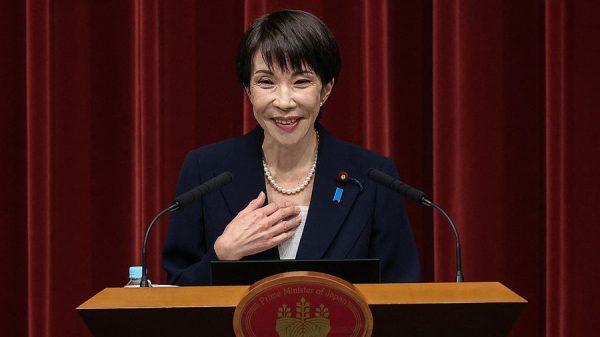
When Sanae Takaichi led the Liberal Democratic Party to capture more than two-thirds of the seats in Japan’s House of Representatives, commentators called the result a “Takaichi wave.” To those who had tracked her career, though, the landslide was less a surprise than a culmination. Her political identity was forged over four decades under the influence of three men she has repeatedly named as mentors: Konosuke Matsushita, Shinzo Abe, and Lee Teng-hui.
Japanese writer Eiji Oshita, author of a biography of Takaichi, traces how each figure left his mark at a distinct phase of her life—and how the three legacies converge in the leader Japan has now.

Matsushita: the industrialist who taught her to govern like a CEO
Takaichi’s political education began not in parliament but inside a training institute founded by one of Japan’s most celebrated business figures. In 1980, Konosuke Matsushita—founder of Panasonic—established the Matsushita Institute of Government and Management to mold a new generation of national leaders. Takaichi, freshly graduated from Kobe University, beat out thousands of applicants to join the inaugural class.
Matsushita is said to have recognized unusual promise in the young woman still in her early twenties. He held repeated one-on-one discussions with her and subjected her to exacting training that stressed empirical research, personal discipline, and the direct application of corporate management principles to public governance.
Success
You are now signed up for our newsletter
Success
Check your email to complete sign up
His core instruction was deceptively simple: observe daily life, identify what ordinary citizens actually need, and treat governing the way one runs a company—relentlessly prioritizing efficiency, growth, and national vitality. Analysts who study Takaichi’s economic thinking routinely trace her positions on macroeconomics, privatization, and market-oriented reform to this formative period under Matsushita’s tutelage.
Abe: the patron who anointed her as his successor
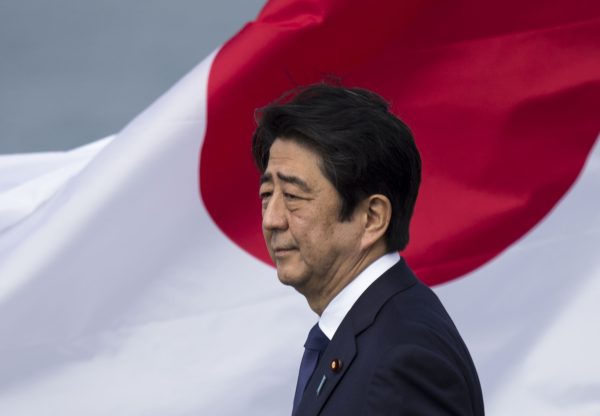
Years later, once Takaichi had entered national politics, she aligned herself tightly with Shinzo Abe. Inside the LDP, she became known as one of his most steadfast protégés.
When she first ran for the party presidency, her base of internal support was thin. Abe responded by personally telephoning fellow lawmakers to rally votes, telling them bluntly: “Takaichi is my successor. Please support her.” According to accounts Oshita cites, Abe was convinced she articulated conservative principles more forcefully than many of the party’s male politicians and could carry forward his governing philosophy intact.
After Abe was assassinated in July 2022, Takaichi spoke openly of her grief and declared she would pursue the position of prime minister to fulfill what she described as his unfinished mission.
Her policy agenda reads like a continuation of the Abe doctrine. She has argued that Japan must shed the constraints of its postwar settlement and become what advocates call a “normal nation”—a vision encompassing constitutional revision, reconsideration of Article 9’s pacifist clause, elevation of the Self-Defense Forces to full military status, and a broader strengthening of national defense. On economics and grand strategy alike, she is widely viewed as the most direct political heir to Abe’s brand of assertive conservatism.
In public appearances since his death, she has spoken with visible emotion, saying she feels Abe’s presence at her back as she advances each new initiative.
Oshita writes that her fidelity to Abe “goes beyond repaying a debt of gratitude; it is a sense of mission.” She believes, in his telling, that she alone possesses the fortitude to resist political pressure, refuse compromise with the party’s centrist factions, and hold Abe’s course.
Lee Teng-hui: the Taiwanese dissident who saw her backbone
If Matsushita supplied discipline and Abe conferred political direction, Lee Teng-hui contributed something harder to quantify: moral conviction rooted in personal example.
Takaichi met the former Taiwanese president on multiple occasions and has called him one of the political figures she most admires. She has cited his scholarly interpretation of the Bushido spirit as a formative influence. Lee’s readiness to endure isolation rather than abandon principle, she has said, struck a deep chord with her own experience as what observers have long called a political “lone wolf.”
She has drawn an explicit parallel between Lee’s determination to move beyond inherited Chinese political frameworks and forge a distinct Taiwanese identity, and her own drive to liberate Japan from what she regards as the lingering constraints of the postwar order.
According to Oshita’s biography, Lee predicted early on that Takaichi would become Japan’s first female prime minister. He reportedly told her that Japanese men were too hesitant and excessively cautious, whereas she possessed backbone and clarity.
Lee offered three reasons for his confidence. First, he valued her directness in a political culture he considered evasive to the point of dysfunction. Second, he recognized in her a willingness to stake her career on principle—a quality he linked to the Bushido ethic. Third, he foresaw mounting turbulence across East Asia and concluded that Japan would need not a conciliatory consensus-builder but a resolute guardian with unambiguous convictions.
Three legacies, one leader
Oshita closes with a striking metaphor for the convergence of these three influences. If rock music shaped Takaichi’s rebellious temperament, and Lee Teng-hui and Shinzo Abe forged her inner conviction, then Konosuke Matsushita built the structural scaffolding that made her political ascent possible.
Together, the three mentors produced a leader unlike any Japan has elevated before—one whose rise was decades in the making and whose time in power is inseparable from the men who made it thinkable.