By Li Jingyao
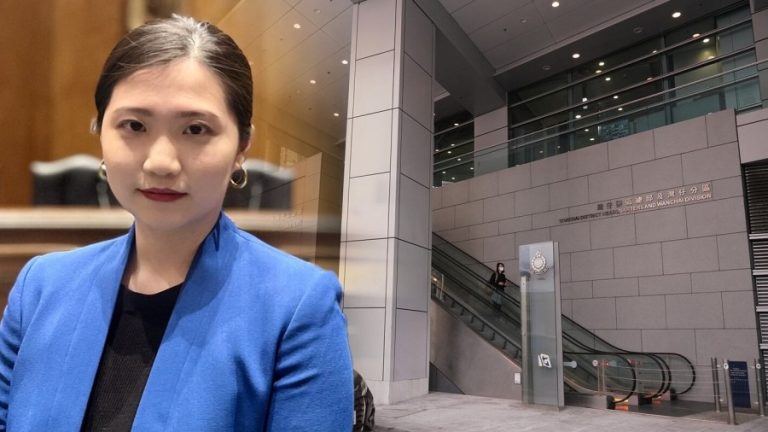
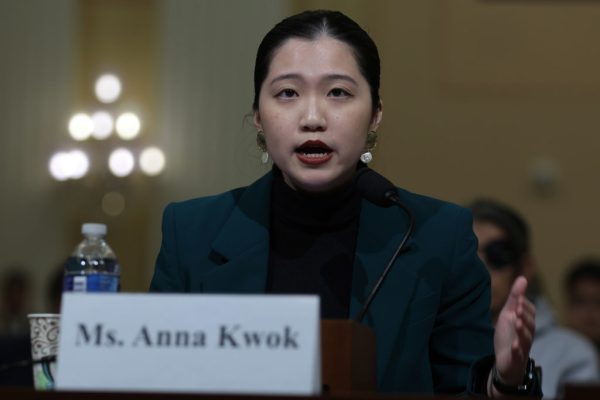
Anna Kwok, executive director of the Hong Kong Democracy Council (HKDC), is wanted by the Hong Kong government with a HK$1 million bounty (approximately US$128,000). Her father, Kwok Yin-sang, has now been convicted of “attempting to deal with funds or property of a fugitive” for assisting her in handling an insurance policy. Various groups condemned the Hong Kong government, accusing it of using “collective punishment” to retaliate against Hong Kong social movement activists living overseas.
Anna Kwok’s father convicted
According to Radio France Internationale, prosecutors said Kwok Yin-sang purchased education insurance policies for his three children in 1991. After Anna Kwok turned 18, ownership of the policy was transferred to her.
In January 2025, citing Anna Kwok’s absence from Hong Kong, Kwok Yin-sang asked the insurance broker to cancel the policy and withdraw the funds. After discussions, he told the broker that his daughter had agreed to the cancellation and said he would provide the form to her for signature before returning it.
At the end of April last year, the National Security Department invoked the Safeguarding National Security Ordinance under Article 23 for the first time to arrest and charge Kwok Yin-sang with “attempting to deal with property belonging to a fugitive.” On Feb. 11, the West Kowloon Magistrates’ Court found him guilty. Sentencing was adjourned to Feb. 26, and he must remain in custody pending sentencing.
Success
You are now signed up for our newsletter
Success
Check your email to complete sign up
In the ruling, Acting Principal Magistrate Cheng Nim-chi said that once Anna Kwok turned 18, she automatically became the policyholder and there had been no subsequent change. Knowing that his daughter was a fugitive, Kwok Yin-sang attempted during the relevant period to process both old and new versions of forms to change the policyholder in order to withdraw the remaining balance. The court found that he knew he was dealing with a fugitive’s funds and convicted him.
Amnesty International: escalation in crackdown on dissent
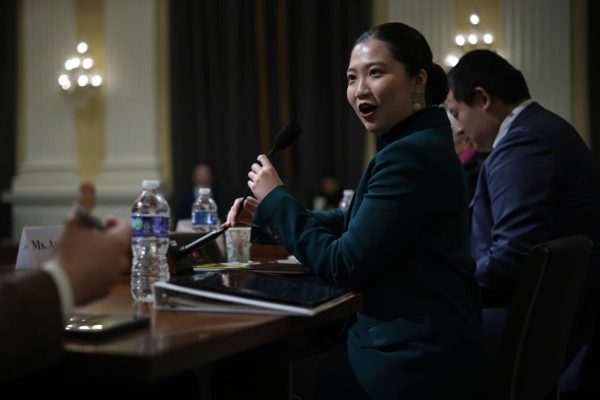
Siu Lan, spokesperson for Amnesty International Hong Kong Overseas, said the case reflected what she described as an alarming escalation in the Hong Kong government’s use of Article 23 to suppress dissent. She said the politically motivated conviction targeting the family of a social movement activist set a dangerous precedent intended to intimidate and silence those overseas who continue to speak out on Hong Kong issues.
Elaine Pearson, Asia director at Human Rights Watch, called the ruling cruel and retaliatory. She said it demonstrated the authorities’ determination to curb peaceful overseas activism by punishing the elderly father of an activist abroad. Pearson added that such “collective punishment” is not permitted under international human rights law and urged governments to tell the Chinese Communist Party that long-arm jurisdiction would not be tolerated. If there are no consequences, she said, the Chinese Communist Party would continue to use such methods to censor critical voices and influence overseas commentary related to China.
According to Chase the Light, the U.S. Congressional-Executive Commission on China (CECC) also condemned the conviction, describing it as blatant intimidation of Anna Kwok, who is in the United States. It said the case underscores why the CECC has introduced several bills related to Hong Kong, including the Hong Kong Judicial Sanctions Act, the Transnational Repression Policy Act, and the Hong Kong Economic and Trade Office Certification Act (HKETO Certification Act), and urged Congress to pass them as soon as possible.
CFHK calls for sanctions on judges and prosecutors
The Committee for Freedom in Hong Kong Foundation (CFHK) criticized the Chinese Communist Party for using what it called “collective punishment” to target family members in Hong Kong of overseas social movement activists. The foundation said that if the United States remains silent, the Hong Kong government will escalate its actions against the relatives of activists in the United States. It warned that such measures would harm U.S. interests by affecting whistleblowing, intelligence sharing, policy advocacy, and legitimate organizational activities, which it described as cornerstones of U.S. security and democratic values.
The foundation called on Congress and the U.S. Department of State to take joint action to address national security and repression risks posed by Hong Kong’s three economic and trade offices in the United States, to pass the Hong Kong Economic and Trade Office Certification Act, and to sanction Hong Kong judges and prosecutors who enforce the national security law.
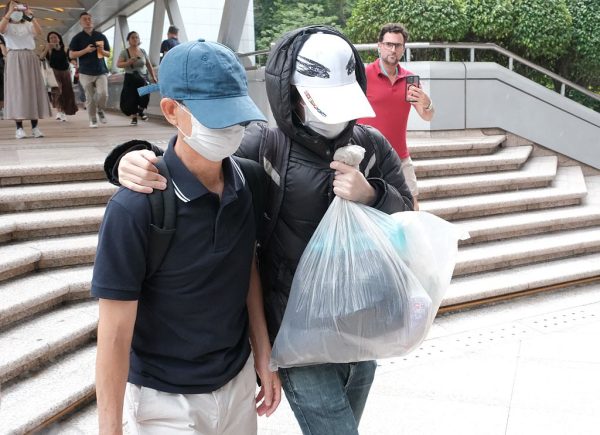
Convicted by blood ties, pushing Hong Kong to the bottom
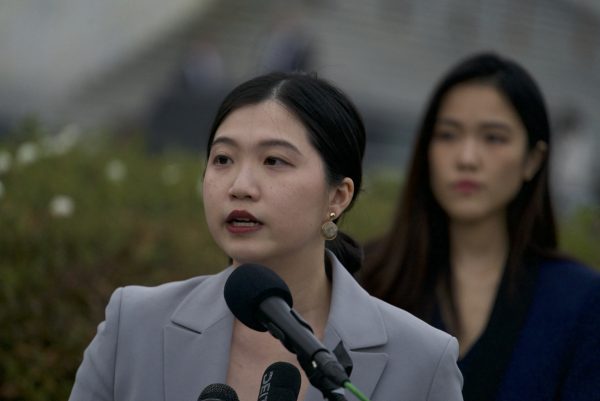
Anna Kwok said her father was convicted solely because he is her father. “This is the retaliatory measure the Hong Kong government has taken against me and my advocacy work with my community,” she said. She described the charges against her father as unfounded and based on what she called a fabricated, baseless, and illogical narrative.
The Hong Kong Democracy Council said in a statement that this was the first time a Hong Kong national security court had used Article 23 of the Basic Law to target an overseas social movement activist by convicting a family member based on blood ties. It said the ruling further pushed Hong Kong’s situation to a new low. The council added that it stands with Anna Kwok, describing her as both an influential overseas leader and a friend and colleague to members of the organization.