By Liu Junning
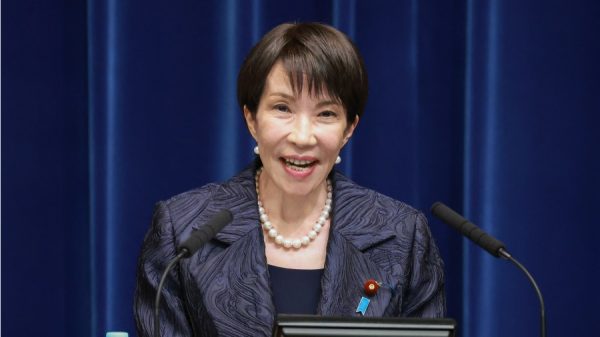
Japan’s February 2026 lower house election delivered a result that sent tremors across East Asia. Takaichi Sanae, Japan’s prime minister and leader of the Liberal Democratic Party (LDP), secured a historic supermajority of more than two-thirds of seats in the House of Representatives. Constitutional revision to normalize Japan’s military posture is now a near certainty. Predictably, one question has dominated debate in the region: will Japan slide back into militarism?
My answer is no. Japan will not.
The reason is ideological. Japan’s prewar militarism was the offspring of European continental left-wing thought, specifically the French Enlightenment tradition. The LDP under Takanichi holds Anglo-American conservative values. These two traditions are fundamentally opposed, and the distinction matters more than most observers recognize.

How French enlightenment philosophy produced Japan’s prewar military ideology
Twentieth-century Japan splits into two eras at a single dividing line: Sept. 2, 1945, the day Japanese officials signed the instrument of surrender aboard the USS Missouri. Everything before that date was catastrophic failure. Everything since has been extraordinary success.
Success
You are now signed up for our newsletter
Success
Check your email to complete sign up
The failure was specific. It was the failure of “leave Asia, enter Europe,” Japan’s grand strategy of modernizing by absorbing European continental ideas. The French Enlightenment tradition, transplanted to Japanese soil, germinated into military expansionism and national ruin.
In China, Japan’s wartime militarism is conventionally classified as right-wing. This is a misreading. Japanese militarism drew from three intellectual sources, and two of the three were European in origin.
The first was the indigenous warrior code of bushido, Japan’s feudal military ethic. The second was the thought of Fukuzawa Yukichi, Japan’s foremost Meiji-era public intellectual, often called “the Japanese Voltaire.” Fukuzawa embraced Social Darwinism wholesale: he believed the logic of survival of the fittest applied to competition between nations, and that advanced civilizations held a natural right to dominate backward ones.
The third source was the Prussian model of statecraft imported by two architects of the Meiji state: Yamagata Aritomo, founder of the Imperial Japanese Army, and Ito Hirobumi, the era’s preeminent political figure. Together, they grafted Prussian military authoritarianism onto Japanese institutions. Prussian authoritarianism itself was a downstream product of French Enlightenment rationalism.
Japan’s prewar catastrophe was, at its root, the failure of French continental philosophy on Japanese soil.
The ‘Eastern Rousseau’ and how radical enlightenment ideas took root in Japan
Nakae Chomin, a Meiji-era political philosopher known as “the Rousseau of the East,” pushed these ideas further than Fukuzawa. Both men championed French Enlightenment concepts: human rights, fraternity, liberty, equality. Yet in Nakae’s hands, these principles had no grounding and no limits. They lacked a transcendent source. Liberty became license, the freedom to do whatever one wished without constraint.
The philosophical framework Fukuzawa and Nakae promoted had no sacred anchor. It celebrated gunboat diplomacy, opportunism, and utilitarian calculation. Anyone seeking to trace the intellectual genealogy of Japanese militarism must assign these two thinkers a substantial share of responsibility.
The same intellectual tradition brought disaster to China
The parallel with China is direct and damning. The godfather of China’s secular liberal intelligentsia is Hu Shih, the early twentieth-century public intellectual. Hu was more dangerous to China’s intellectual development than Chen Duxiu, co-founder of the Chinese Communist Party, precisely because he was harder to reject. Those who opposed communism instinctively distrusted Chen. Hu, by contrast, presented himself as a liberal, and people who valued freedom were drawn to him.
Hu Shih was an atheist, a progressivist, and an evolutionist. He chose his courtesy name, “Shizhi,” from the phrase “survival of the fittest,” a declaration of his Darwinian worldview, which held that human beings were descended from primates and that progress was an inexorable natural law.
Hu once read the Bible. When a Taiwanese pastor urged him to accept God, Hu refused with a revealing excuse: “Believing in God would be fine, but what if I die and meet other gods? How could I anchor myself to Jesus alone? Better to hedge my bets across several.” This was the dodge of a man unwilling to commit to any transcendent authority.
Today, many Chinese intellectuals look admiringly at Japan’s “leave Asia, enter Europe” modernization project, treating it as a model of progress. This is the same error as calling China’s adoption of Marxism-Leninism a step forward. Marxism-Leninism dragged China into deeper catastrophe. It offered no way out; it sealed the trap.