The Chinese Communist Party has long attributed the Great Chinese Famine of 1959–1961 to “three years of natural disasters” and pressure from the Soviet Union to repay debts. Investigative journalist Yang Jisheng, author of the landmark study Tombstone, traveled five times to China’s national meteorological bureau and compiled agricultural, trade, and diplomatic records to test both claims. His findings, supported by additional research from historians, demonstrate that the famine was a man-made catastrophe driven by ideology and political vanity, compounded by the regime’s decision to keep exporting grain and expanding foreign aid even as tens of millions of its own citizens died of starvation.
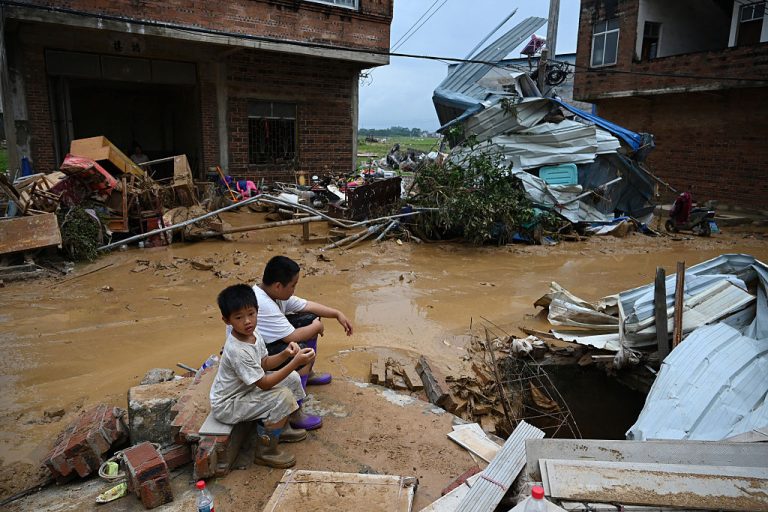
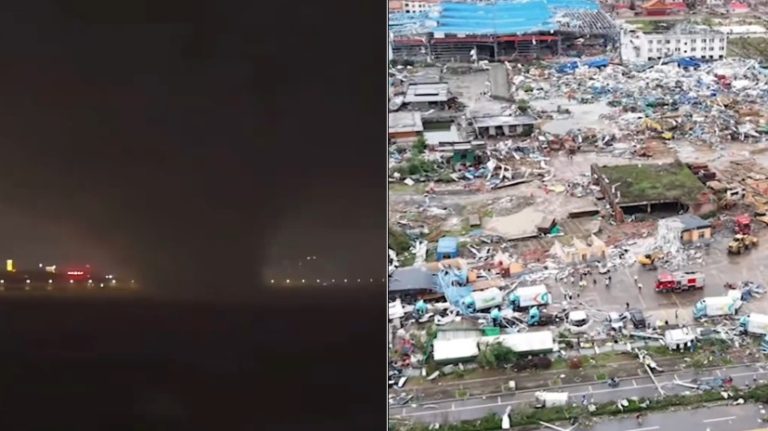
The most durable piece of CCP propaganda surrounding the Great Famine is the phrase “three years of natural disasters,” which has served as the official explanation for the catastrophe from 1961 to the present day. Yang Jisheng, the veteran Xinhua journalist whose decades-long investigation produced Tombstone, one of the most authoritative accounts of the famine, traced the origins of the phrase and tested it against physical evidence.
The label appeared as early as 1958 and 1959. By 1961, it was written into the official communiqué of the Chinese Communist Party’s Ninth Plenum of the Eighth Central Committee. Shortly afterward, Lin Biao, then China’s defense minister and Mao Zedong’s designated successor, reinforced it at the “Seven Thousand Cadres Conference,” a rare large-scale Party work meeting. From that point forward, the phrase became the Party’s authoritative characterization of the famine years and has remained so ever since.
Yang visited China’s National Meteorological Administration five times, consulted multiple climate scientists, and reviewed extensive records. His conclusion: droughts and floods occur every year across China’s vast territory, but the three famine years were meteorologically ordinary. They fell within normal ranges.
In his research, Yang plotted five meteorological curves closely correlated with agricultural output and grain yields. The data showed that the deviations during 1959–1961 were unremarkable, smaller, in fact, than deviations recorded during several years in the 1980s. Yet the 1980s saw no mass starvation. Earlier decades with larger weather anomalies likewise produced no comparable famine.
Success
You are now signed up for our newsletter
Success
Check your email to complete sign up
The statistical record confirms this. In 1959, roughly 200 million mu (about 33 million acres) of farmland were affected by natural disasters, reducing grain output by an estimated 20 to 30 billion jin (10 to 15 million metric tons). In 1960, 370 million mu were affected, with losses of 30 to 40 billion jin. Even at the upper bound, natural disasters accounted for only about one third of the total grain production shortfall. The rest was a product of policy.
Yang Kuisong, a history professor at East China Normal University in Shanghai, conducted his own province-by-province statistical analysis and reached the same conclusion. The natural disasters of 1958–1960 were no worse than those in other periods of Chinese history, including under Nationalist rule. China had endured severe weather before. What made the Great Leap Forward era different was the scale of death, which had no precedent and no natural explanation.

The Soviet debt myth: Moscow offered grain while Beijing chose pride
The Chinese Communist Party’s second official explanation for the famine is “Soviet revisionists demanding debt repayment,” a claim with two components: that the Soviet Union tore up cooperation contracts, and that Moscow pressured China to repay loans immediately.
Yang Jisheng found that both the factual basis and the timeline make this claim untenable.
The contract cancellations occurred in July 1960 and involved science, weapons, and defense projects. They had no direct connection to agricultural production. The famine had already been raging across the country since early 1959, more than a year and a half before the cancellations. The Soviet withdrawal could not have caused a crisis that predated it.
As for “debt pressure,” China did owe the Soviet Union money, much of it related to the Korean War, a debt whose fairness was itself questionable. But these loans came with fixed repayment schedules, with full repayment planned between 1965 and 1966. There was no sudden Soviet demand.
The decision to accelerate repayment came from Mao Zedong, China’s paramount leader, himself. Mao declared that China would “fight for a breath of pride” and pay off the debt early. Wu Lengxi, then head of the Xinhua News Agency, China’s official state media organ, confirmed in his memoirs that the Soviet Union never demanded accelerated repayment. Mao made the choice unilaterally.
Archival records show the Soviet Union did the opposite of pressuring China. In 1961, at the suggestion of Zhou Enlai, then China’s premier, the Soviet Union lent China 200,000 tons of grain to relieve food shortages in the northeast. That same year, Soviet leader Nikita Khrushchev wrote to Mao offering one million tons of grain and 500,000 tons of Cuban sugar on loan terms, along with permission for China to defer delivery of goods worth one billion rubles over five years, interest-free. The Chinese government formally thanked the Soviet Union for this assistance.
On July 18, 1960, at the Beidaihe Conference, Mao instructed Zhou Enlai to calculate how long it would take to clear all debt to the Soviet Union. Zhou estimated ten years. Mao said China would “tighten its belt” and finish in five. The Politburo then ordered every province to establish foreign trade groups to accelerate exports and generate revenue for debt repayment.
This decision was made at the peak of the mass dying.

Beijing expanded foreign aid and grain exports during the worst of the famine
The resources China devoted to accelerated debt repayment were actually smaller than what it spent on foreign aid during the same period. In 1960, at the height of the famine, the Chinese government established a dedicated foreign aid agency and significantly expanded its aid programs. Several recipient countries had higher living standards than China.
Between 1958 and 1962, China’s total foreign aid reached 2.362 billion yuan. Recipients included Albania, North Korea, Vietnam, Cuba, Mongolia, and various countries across Asia and Africa. In 1960 alone, China shipped 10,000 tons of rice to Guinea and 15,000 tons of wheat to Albania.
At the same time, China was exporting record quantities of grain. In 1959, national grain production fell by 25 million tons compared to 1957, yet grain exports rose to 4.1575 million tons, an increase of 2.09 million over 1957 and an all-time high. Converted to unprocessed grain equivalents, this represented approximately five million tons.
Measured against rural per-capita grain rations, five million tons could have fed 24.5 million people for a year. Even diverting half of that total to domestic consumption would have prevented mass starvation. Yet in 1960, with the famine at its most lethal, China continued exporting 2.72 million tons of grain. In one case, a shipment of grain that had already been purchased from Canada and was en route to China was redirected to Albania on the instructions of Liu Shaoqi, then China’s head of state, via telegram.
Beyond grain, China exported large quantities of food items that ordinary citizens could not obtain at any price during the famine: eggs, honey, fruit, dates, peanut oil, pork, seafood, and canned goods of all types. The revenue was used to purchase machinery and weapons.
The senior leadership knew exactly how severe the famine was. Liu Shaoqi personally returned to his home village in Hunan province to investigate conditions on the ground. Yet even with direct knowledge that farmers were dying in large numbers, grain continued to flow outward.

Ideology over lives
Yang Jisheng identified the root cause as ideological. International communism, the export of revolution, and the political symbolism of “fraternal socialist nations” took priority over the lives of Chinese citizens. Albania, North Korea, Romania, Hungary, and various nations in Asia and Africa all received aid. Even a single large-sum aid package to Pakistan was treated as a component of international strategy.
The verifiable historical record is this: while domestic grain reserves were actually increasing and farmers were dying in massive numbers, China continued to export food and expand foreign aid.
Deception, being deceived, and the systematic encouragement and toleration of deception defined the environment of the Great Chinese Famine. Within a web woven from lies, fear, and ideological rigidity, tens of millions of lives vanished without a sound.
Revisiting this history serves to restore the factual record, assign responsibility, and ensure that future generations do not repeat the same catastrophe. Only by confronting the evidence directly can we understand why this disaster occurred and why it was allowed to reach such devastating proportions.