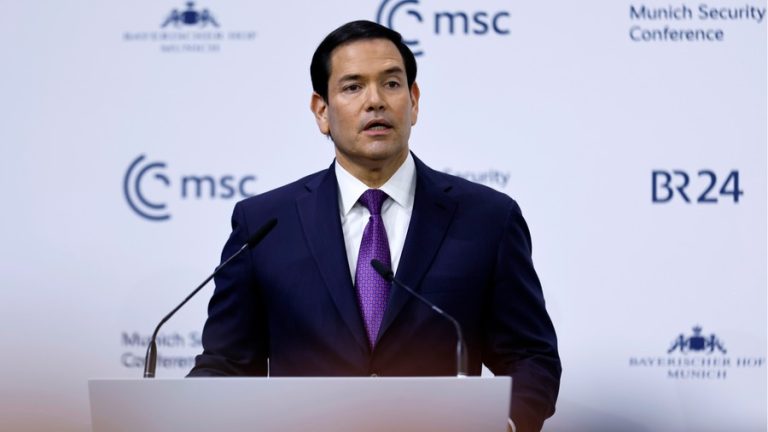
At the 2026 Munich Security Conference, U.S. Secretary of State Marco Rubio received a standing ovation from Europe’s political and military elite after a speech that combined emotional appeals to Western civilization with a blunt list of demands for European policy reversals. One year earlier, at the same conference, Vice President JD Vance had delivered a speech so confrontational that it left European leaders stunned and, in some cases, visibly shaken. Political commentator Jason argues that the dramatic shift in European reception was no accident: it was the culmination of a deliberate two-year psychological campaign by the Trump administration to reshape transatlantic relations using a classic “bad cop, good cop” playbook.
Rubio opened with emotional storytelling designed to make Europeans feel like partners rather than subordinates. He declared that the United States and Europe belong to the same Western civilization and that America is “a child of Europe.” He shared his own family history: ancestors from Piedmont, Italy, and Seville, Spain, who could never have imagined that their descendant would return to Europe as America’s top diplomat 250 years later. The narrative immediately established a tone of kinship, shared blood, shared culture, and shared purpose.
He then celebrated Europe’s contributions to world civilization: Mozart, Beethoven, Dante, Shakespeare, Michelangelo, Leonardo da Vinci, the Beatles, the Rolling Stones, the rule of law, the university system, the scientific revolution. These were achievements to be proud of, he insisted, not burdens to apologize for. Jason, the commentator, observed that for European elites who have spent years immersed in self-critical “political correctness” culture, Rubio’s words landed like a shot of long-overdue pride, a kind of “intellectual liberation.”
The warmth, however, was the wrapper around a very specific, very demanding policy agenda:
Reindustrialize together and reclaim supply chain sovereignty; stop handing critical industries to strategic rivals. Impose strict border controls; mass immigration is eroding Western social cohesion and cultural continuity. Abandon energy policies that impoverish ordinary people; stop letting “climate cultists” dictate economic strategy through moral blackmail. Reform international institutions; the United Nations has accomplished virtually nothing on Gaza, Ukraine, Iran’s nuclear program, or Venezuela, and it was ultimately American leadership, B-2 bombers, and special operations forces that resolved crises.
Success
You are now signed up for our newsletter
Success
Check your email to complete sign up
These demands, taken together, amount to a call for Europe to repudiate the entire policy consensus of the past three decades: doctrinaire globalization, open borders, green energy mandates, and reliance on multilateral institutions. The agenda is sweeping and carries a strong unilateralist undertone.

Europe’s leaders responded with relief instead of anger
The remarkable thing, Jason noted, is that the European audience did not push back. They exhaled. The conference moderator said it out loud: “I’m not sure you heard that sigh of relief in the hall… Your speech delivered a message of partnership, and that is much appreciated.” The applause that followed was sustained and enthusiastic.
Jason’s interpretation: the psychological ground had shifted so dramatically over the preceding year that European elites were simply grateful to hear that America still considered them family. Once that baseline was established, the specific policy demands felt secondary, almost negotiable. The unspoken European calculus was clear: at least the Americans still want us. Everything else can be discussed.
Vance destroyed Europe’s moral self-image in 2025
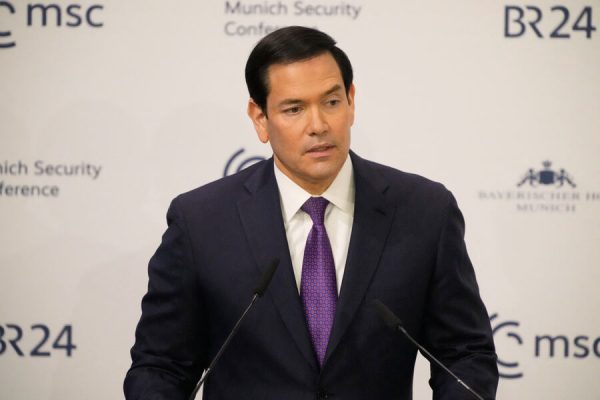
To understand why Rubio’s reception was so warm, you have to go back to Vance’s speech at the same conference in February 2025. Jason described it as an “explosive” address that did something no previous American official had done: instead of criticizing Europe for insufficient defense spending (the usual complaint), Vance used Europe’s own professed values to indict European governments for betraying democracy.
His examples were specific and damning. Romania’s presidential election had been annulled by the European Union on grounds that foreign social media advertising had influenced the vote. Citizens in the United Kingdom and Germany had been arrested and sentenced for peacefully expressing political opinions. EU officials had threatened to shut down entire platforms over individual posts.
Vance’s verdict was ice-cold: “You cancel elections, censor speech, and prosecute people for praying in their own homes. How are you any different from the Soviet Union?”
Jason emphasized that this attack cut far deeper than any complaint about NATO budgets ever could. For decades, European elites had built their identity around being more civilized, more progressive, and more committed to human rights than the “crude” Americans. Vance demolished that self-image using Europe’s own standards. The message was devastating: you are the ones who have betrayed democratic values, not us.
A year of calculated anxiety softened Europe for Rubio’s offer
After Vance’s speech, European political circles spent the rest of 2025 consumed by a single fear: would America actually abandon them? The question was existential. For decades, European governments had operated under the American security umbrella, free to lecture the world about human rights, climate policy, and multilateral governance while leaving the expensive, dangerous work of maintaining global order to Washington. If the Americans walked away, the entire model collapsed.
Jason argues that the Trump administration deliberately let this anxiety simmer for a full year. There was no reassurance, no olive branch, no “of course we still have your back.” European leaders were left to stew in uncertainty, and the longer the silence lasted, the more desperate they became for any signal that the transatlantic relationship would survive.
The Trump administration executed a textbook psychological strategy
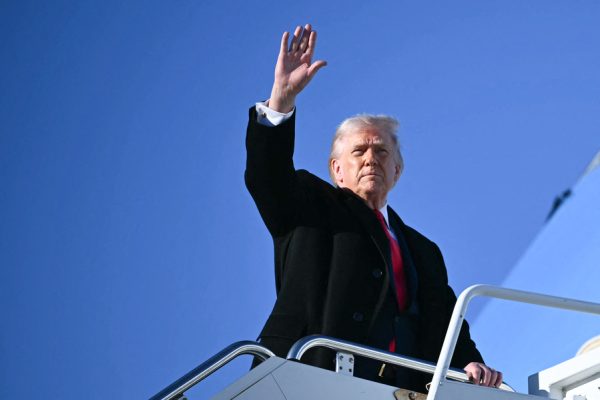
Jason’s central argument is that the Vance-Rubio sequence was a carefully orchestrated “bad cop, good cop” operation spanning two years.
In February 2025, Vance played the bad cop. He shattered Europe’s sense of moral superiority and its comfortable dependence on American protection. Throughout 2025, the Trump administration allowed European anxiety about abandonment to intensify without offering relief. In February 2026, Rubio played the good cop. He arrived with the language of civilizational partnership and familial bonds, offering what felt like salvation, but attached to a concrete list of conditions.
Vance smashed Europe’s psychological floor. Rubio offered the way back up. The emotional arc, from shock and fear to relief and gratitude, was precisely calibrated to make Europe receptive to demands it would have rejected outright two years earlier.
Jason framed this as something deeper than conventional diplomacy. He called it the collision of honest reality with years of comfortable fiction. European elites had spent decades using globalization, multiculturalism, and environmental policy as shields to avoid confronting domestic failures: deindustrialization, uncontrolled immigration, energy poverty, and democratic erosion. Vance forced those failures into the open. Rubio then offered a new framework, “Western civilization” as a shared project, that recast the transatlantic relationship on fundamentally different terms. The old model, where America protects and Europe moralizes, was dead. The new model demands equal partnership in defending a shared heritage. The catch is that Europe has to change first.
The standing ovation suggests the strategy is working
The sustained applause and standing ovation at the Munich Security Conference signal that European elites are beginning to accept the new terms. Jason believes they are starting to internalize the message: revival requires confronting problems honestly, and partnership requires paying a real price.
Rubio closed his speech with a line that may come to define this moment in transatlantic relations: “Yesterday is over. The future is inevitable. Our shared destiny awaits.” Jason’s own conclusion matched the ambition of the moment: the decline of the West is a choice, not a fate. Unity, pride, and action can still deliver a new Western century.