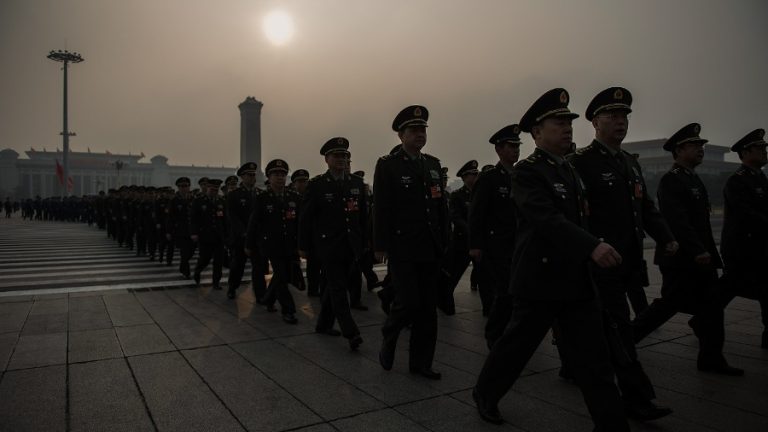
Beijing’s Taiwan policy apparatus held its annual work conference on February 9 and 10, 2026, and the language that emerged marked a conspicuous departure from the prior year. In 2025, the conference had stressed “shaping the inevitable trend of national reunification” and “consolidating the international community’s adherence to the One China principle,” formulations that carried an implicit threat of coercion. This year, Party officials replaced that combative framing with appeals to kinship and stability, emphasizing “maintaining peace and stability in the Taiwan Strait” and describing cross-strait relations with the phrase “both sides of the Strait are one family.” The conference highlighted expanded personnel exchanges along with cultural and commercial cooperation.
Wang Huning, one of the seven members of the CCP’s Politburo Standing Committee, the Party’s innermost circle of power, and the official who chairs the Chinese People’s Political Consultative Conference, the Party’s political advisory body, addressed the meeting. Wang has long served as the CCP’s chief ideologist and is widely considered the architect of the Party’s evolving formula for bringing Taiwan to heel through political and cultural absorption rather than outright invasion. His presence at the meeting reinforced that the softer phrasing was deliberate policy, not bureaucratic drift.
The shift did not emerge in a vacuum. It came amid mounting international pressure on Beijing, persistent economic troubles at home, and a newly assertive posture from Washington in support of Taiwan.

Beijing shelved a propaganda film that called Taiwan’s conquest ‘unstoppable’
Days after the conference adopted its conciliatory tone, Battle of Penghu, a lavishly produced historical epic that could hardly have been more at odds with the new messaging, was pulled from its Lunar New Year release slot. No new date has been announced.
Directed by Hong Kong filmmaker Soi Cheang, the film dramatizes the 1683 campaign in which the Kangxi Emperor dispatched General Shi Lang and the Fujian navy to seize Taiwan and bring it under Qing imperial control. On October 25, 2025, a date Taiwan marks as Retrocession Day to commemorate the island’s return from Japanese colonial rule in 1945, the producers released a trailer that closed with the slogan “Unifying Taiwan is unstoppable.” The promotional video wove in footage from recent Chinese military exercises targeting Taiwan, and the CCP’s Central Propaganda Department branded the production a “patriotic blockbuster.”
Success
You are now signed up for our newsletter
Success
Check your email to complete sign up
Jackson Yee, the Chinese pop star and actor who plays Emperor Kangxi in the film, reposted the trailer on Weibo, the Chinese social media platform, and repeated the slogan. He added that “the Penghu in Battle of Penghu is China’s Penghu.” Because Yee had held a fan event in Taiwan just months earlier, in May 2025, the statement drew pointed backlash from Taiwanese fans who had supported his career.
The film’s withdrawal suggests that Beijing’s propaganda apparatus concluded the triumphalist messaging had become a liability. Observers have noted that the decision likely reflects a recalibration of the Party’s external messaging as it confronts simultaneous pressure from Washington, international scrutiny, and a faltering domestic economy.
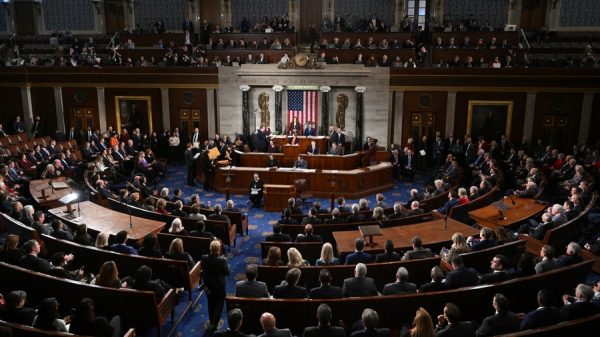
The US House passed legislation to cut Beijing off from global finance over Taiwan
The timing of Beijing’s rhetorical retreat is easier to understand in light of what was happening in Washington. On Feb. 9, the same day the CCP’s Taiwan conference opened, the U.S. House of Representatives passed the PROTECT Taiwan Act by a vote of 395 to 2, an overwhelming bipartisan margin that signaled deep congressional consensus on defending the island.
The bill, introduced by Representative Frank Lucas, stipulates that if actions by the CCP threaten Taiwan’s security, the United States should, to the maximum extent feasible, seek to exclude China from international financial systems and organizations. Specifically, the legislation calls for barring CCP representatives from the Group of 20, the Bank for International Settlements, and the Financial Stability Board if Beijing moves against Taiwan’s security or destabilizes its social and economic systems.
Lucas framed the bill as a deterrent. He said the measure is intended to make clear that the CCP would face severe consequences for threatening Taiwan, and he pointed to what he described as continued aggressive Chinese behavior in the South China Sea as evidence that forward-looking policy was overdue. Any U.S. response to an invasion of Taiwan, Lucas added, should include sanctions, economic penalties, and exclusion from the international bodies that underpin global commerce.
Chinese military jets crossed the Taiwan Strait median line with 10 aircraft in a single day
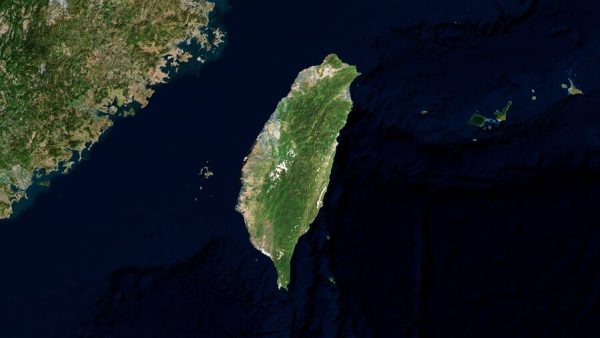
Whatever shift was underway in the CCP’s propaganda and diplomatic vocabulary, Beijing’s military posture told a different story. On Feb.19, 2026, Taiwan’s Ministry of National Defense detected 14 sorties by Chinese combat and support aircraft heading to sea beginning at 9:36 a.m. The aircraft included J-10, J-11, and J-16 fighter jets as well as KJ-500 early-warning planes. Ten of the fourteen crossed the median line of the Taiwan Strait and its extension, entering Taiwan’s northern, central, and southwestern air defense identification zones.
The flights were conducted in coordination with Chinese naval vessels in what Beijing described as a “joint combat readiness patrol,” a formulation the CCP uses to frame provocation as routine. Taiwan’s defense ministry responded by deploying surveillance and reconnaissance assets along with mission aircraft, naval vessels, and shore-based missile systems.
The median line of the Taiwan Strait served for decades as an informal boundary that both sides respected. Beijing began crossing it routinely in 2022, following then-U.S. House Speaker Nancy Pelosi’s visit to Taiwan, and has since treated the line as functionally nonexistent. Each new round of crossings further normalizes what was once considered a serious escalation.
Taiwan’s president pledged sustained defense spending and warned against losing resolve
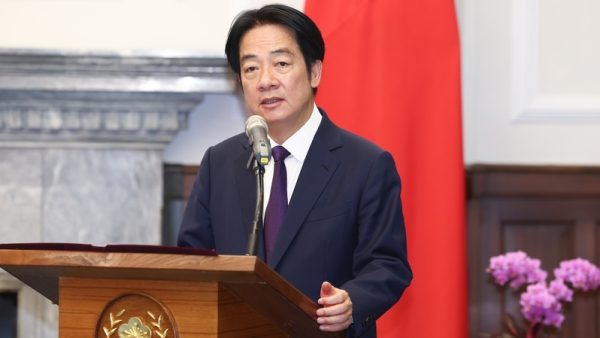
Taiwan’s President Lai Ching-te addressed the security environment on February 19, the same day the Chinese military sorties were detected. Speaking during a visit to Yuanbao Temple in Taichung, where he paid respects and distributed red envelopes for the Lunar New Year holiday, Lai outlined Taiwan’s defense spending commitments and urged the public not to be intimidated.
Lai said Taiwan’s special defense budget totals 1.25 trillion New Taiwan dollars over eight years, averaging more than 100 billion per year, and that the country can sustain the expenditure. Peace and stability in the Taiwan Strait, he said, cannot depend on Taiwan standing idle. “Do not let CCP threats weaken our resolve. Everyone must have courage,” Lai said, adding that the defense budget comes from the people’s hard-earned money and would be spent responsibly.
Lai also pointed to the trajectory of the past decade, during which he and his predecessor, former President Tsai Ing-wen, have governed successively. Taiwan has become safer over that period, he said, because the government has steadily increased defense spending and demonstrated to the international community that the island has both the military capability to protect itself and the political will to maintain peace in the strait.
He further noted that the United States had issued a national security strategy report reorienting American strategic focus toward the Indo-Pacific, a shift Lai described as aimed at countering the CCP’s outward expansion. That reorientation, he said, works directly in Taiwan’s favor.
By Li Jingyao