In peacetime, lard is a household ingredient. In wartime, it can become part of the supply system that supports both troops and industry.
Historically, lard has been used for nourishment, equipment maintenance, and as a source of materials later processed into explosives.
Its most immediate value lies in caloric density.
Combat often unfolds in freezing temperatures, under physical strain, and with unstable supply lines. In such conditions, compact sources of energy are essential. Lard is calorie-rich. A small portion can provide energy comparable to several kilograms of staple foods such as rice or beef. It converts efficiently into body heat, helping soldiers exposed to extreme cold maintain strength.
Historical accounts from World War II describe canned lard as a valued field ration. It could be eaten directly, and any remaining fat in the container could be burned for warmth. In winter conditions, that dual use increased its practicality.
Success
You are now signed up for our newsletter
Success
Check your email to complete sign up
Encampments were also frequently plagued by rodents. Compared with grain-based rations, lard was less attractive to rats, helping preserve stored supplies. It also remains semi-solid in low temperatures, a property that made it workable in cold climates.
In addition to consumption, lard was sometimes applied externally. In strong winds and freezing weather, soldiers lacking adequate protection would rub a thin layer on exposed skin to reduce cracking and frostbite.
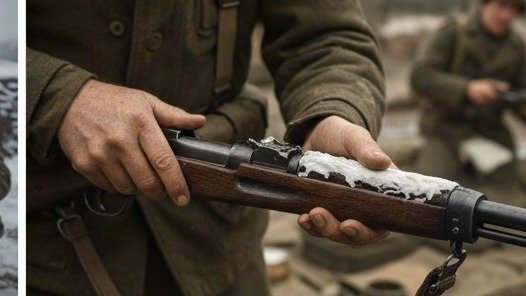
Lubricating weapons and machinery
Animal fat has long had industrial uses.
As a lubricant, lard provides stability and resistance to moisture. On muddy battlefields, when firearms rusted or jammed, soldiers could apply fat to restore function. It did not corrode metal and could reduce friction in moving parts.
Before antibiotics became widely available, fats were also used as protective barriers on wounds when medical resources were limited.
Processed animal fats continue to serve as inputs in certain technical and manufacturing sectors within modern industrial systems.
One of the most significant wartime uses of lard lies in chemistry.
Animal fat contains glycerol, which can be extracted and converted through nitration into nitroglycerin, a key component in many types of explosives. Large quantities of fat yield substantial amounts of glycerol, making it a valuable raw material during periods of munitions production.
During World War II, governments organized campaigns to collect cooking grease. Households were encouraged to donate leftover fat, and these materials entered industrial supply chains linked to wartime manufacturing. In this way, domestic kitchens became connected to the production of military materiel.

World War II and the mobilization of fats
The Second World War provides a clear historical example of how everyday materials were incorporated into national war efforts.
The United States, Germany, and other countries launched organized fat recycling drives. Families delivered used cooking grease to collection points, sometimes receiving soap or other goods in exchange. These programs reflected shortages of fats and oils that affected both industry and civilian life.
Military rations during the period emphasized fat content for caloric efficiency. At the same time, industrial planners sought glycerol supplies for explosives production. Canned lard functioned as concentrated energy for soldiers and as chemical feedstock for manufacturing.
Under wartime conditions, lard moved from kitchens into supply networks that supported both battlefield survival and industrial output.