The U.S. State Department has completed development of Freedom.gov, a privacy-focused application explicitly designed to bypass internet censorship in countries like China, Iran, and Russia. The app is set to launch “within the coming weeks,” according to a Fox News report published on Feb. 20, and aims to give users worldwide “the same uncensored internet experience available to Americans.”
State Department officials said the app will be available on desktop, iOS, and Android, with a simple one-tap interface designed to minimize technical barriers.
“Freedom.gov is fully open source and fully anonymous,” one State Department official said. “Anyone can audit its technical mechanisms, but no one can track its users.”
The system will collect no IP addresses, browsing history, DNS requests, or device identifiers, according to U.S. officials. While the full technical architecture has not been made public, the project’s purpose is explicit: to provide a working escape route for people trapped behind state-controlled information systems.

China’s ‘Great Firewall’ is the primary target.
Among all the censorship regimes Freedom.gov is designed to penetrate, the Chinese Communist Party’s internet control apparatus stands as the most formidable.
Success
You are now signed up for our newsletter
Success
Check your email to complete sign up
The CCP’s so-called “Great Firewall” systematically blocks foreign media outlets, social media platforms, and search engines, replacing them with a Party-controlled digital ecosystem. Cross-border information flows are subjected to deep packet filtering. Censorship-evasion tools are routinely identified and blocked, and Chinese citizens caught using them face administrative penalties or even criminal prosecution.
U.S. officials told reporters that one of Freedom.gov’s core design goals was to serve users living under exactly this kind of high-intensity censorship environment.
Iran and Russia present similar, if less technically sophisticated, challenges. The Iranian government has repeatedly imposed nationwide internet shutdowns during protest movements. Russia recently banned WhatsApp, tightening its grip over digital communications. Washington views these measures as hallmarks of what it calls “digital authoritarianism,” and Freedom.gov is framed as a direct technical countermeasure.

The app will function like a VPN routed through US servers.
The New York Post reported on February 19 that the freedom.gov domain was registered on Jan. 12. The site currently displays only placeholder slogans: “Freedom is coming” and “Information is power.”
Sources familiar with the project said the platform will use a VPN-style technical architecture, allowing users to effectively simulate accessing the internet from within the United States. This would circumvent local content restrictions, keyword filters, and domain-level blocking.
The U.S. government has a history of funding and supporting VPN and censorship-evasion technology projects targeting China, Cuba, Iran, and Russia. These efforts have met with mixed results. Sophisticated censorship regimes typically move quickly to block new tools by restricting downloads, blacklisting domains, disrupting encrypted traffic, and punishing users.
Whether Freedom.gov can maintain long-term accessibility inside China, where the CCP’s censorship infrastructure is the most technically advanced in the world, will depend entirely on the app’s ability to resist blocking and update itself dynamically in response to new countermeasures.
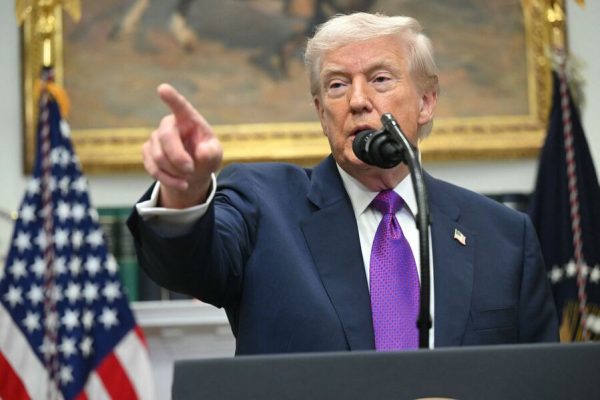
The Trump administration is framing internet freedom as a core policy priority.
The project is being led by Sarah Rogers, the Under Secretary of State for Public Diplomacy. Rogers described the platform as part of a broader American effort to defend fundamental freedoms in the digital age.
Under President Trump, the administration has repeatedly criticized content regulation policies in Europe and elsewhere, arguing that governments are using the fight against “misinformation” as a pretext to suppress legitimate speech.
Vice President JD Vance made this argument directly at the Munich Security Conference last year, warning that regulatory trends in parts of the West were shrinking the space for free expression.
Within this broader strategic framework, Freedom.gov serves a dual purpose. It targets the internet blockades maintained by authoritarian regimes like the CCP, while also functioning as a vehicle for exporting Washington’s vision of an open, uncensored internet.

History shows that censorship-evasion tools trigger an escalating arms race.
Every censorship-evasion tool ever deployed has triggered the same cycle: a technical breakthrough, followed by a blocking escalation, followed by another breakthrough, followed by another escalation.
The CCP has waged a sustained campaign against circumvention tools for years, using a layered system of legal penalties, administrative enforcement, and increasingly sophisticated technical detection. Iran has jammed satellite internet signals and criminalized the possession of related equipment.
Freedom.gov’s launch is therefore both a technical experiment and a political confrontation over digital sovereignty. Whether the app can sustain operations inside a system as tightly controlled as China’s will be one of the most telling indicators of the global balance between internet freedom and state censorship in the years ahead.