German Chancellor Friedrich Merz arrived in Beijing on Feb. 25 for a two-day visit, leading a delegation of roughly 30 senior executives from companies including Volkswagen, Mercedes-Benz, Siemens, BMW, Bayer, and Adidas. It is his first trip to China since taking office in May 2025.
The visit comes as China remains Germany’s largest trading partner while Berlin faces mounting industrial competition and growing concern over supply-chain and raw-material dependence. The Trump administration’s renewed tariff policies have further reshaped global trade conditions.
After arriving, Merz wrote in Chinese on social media that Germany seeks a “balanced, reliable, and fair” partnership and that open dialogue remains essential. He said Germany aims to reduce areas of excessive dependence while expanding cooperation where interests align.
Meeting Li Qiang and signing agreements
Merz met Premier Li Qiang at the Great Hall of the People. Li called for strengthened cooperation, support for multilateralism, and opposition to protectionism. Merz emphasized the need to maintain dialogue and said several German ministers would visit China in the coming months.
Five agreements were signed covering climate cooperation, animal disease prevention to resume German pork exports, restarting the chicken claw trade, and cooperation between China Media Group and German sports associations. Details were not disclosed.
Success
You are now signed up for our newsletter
Success
Check your email to complete sign up
Trade imbalance at center of Merz-Xi talks
Later that evening, Merz met Xi Jinping at the Diaoyutai State Guesthouse. Xi said he values bilateral ties and supports elevating the comprehensive strategic partnership. Merz expressed support for restarting the China-Germany intergovernmental consultation mechanism.
Trade dominated discussions. Merz said China would place additional Airbus orders, bringing total purchases to 120 aircraft. Other German firms are expected to sign further contracts.
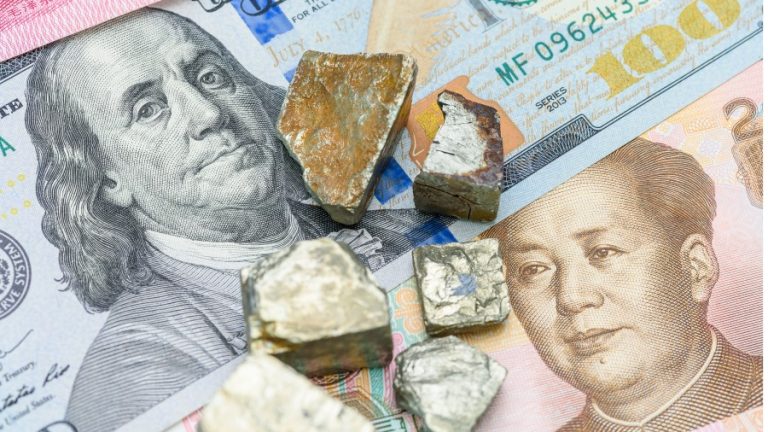
At the same time, he addressed Germany’s widening trade deficit with China, which exceeded €80 billion in 2025 and is nearing €90 billion, about 2 percent of GDP. The deficit has quadrupled since 2020. Merz described the trend as unhealthy. Talks covered market access, competitive neutrality, rare earth supply security, state subsidies, the RMB exchange rate, and other concerns raised by Berlin.
At the China-Germany Economic Advisory Committee, Merz reiterated that Germany acts within the European Union framework and that key trade decisions are handled at the EU level.
On security issues, Merz urged Beijing to play a greater role in ending the Russia-Ukraine war and expressed hope that China would not provide Russia with dual-use goods.
German debate over ‘de-risking’
The visit also includes stops in Hangzhou and meetings with robotics firm Unitree Technology and Siemens Energy facilities. Germany faces growing competition from China in automobiles, machinery, and advanced technology while remaining dependent on Chinese rare earth processing and key intermediate products.
A Forsa poll conducted February 4–5 found that 53 percent of Germans support reducing economic dependence on China even if it carries costs, while 42 percent oppose. Support is strongest among older voters and Green, CDU/CSU, and SPD supporters; opposition is higher in eastern Germany and among AfD voters.
Major German media urged Merz to project confidence. Handelsblatt called for firmness in negotiations. The Frankfurter Allgemeine Zeitung stressed improving competitiveness at home. Der Spiegel said Berlin should neither supplicate nor moralize, but engage Beijing from a position of strength.
Kovrig: structural risk, not cyclical tension
Former Canadian diplomat Michael Kovrig described Germany’s position as a “triple dilemma”: Russia’s aggression, U.S. policy uncertainty, and what he called the CCP’s mercantilist strategy. He argued that Germany’s earlier economic model — U.S.-European security, Russian energy, and China trade — has weakened.
China posted a $1.2 trillion trade surplus in 2025. Germany’s deficit with China reached €90 billion. Between 2022 and 2024, German car exports to China fell nearly 70 percent and declined another 33 percent in 2025. Exports in machinery, metals, chemicals, and pharmaceuticals fell around 10 percent. Since 2019, more than 200,000 German manufacturing jobs have been lost.
Germany depends heavily on China for rare earth processing and key materials including cobalt, graphite, lithium, silicon, circuit boards, and LEDs. In spring 2025, Beijing restricted rare earth and automotive chip exports. Kovrig said the shift reflects structural decoupling rather than temporary fluctuation and warned that a Taiwan conflict could trigger hard decoupling and disrupt €8.9 billion in German direct investment.
He attributed Germany’s vulnerability in part to its long-standing “Wandel durch Handel” approach and called for stronger EU economic security tools and clearer assessment of strategic exposure.
By Yin Hua