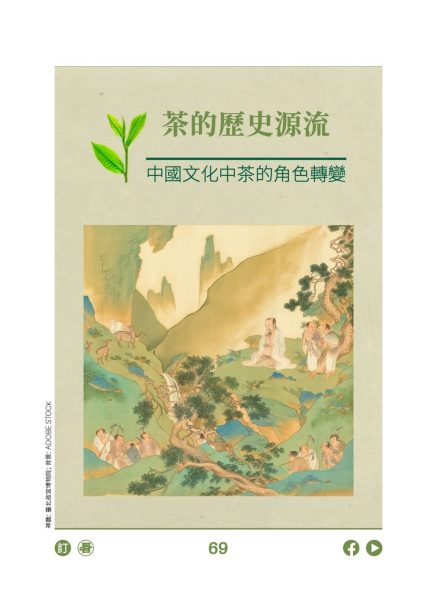
Chinese legend holds that Shennong, the ancient ruler revered as a founder of agriculture and medicine, once tasted hundreds of herbs in a single day, encountering dozens of poisons along the way. Tea, the story goes, was his antidote. One day, as he rested beneath a tree, a few leaves drifted into a pot of boiling water. After drinking the infusion, he felt renewed. In this telling, tea entered human life not as a pleasure, but as a remedy.
By the Eastern Han dynasty, tea was already described in The Divine Farmer’s Classic of Materia Medica, an early pharmacopeia. The text notes that tea tastes bitter, but “makes one think more clearly, sleep less, lighten the body, and brighten the eyes.” Its character was defined less by sweetness than by clarity.
Centuries later, during the Tang dynasty, the scholar Lu Yu wrote The Classic of Tea, the first comprehensive treatise on the subject. He traced tea’s origins to Shennong and documented its cultivation, preparation, and utensils. By Lu Yu’s time, tea had moved beyond the realm of medicine and into daily life.
From medicinal leaf to everyday drink
As methods of boiling and brewing evolved, tea became a presence in kitchens, studies, and roadside inns. Unlike alcohol, it did not overwhelm the senses. Unlike sugary drinks, it did not fade quickly on the palate. Its flavor unfolded gradually, depending on water temperature and the careful opening of the leaves.
Over time, different varieties came to be associated with different temperaments.
Success
You are now signed up for our newsletter
Success
Check your email to complete sign up
Clear and immediate: green tea
For many people, green tea is the starting point. When hot water meets the leaves, a fresh aroma rises. The taste is direct and brisk. It suits early mornings and busy schedules, offering alertness without excess. Its appeal lies in immediacy — a brightness that sharpens the present moment rather than lingering in memory.
Quiet endurance: white tea
White tea carries a different rhythm. It does not announce itself with fragrance or intensity, and the first infusion can seem understated. With age, however, its character deepens. Older white tea develops a steadier, rounder profile. It is often brewed in the afternoon, when the light outside shifts slowly and conversation unfolds without hurry. The sweetness emerges gradually, without urgency.
Depth and persistence: Pu-erh
Pu-erh, particularly aged varieties, is sometimes an acquired taste. Younger drinkers may find it heavy or subdued. Yet its strength lies in endurance. It withstands repeated steepings, revealing new layers each time. The flavor grows fuller rather than fading. For those who favor it, the appeal is not stimulation but steadiness.
The ritual of tasting
Tea drinking in China is often linked to the idea of slowing down. On an unhurried afternoon, water is set to boil. A teapot or lidded bowl is arranged with small cups. Before the first sip, the setting itself invites stillness.
In its long passage from legend to daily life, tea has remained consistent in one respect: it does not demand attention, but rewards patience.

By Qing Yuan